
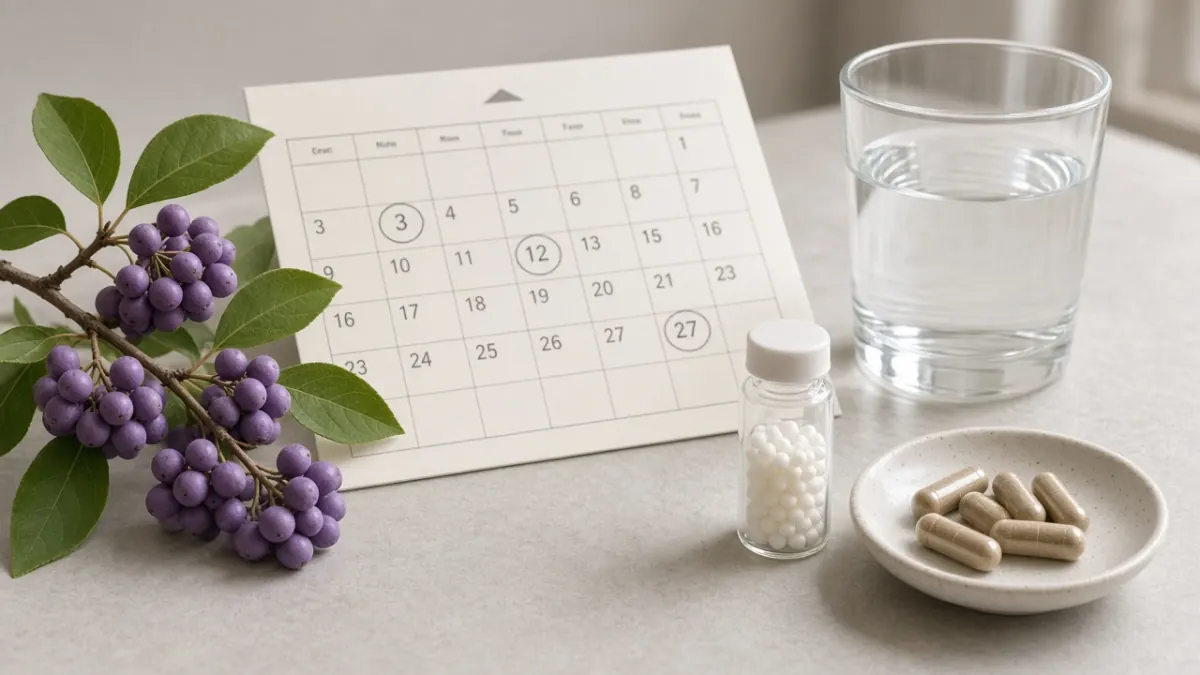
Short answer: Agnus castus is the homeopathic name for Vitex agnus-castus, the chaste tree. Classical materia medica gives it for low or lost sexual desire with a discouraged mood, and for scanty breast milk; its PMS reputation comes mostly from herbal practice. A 30C pellet holds no measurable plant. The Q tincture and herbal capsules do, and they act on the dopamine and prolactin axis, so they are not for pregnancy, breastfeeding or hormone-sensitive disease. Some trials of standardised herbal extracts suggest benefit in premenstrual syndrome. No good clinical trial shows that homeopathic Agnus castus treats impotence, infertility, irregular periods or any hormone problem.
This article is for searches like agnus castus, agnus castus homeopathic medicine, agnus castus 30 uses, agnus castus q, agnus castus for PMS, agnus castus for low libido, agnus castus for impotence, vitex agnus castus side effects, agnus castus uses in hindi, and the same typed as एग्नस कास्टस 30 के फायदे, অ্যাগনাস কাস্টাস, அக்னஸ் காஸ்டஸ் 30, అగ్నస్ కాస్టస్ 30 or അഗ്നസ് കാസ്റ്റസ് 30. It is not a protocol for infertility, hormone testing or erectile dysfunction.
Author: Dr. Dheeraj Sharma, BHMS. Based on: Boericke's Materia Medica (paraphrased) and general herbal pharmacology of Vitex agnus-castus. No trial figures or citations are quoted.
| Item | Detail |
|---|---|
| Names | Agnus castus, Agnus cast., chaste tree, chasteberry, monk's pepper |
| Botanical name | Vitex agnus-castus (Lamiaceae; older books say Verbenaceae) |
| Part used | Ripe berries |
| Forms sold in India | Q (mother tincture); 6C, 30C, 200C, 1M; herbal capsules and tablets sold as chasteberry or Vitex |
| Classical sphere | Sexual weakness with melancholy, low desire, scanty milk |
| Usual adult dose, as commonly labelled | Q: 5–10 drops in water, two or three times a day on many labels. 30C: a few pellets on the tongue. Labels differ; see the dosage table. Not medical advice |
| Evidence snapshot | Herbal extract: some randomised trials in PMS, mostly small, short and brand-specific. Homeopathic 30C: no good clinical trial for any use |
| Safety | Avoid Q and herbal forms in pregnancy and breastfeeding; possible interactions with dopamine-related drugs and hormones |
Vitex agnus-castus is a Mediterranean shrub whose berries have a long place in European herbal medicine. The name "chaste tree" comes from a folk belief that it dampened desire, which is the opposite of the low-desire use in homeopathy. Its reported pharmacology centres on dopamine D2 activity that can lower prolactin; compounds such as iridoid glycosides, flavonoids and diterpenes are thought to be involved.
Boericke places Agnus castus mainly in the sexual sphere and the mind. In paraphrase: desire is lost or weak, erections are feeble or relaxed, and the person is gloomy and discouraged. Some texts add absent-mindedness, brooding about lost potency and a conviction that death is near. For women, older books list scanty or suppressed milk after delivery and a thin, transparent vaginal discharge with little desire.
That is 19th-century language. "Impotence" and "sexual hypochondriasis" in an old book are not diagnoses. Today the same complaints often trace back to diabetes, blood-vessel disease, medicines, depression, thyroid or prolactin problems, and relationship stress.
Low libido and "impotence". This is the classical core. There is no good trial of homeopathic Agnus castus for erectile dysfunction or desire in either sex. A new erectile problem can be an early sign of diabetes, hypertension or heart disease, so tests and a medicine review come before a remedy. For women, see low libido in women.
PMS and breast tenderness. This is where the herbal extract has its best evidence: some randomised trials of standardised extracts report better premenstrual scores than placebo, but they are small, short and use specific branded products. That does not transfer to a 30C pellet. For the homeopathic approach, see PMS homeopathy.
Irregular periods, missed periods and infertility. Herbal evidence is limited and mixed; homeopathic potencies have none. A missed period needs a pregnancy test first, and irregular cycles need a hormone work-up (thyroid, prolactin, PCOS markers). See irregular periods. Trying for 12 months without success, or 6 months if the woman is 35 or older, means both partners should be checked.
Scanty milk. Classical books list it. The herb's effect on lactation is unpredictable, and a baby who is not gaining weight needs a paediatrician or lactation counsellor, not a bottle.
Menopause symptoms, prostate and acne. Claims online mix these with herbal studies of uncertain quality. None is established for homeopathic Agnus castus. Urinary difficulty in an older man needs a prostate examination.
| Remedy | Picture | Note |
|---|---|---|
| Agnus castus | Low desire, discouraged mood, scanty milk | Mental and sexual keynote |
| Sepia | Dragging-down pelvic feeling, indifference to family, hot flushes | Chosen for the whole woman, not desire alone |
| Damiana | Herbal Q sold for sexual debility | A herb, not a proven aphrodisiac |
| Claim you will see online | What is actually true |
|---|---|
| "Regulates LH and FSH" | Reported effects are mainly on dopamine and prolactin, from herbal-extract studies. Not shown for 30C |
| "Cures irregular periods and infertility" | No. Irregular periods and infertility need a diagnosis; the herb's evidence is limited and mixed |
| "Treats impotence and improves sperm" | No good trial for either, in any form |
| "Reduces insulin resistance and helps diabetes" | No reliable evidence. Keep prescribed diabetes medicine |
| "Makes your own tincture at home" | Home extracts have unknown strength and alcohol. Do not make or dose one |
| "Mild, no side effects" | False for Q and herbal forms: stomach upset, headache, skin reactions, cycle changes and drug interactions are documented |
| Form | What is in it | Label wording as commonly printed | Who decides |
|---|---|---|---|
| 30C pellets | No measurable Vitex | A few pellets on the tongue, repeated a few times a day for a short spell; wording varies by brand | Self-care only for short, mild use; otherwise a homeopath |
| 200C / 1M | None | No home schedule; supplied as single or infrequent doses | Registered homeopath only |
| Q | Alcoholic berry extract | 5–10 drops in a little water, two or three times a day on many labels | Prescriber only; list your medicines first |
| Herbal capsule or liquid | Standardised berry extract | Follow that product's label; strengths differ between brands | Doctor for any hormone-related condition |
| Raw berries, tea, home tincture | Unknown strength | No standard dose | Avoid |
Do not increase drops or pellets because a first bottle seemed to fail. If nothing has changed in about two weeks, get the underlying symptom checked instead of changing potency.
Q and herbal forms: stomach upset, nausea, headache, dizziness, itching or rash, acne-like skin change, and cycle changes such as spotting or a shorter or longer cycle. Q also carries alcohol. Allergic reactions are rare but possible.
30C and above: no plant-related harm is expected. The real risk is delay, plus sugar or lactose in the pellets. See homeopathy side effects.
Who should avoid Q and herbal forms: pregnancy or a late period; breastfeeding; breast, ovarian, uterine or prostate cancer; endometriosis or fibroids unless a specialist agrees; IVF or ovulation-induction cycles unless the fertility doctor agrees; Parkinson's disease; psychosis; teenagers and children, where no safe dosing exists.
Interactions are plausible from the mechanism, and well-documented cases are few: dopamine agonists (bromocriptine, cabergoline), dopamine blockers (antipsychotics, metoclopramide, domperidone), hormonal contraceptives, HRT and fertility drugs. Tell your doctor. Never stop a prescribed medicine to try Agnus castus.
Pregnancy and breastfeeding: avoid Q and herbal forms. After a missed period, test for pregnancy before taking any remedy. In breastfeeding, the herb acts on prolactin and the effect on milk is unpredictable.
Call emergency services (108 / 112 in India) for heavy bleeding that soaks a pad every hour, fainting, severe pelvic pain with a missed period, chest pain, or any thought of ending your life.
WeClinic, Panki, Kanpur — 10 AM–9 PM, closed Monday. Call +91 7905136461. Bring the bottle and say the potency on the label. Author: Dr. Dheeraj Sharma.
Have questions about your symptoms? Talk to a WeClinic™ homeopathic doctor, free.
Call Now - Free Consultation