
Homeopathy Side Effects: What's Real, What's Not

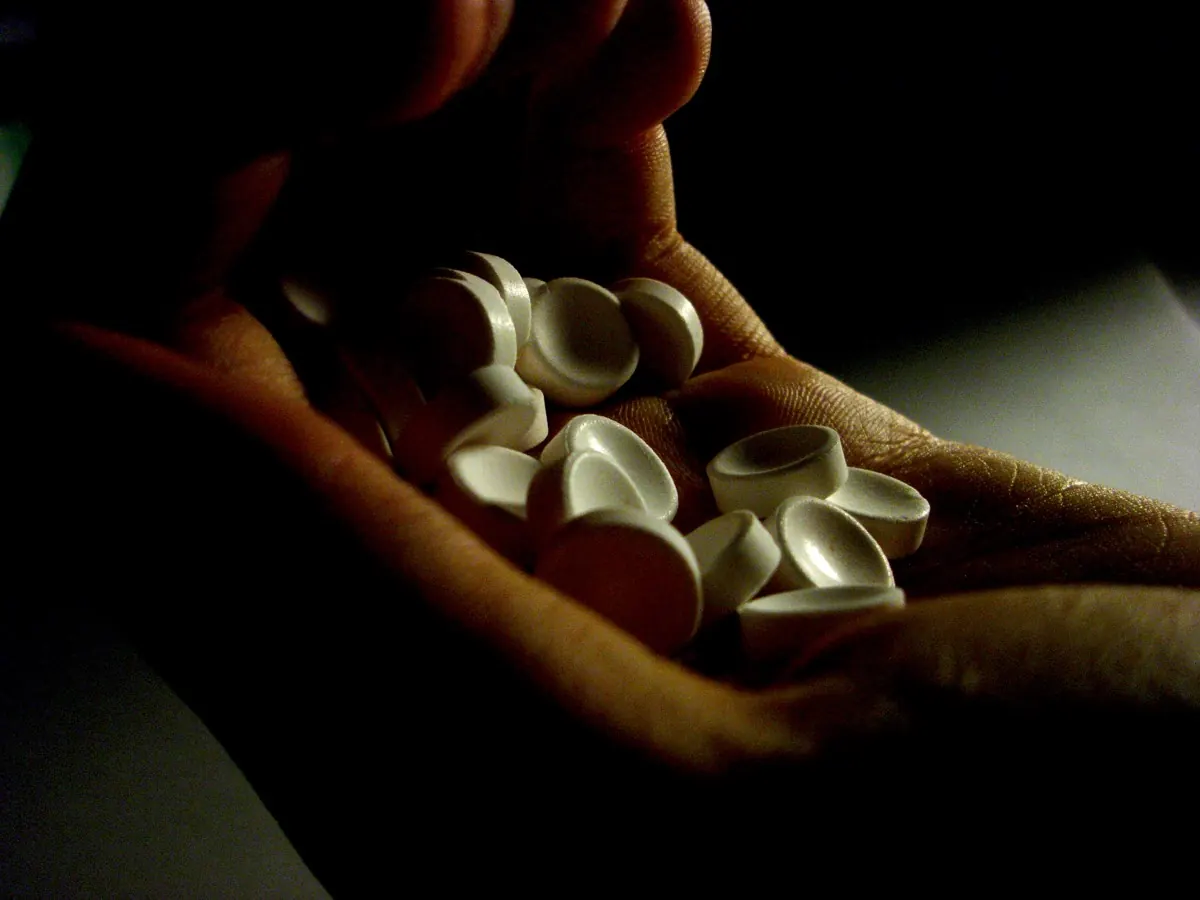
"Homeopathy has no side effects" is a sales line, not a fact. But the real risks sit somewhere most people never look. Three things can genuinely harm you: a mother tincture, the sugar or alcohol carrying it, and time lost while a treatable illness gets worse. A bottle marked 30 or 200 holds none of the original substance. It cannot poison you as that substance, assuming it was made properly. The number printed on your label decides which situation you are in.
You have a bottle in your hand and nobody explained it. Look at the mark after the remedy name — Q, 6X, 30, 200. That mark, not the name, tells you what you are dealing with.
Some of the biggest pages in Indian search promise "no side effects" on mother tinctures. That is the one form on the shelf that really can cause chemical harm.
The honest version: side effects are not decided by the remedy's name. They are decided by the number after it.
Read the number on your label first
The full set of marks is Q, Ø, 3X, 6X, 12X, 30, 200 and 1M. Each one tells you how much of the original substance is left. Once you can read it, you can answer the side-effect question for any homeopathic medicine.
The numbers: X divides by 10, C divides by 100
- 1X — 1 part in 10
- 3X — 1 part in 1,000
- 6X — 1 part in a million
- 3C — also 1 part in a million
- 6C — 1 part in a trillion (the same as 12X)
- 30C — a 1 with 60 zeros under it
A 6X is one part per million. Tiny, but not zero. There is real, weighable substance in a 6X tablet, and that matters for the biochemic tissue salts most Indians buy.
On an Indian label a bare 30 or 200 almost always means 30C and 200C. Indian law allows only three scales — decimal, centesimal and millesimal — under Rule 106-A of the Drugs and Cosmetics Rules 1945.
A 30C starts with one mole of the substance in a litre — a standard chemistry strength. To expect to meet one original molecule after 30 centesimal steps, you would need roughly a million billion times all the water in Earth's oceans. Total ocean volume is about 1,335,000,000 cubic kilometres, so you can check the sum.
Where the substance runs out: 12C and 24X
This line comes from chemistry, not opinion.
One mole of any substance — the chemist's standard amount — holds 6.02214076 x 10^23 particles. That is the Avogadro constant, fixed exactly by the definition of the mole.
Start from one mole and divide by 10 twenty-four times. About 0.6 of a molecule is left, so most bottles at that dilution contain none. You reach it at 24X, and you reach it at 12C. Same point.
So the rule is simple. Below 24X and 12C — Q, 1X, 3X, 6X, 12X, 6C — there is real substance in the bottle. At that line and above it — 30, 200, 1M — there is not.
Q and Ø are not potencies at all
On an Indian bottle, Q (or Ø) means mother tincture. The plant is crushed, soaked in strong alcohol and strained. Nothing is diluted away. It is the starting material, not a dilution of it.
That makes it closer to a herbal medicine than to what most people picture as homeopathy. It is the only common form on the shelf that can chemically harm you. So "no known side effects" on a mother tincture page is the least trustworthy sentence in Indian health search.
Four heavily searched remedies are sold mainly as tinctures: Holarrhena antidysenterica, Justicia adhatoda, Hydrocotyle asiatica and Blatta orientalis. Our mother tincture guide covers the form itself.
Look up your own bottle here
| What is on your label | What is inside | What that means for you |
|---|---|---|
| Q or Ø — Hydrocotyle Q, Justicia Q, Holarrhena Q, Blatta Q | Full-strength extract in strong alcohol | Real chemistry, real interactions, real dose limits. Ask a prescriber first |
| 1X–12X, 1C–6C — Hekla Lava 3X, Ferrum Phos 6X, Calc Fluor 6X, Calc Sulph 6X, Nat Mur 6X | A trace of the mineral, plus a lot of lactose | Mineral poisoning is not the worry. The lactose base is |
| 24X or 12C and above — Hepar Sulph 30 and 200, Cantharis 30, Robinia 30, Ignatia 30, 1M | No molecules of the original substance | Cannot poison you as that substance. The risks are the base, bad manufacturing and delay |
| Not listed | Do the X or C sum above | Below the line, treat it as a real substance. At the line or above, as sugar or alcohol |
Our homeopathy potency guide walks through what each potency is used for.
Mother tinctures: the one form that really can cause side effects
A tincture holds the plant's full chemistry and a lot of ethanol. Researchers at the National Institute of Homoeopathy, Calcutta, found 70% v/v ethanol was the best solvent for one Indian tincture. They added that the pharmacopoeial method may need review.
Published harm reports show why that matters. The largest published review of homeopathy harms collected 38 reports covering 1,159 patients. Effects ranged from mild to severe and included four deaths. The two commonest problems were allergic reactions and poisonings. Rhus toxicodendron — usually sold in low potency — was named most often.
Note the scope of that review, though. It covered homeopathy as a whole, not tinctures alone. Eight of the 38 reports were about harm from replacing conventional medicine, not from anything in the bottle.
Practical rules for any tincture:
- Count the exact drops you were told to take.
- Put them in water. Never swig from the bottle.
- Never run one for months without a review.
- Tell your doctor, and take the bottle along.
How much alcohol is in that 30 ml bottle?
You cannot find out from the label, and there is a legal reason. Rule 106-A(A)(v) of the Drugs and Cosmetics Rules 1945 says alcohol content must be stated. Then it adds that a container holding 30 millilitres or less need not state it.
Most retail dilutions and tinctures in India are sold in 30 ml bottles or smaller. That is exactly the range the exemption covers.
Rule 106-B then bans selling any homeopathic medicine above 12% alcohol by volume in bottles larger than 30 ml. Hospitals and dispensaries may buy up to 100 ml. It caps the bottle, not the alcohol. The small bottle is how strong alcohol reaches the shelf without a declared strength.
This matters if you have liver disease, are recovering from alcohol dependence, are pregnant, or are giving drops to a small child. Ask the pharmacy or your prescriber.
Tinctures in pregnancy need real care
Justicia adhatoda (Vasaka) contains vasicine, which Indian researchers described as a uterotonic abortifacient. A Lucknow study found leaf extract fully abortive in rats at doses equal to 175 mg/kg of dried plant.
Read that carefully. These were animal studies of crude plant extract, not of a homeopathic tincture at homeopathic dosing, and not human data. Nobody should say it causes miscarriage in women. It is reason enough not to self-prescribe any tincture in pregnancy.
3X, 6X and biochemic tissue salts: small amounts, real tablets

These are Wilhelm Schuessler's twelve tissue salts. They are not diluted in liquid — the mineral is ground up with milk sugar, a process called trituration, and pressed into tablets. Our biochemic tissue salts guide covers the whole set.
Schuessler chose these low strengths on purpose. In his 1898 manual he wrote, "In my practice I generally use the 6th decimal trituration." He then counted the molecules left, to argue that 6X still holds something. **
So "does Ferrum Phosphoricum 6X have side effects" is a fair chemistry question. The same goes for Calcarea Fluorica 6X, Calcarea Sulphurica 6X and the rest of the biochemic set. A 6X is one part per million by weight, so one gram of it holds one microgram of the actual salt. To swallow a single milligram of the mineral, you would have to eat about a kilogram of 6X tablets. Mineral build-up is not the realistic worry here. Something else is.
The main ingredient in a 6X tablet is lactose
By weight, a Ferrum Phos 6X tablet is almost entirely lactose — milk sugar. The iron phosphate is a millionth of it. The sugar is the tablet. Now add the usual dose: four tablets, three or four times a day, for weeks.
Lactose intolerance is common in India. A 1981 multicentre study by Tandon and colleagues found it in 66.6% of healthy volunteers at two South Indian centres, against 27.4% in New Delhi. That is one dated study with a small sample, not a current national figure. It still points at a real problem.
European regulators set the warning threshold for oral lactose at zero. Any amount triggers this leaflet line: "If you have been told by your doctor that you have an intolerance to some sugars, contact your doctor before taking this medicinal product." India's homeopathic labelling rule requires no such statement, so you will not find one on the box.
If a biochemic tablet gave you bloating, wind, cramps or loose stools, suspect the lactose before the remedy. Stop for three days. If the gut settles, you have your answer.
One more thing: Ferrum Phos 6X is not a treatment for diagnosed iron-deficiency anaemia. If your doctor prescribed iron, keep taking the iron.
30, 200 and 1M: what a high potency actually contains
By the arithmetic above, a 30C or a 200C contains none of the original substance. Not a small amount. None.
So Hepar Sulph 30, Hepar Sulph 200, Cantharis 30, Robinia 30 and Ignatia 30 hold none of their starting substance. They cannot poison you with it. That part of the worry can go.
Risk does not vanish at high potency, though. It changes shape — into the sugar base, the alcohol in liquid form, a badly made product, and above all into time lost.
Is 200 stronger and more dangerous than 30?
No. Chemically it is the exact opposite. A 200C has been diluted a hundredfold two hundred times, so it is further from containing anything than a 30C is. A higher number does not mean a bigger dose.
Classical homeopathy teaches that higher potencies act more deeply and are repeated less often. That is a claim from inside homeopathy. The dilution arithmetic does not support it, and we will not pretend otherwise.
So a 200 is not a stronger poison to fear. It is also not something to keep swallowing casually without a prescriber.
Cantharis and Nux Vomica: the raw material is toxic, the 30 is not
Cantharis is made from the blister beetle, Spanish fly. Clarke's materia medica lists it as "Tincture or trituration of living insects."
He puts "Vesication of skin" — blistering — and "Kidneys, affections of" in its clinical sphere. That is a list of what the remedy is prescribed for, not a list of harms it causes.
The raw substance, though, genuinely burns and injures. Nux Vomica comes from a seed containing strychnine, and it is among the substances used in homeopathic products given to children.
Both are true. And at 30C neither is in the bottle. The bottle is not the beetle.
A low potency or a tincture of a toxic starting material is a different proposition. The number matters more than the name.
"I took it and I feel worse." Four things that could be
There are four honest possibilities, and they are not the same.
- A homeopathic aggravation — a short flare of symptoms you already had.
- A genuine adverse effect of the medicine or its base.
- Your illness carrying on, or getting worse, exactly as it would have anyway.
- Something new that happened to start this week and has nothing to do with the remedy.
What homeopaths mean by an aggravation
In aphorism 158 he called it "a very good prognostic that the acute disease will most probably yield to the first dose."
That line became folklore: feeling worse proves it is working, so push on.
** In the 6th edition of the Organon he wrote about long-standing illness. No apparent increase of the disease "ought to appear during treatment," he said, when the doses are kept small and raised slowly.
He went further in aphorism 282. An early aggravation is "a certain sign that the doses were altogether too large." Oversized doses, he warned, "put the patient not seldom in danger of life."
A marked worsening is a signal to stop and ask, not a badge of progress.
How many people actually feel worse? About 1 in 4
In one published study of homeopathy patients, 26% reported feeling worse after a remedy. Two thirds of those were classed as aggravations. One third were classed as adverse events.
A 2022 meta-analysis of 41 observational studies counted how many of those studies mentioned side effects at all. 35 of the 41 did. The effects they reported were graded mild to moderate. Only 9 of the 41 mentioned aggravations. That is a count of studies, not of patients.
The same review found adverse effects were significantly more common with conventional medicine and with herbs than with homeopathy. Its authors also said the reporting of adverse effects in homeopathy studies is inconsistent. They called for a standard system before comparisons like that can be trusted.
Those researchers also warned about the aggravation idea itself. They wrote that it "may impose a particular risk, as it is tolerant towards a worsening of the patients' symptoms." We agree with that warning, about our own tradition. No homeopath should use the word to talk a patient out of being examined.
How to tell them apart in 48 hours
First rule out an emergency. Swelling of the face, lips or tongue, trouble breathing or chest pain means help today, not a wait. So does blood in vomit, urine or stool. So does any worrying symptom in a baby under one year.
Otherwise: stop the remedy. Wait two days. Watch what the symptom does.
| What you notice | What it probably is | What to do |
|---|---|---|
| Mild, only symptoms you already had, gone in a day or two | An aggravation | Carry on, but tell your prescriber |
| Something new — rash, itching, swelling, vomiting, wheeze | An adverse effect | Stop now. Call today |
| Not settled after 48 hours, or it returns when you restart | An adverse effect | Stop. Call your prescriber |
| Worsening follows your illness's usual pattern, not your dosing times | The illness itself | Get the illness reviewed |
You do not taper a homeopathic remedy. You simply stop.
The harm that shows up most in the research: waiting
The biggest risk in the published record is not poisoning. It is delay.
One large study followed 1,901,815 people with curable breast, prostate, lung or bowel cancer. Those using complementary medicine refused chemotherapy at 34.1% against 3.2%, surgery 7.0% against 0.1%, and radiotherapy 53.0% against 2.3%. Their five-year survival was 82.2% against 86.6%.
Now the half nobody quotes. The extra deaths came from refusing treatment, not from the complementary medicine. Once refusal was accounted for, the risk of death fell from 2.08 to 1.39 and was no longer significant. The authors said the risk "was mediated by the refusal" of conventional treatment.
The remedy is not what would harm you. Skipping the treatment that works is. Put plainly: homeopathy should not be used to treat health conditions that are chronic, serious, or could become serious.
What can go wrong inside the bottle
All of that assumes the medicine was made correctly. That is an assumption, not a promise.
Take the laboratory analysis of homeopathic teething tablets. The labels said Belladonna 12X. At that strength, the testing should not have found any detectable belladonna at all.
It found plenty. Alkaloid content was "not uniform among the manufactured tablets," and levels "far exceeded the amount stated on the products' labels." Single tablets measured up to 1,100 nanograms of atropine and 390 nanograms of scopolamine. Investigators blamed a poorly controlled manufacturing process.
The danger there was that the dilution had failed, not that it had worked. Homeopathic products are also widely marketed without any regulatory review of whether they work, and may not meet modern standards for safety, quality and labelling.
Check your label for a batch number, an expiry date and a manufacturing licence number. A missing batch number is a reason to put the bottle down.
What Indian law does and does not promise
- The legal definition (Rule 2(dd)) rests on provings and recorded clinical experience — not on trial proof that it works.
- Some homeopathic products are held to a published standard. The Drugs and Cosmetics Act 1940 sets it out in Second Schedule item 4A. A product listed in the Indian, US, UK or German homeopathic pharmacopoeia must match that book's rules for identity, purity and strength. A product in none of them only has to match its own label.
- Rule 106 bars any drug sold in India from claiming to prevent or cure the 51 conditions in Schedule J. Cancer, diabetes, asthma, high blood pressure, epilepsy, liver disorders and piles are on that list. Rule 106 is written for drugs in general. Homeopathic medicines are regulated as drugs under the Act, so the bar should apply to them too.
Prefer pharmacopoeial products from established makers. You can report a suspected reaction, or a misleading advertisement, through the Ministry of AYUSH's Ayush Suraksha portal.
Four things you will read that are not true
"Homeopathic medicines have no side effects, so you can take them for life." A marketing line. The tincture on the same shop shelf disproves it. It persists because it sells, and because the biggest Indian product pages run the same auto-generated safety template rather than researched copy.
"Higher potency means a stronger, riskier dose." Backwards. A 200 has been diluted far further than a 30, and neither holds any of the original substance.
"Natural means safe." Belladonna, strychnine and blister beetle are all natural.
"Coffee, onion, mint and camphor cancel your remedy, so leave a 30-minute gap." This is prescribing tradition passed between practitioners, and we have found no evidence behind it. It can do real harm if a patient delays or skips a prescribed tablet to protect the gap.
Taking homeopathy with your regular medicines
Never stop a prescribed medicine to start a remedy.
A 30C or 200C has nothing in it to interact with your tablets. There is no reason to space it away from them.
A mother tincture is different. It can interact like any herbal medicine. Take extra care if you are on:
- Blood thinners
- Diabetes medicines
- Blood-pressure medicines
- Thyroid medicines
- Sedatives or sleeping tablets
Do not use homeopathy to replace proven care, or to put off seeing a doctor.
Stop the remedy and get medical help today
Do not wait to see whether it is an aggravation. Go now if you have:
- Swelling of the face, lips or tongue
- Trouble breathing, or wheeze getting worse instead of better
- A widespread rash or hives
- Chest pain
- Vomiting that will not stop, or blood in vomit, urine or stool
- Yellow eyes or yellow skin
- Confusion or fainting
- A fever that will not come down
- Any worrying symptom in a baby under one year
- A serious diagnosed illness getting worse while you are on homeopathy alone
Call your prescriber this week if a worsening lasts past 48 hours, if a new symptom appears, or if nothing has improved yet. Take the bottle so the potency can be read. If you do not have a prescriber to call, ours are on +91 7905136461.
Where the evidence actually stands
The largest independent review of the evidence assessed 57 systematic reviews covering 176 studies across 61 health conditions. It concluded that there are no health conditions for which there is reliable evidence that homeopathy is effective. A further 42 studies submitted by homeopathy groups did not alter that finding. Noted fairly: that review assessed effectiveness, not safety.
Other major reviews say the same in fewer words — there is little evidence supporting homeopathy for any specific condition.
WeClinic prescribes on classical indications from Hahnemann, Boericke, Clarke and Schuessler, and on clinical experience — alongside conventional care, never instead of it. We do not promise cures, and we will tell you when your problem needs a physician, a surgeon or a test rather than a remedy.
Bring us the bottle
Worried about a remedy you are already taking? Talk to a qualified homeopathic doctor before your next dose. We read the potency off your label, work out whether what you feel fits the medicine or fits your illness, and say so honestly.
Call or WhatsApp +91 7905136461, or book an online homeopathy consultation from anywhere in India. Meet our doctors first if you like. Our Panki clinic in Kanpur opens 10 AM to 9 PM daily, closed Monday. Packages usually run about Rs 1,600 to Rs 5,000 by condition.
Bring every bottle you take, homeopathic and otherwise. That one habit prevents most of the problems on this page.
Frequently Asked Questions
Can homeopathic medicine have side effects?
Why do I feel worse after taking my homeopathic medicine?
Is a homeopathic aggravation a good sign or a bad sign?
Is Hepar Sulph 30 safe to take, and for how long?
Is 200 potency stronger and more dangerous than 30?
Is Ferrum Phosphoricum 6X safe to take every day for months?
Can homeopathic medicine damage the liver or kidneys?
How much alcohol is in a homeopathic mother tincture or dilution?
Are homeopathic sugar pills safe if I have diabetes?
Can I take homeopathic and allopathic medicine at the same time?
Can homeopathic medicine cause an allergic reaction?
Is homeopathic medicine safe during pregnancy and breastfeeding?
Can I give homeopathic medicine to my baby or young child?
What happens if I take too many homeopathic pills by mistake?
Do coffee, onion, mint or camphor really cancel out homeopathic medicine?
When should I stop taking a homeopathic remedy and see a doctor?
Have questions about your symptoms? Talk to a WeClinic™ homeopathic doctor, free.
Call Now - Free Consultation