
12 Biochemic Tissue Salts: Uses, Dosage, Side Effects
 Dr. Dheeraj Sharma
Published August 26, 2026
Dr. Dheeraj Sharma
Published August 26, 2026
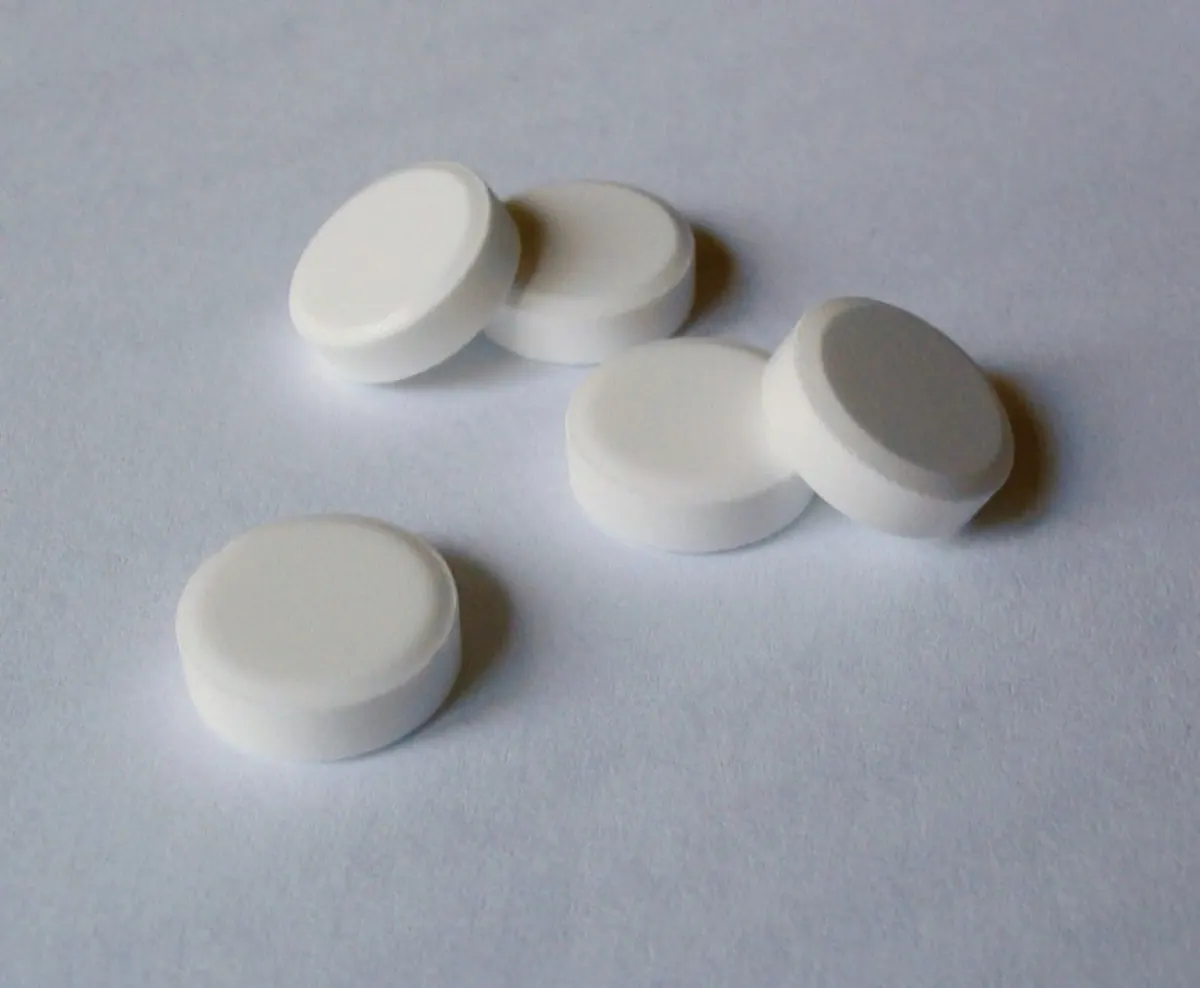
Biochemic tissue salts are twelve mineral compounds. Each one is ground with milk sugar and pressed into a small tablet. A German doctor named Wilhelm Schuessler published the list in 1873, and he said plainly that his system was not homeopathy. On one filed label, a 6X tablet holds about 60 nanograms of mineral and 97.7% milk sugar. So the honest safety question is about the sugar base, not the mineral. This page gives all twelve salts, the dose, and the arithmetic.
What a biochemic tissue salt is
A tissue salt is one of twelve mineral compounds. The mineral is ground with milk sugar, again and again, until very little is left.
Wilhelm Heinrich Schuessler (1821–1898) was a German doctor. He first published his list of twelve in 1873, and it was later expanded into a book, Eine abgekürzte Therapie, which reached its 42nd edition by 1917.
He believed illness comes from a shortage of one of twelve mineral salts inside the cells. Give a very small amount of the missing salt, he said, and the cell corrects itself.
No randomised trial of these salts shows up in the medical literature. The evidence section below prints the exact search, so you can rerun it.
Schuessler said this was not homeopathy
Almost every shop in India files biochemic tablets under homeopathy. Schuessler would have objected.
He called his method biochemistry, grounded in the chemistry of the body, and stated in his 1873 article that it was not homeopathic.
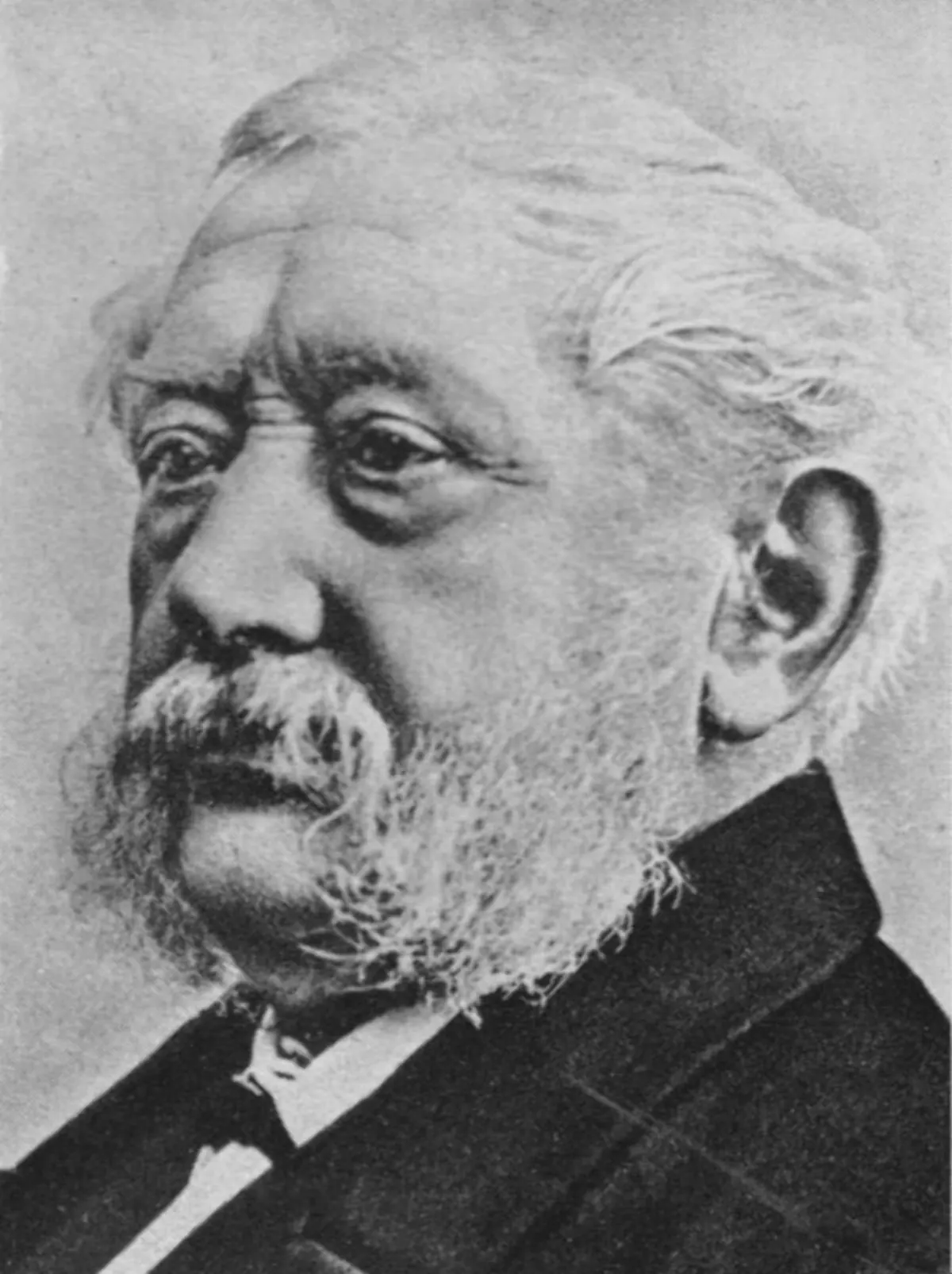
His American editors recorded the same thing. In 1899, Boericke and Dewey wrote that Schuessler "denies… all connection with Homoeopathy, and insists that his method is not based upon the homoeopathic law of cure."
Both authors were homeopaths, and argued the two systems fitted together anyway. That is why the tablets sit on homeopathy shelves today.
There is a sharper irony. " A cell-salt shortage is exactly that kind of material cause.
Kent never engaged with the system either. We searched the full text of his Lectures on Homoeopathic Philosophy on 26 August 2026. Zero hits for Schuessler, tissue salts, cell salts or biochemistry.
Two numbering systems, and why your box may disagree with the internet
The twelve are numbered two different ways, and the lists do not match. This trips up most buyers.
The classical German order is Schuessler's own. It appears in Boericke and Dewey (1899), and German makers still follow it. Many Indian makers number them near-alphabetically by Latin name instead.
| Latin name (box abbreviation) | Classical no. | Indian no. |
|---|---|---|
| Calcarea fluorica (Calc Fluor) | 1 | 2 |
| Calcarea phosphorica (Calc Phos) | 2 | 1 |
| Ferrum phosphoricum (Ferr Phos) | 3 | 4 |
| Kali muriaticum (Kali Mur) | 4 | 5 |
| Kali phosphoricum (Kali Phos) | 5 | 6 |
| Kali sulphuricum (Kali Sulph) | 6 | 7 |
| Magnesia phosphorica (Mag Phos) | 7 | 8 |
| Natrum muriaticum (Nat Mur) | 8 | 9 |
| Natrum phosphoricum (Nat Phos) | 9 | 10 |
| Natrum sulphuricum (Nat Sulph) | 10 | 11 |
| Silicea (Sil) | 11 | 12 |
| Calcarea sulphurica (Calc Sulph) | 12 | 3 |
The rule is one line: ignore the number, read the Latin name. Follow a German chart into an Indian shop and you can walk out with the wrong salt.
Why Calcarea sulphurica is number 12 in one list and number 3 in another
Calcarea sulphurica was the last salt Schuessler added, and the one he later took away.
Boericke and Dewey record it plainly: "In the last years of Dr. Schussler's life this remedy was discarded from his list, leaving only eleven, instead of twelve tissue remedies." German lists still place it at 12, with a note that he removed it. It sits at 12 because it arrived last. Indian lists sort by name, so it lands at 3.
What each of the twelve is classically used for
These indications come from Schuessler, Boericke and Clarke, written down from bedside observation in the 1800s. They are not trial results. They say when a prescriber picks a salt, not what will happen.
The potency column shows what Schuessler himself used. On a German box you will see D instead of X. D means decimal, and it is the same scale.
| Salt | Mineral | Classically used for | Usual potency |
|---|---|---|---|
| Calcarea fluorica | Calcium fluoride | Stony hard glands, veins that have lost stretch, cracked skin, enamel, bony outgrowths | 12X |
| Calcarea phosphorica | Calcium phosphate | Slow teething, slow bone healing, poor growth in children | 6X |
| Ferrum phosphoricum | Iron phosphate | The first hours of fever — flushed face, fast pulse, before any discharge | 12X |
| Kali muriaticum | Potassium chloride | The stage after Ferrum Phos — white or grey coating, thick bland discharge | 6X |
| Kali phosphoricum | Potassium phosphate | Nervous exhaustion, tiredness after mental strain, sleeplessness | 6X |
| Kali sulphuricum | Potassium sulphate | Yellow sticky discharge, scaling skin, worse in a warm room | 6X |
| Magnesia phosphorica | Magnesium phosphate | Cramping pain eased by warmth and pressure — period cramps, colic, neuralgia | 6X |
| Natrum muriaticum | Common salt | Watery discharges, dryness with thirst, cold sores, headache from sun | 6X |
| Natrum phosphoricum | Sodium phosphate | Sour risings, acidity, creamy yellow coating at the back of the tongue | 6X |
| Natrum sulphuricum | Sodium sulphate | Complaints worse in damp weather and near water; bilious symptoms | 6X |
| Silicea | Silicon dioxide | Boils that will not resolve, brittle nails, splinters working out | 12X |
| Calcarea sulphurica | Calcium sulphate | Abscesses already discharging, slow-healing wounds, thick yellow discharge | 6X |
Four warnings no seller prints:
- Ferrum Phos is not a treatment for anaemia. It does not raise haemoglobin. The sum is below.
- Kali Mur has nothing to do with potassium chloride tablets prescribed for low potassium.
- Calc Phos, Mag Phos and Nat Mur are not supplements. They cannot fix a calcium, magnesium or salt shortage.
- Silicea carries a traditional caution about implants and scar tissue. That is old teaching, not a recorded harm.
What is actually inside a 6X tablet
Tissue salts are made by trituration — the mineral is ground with milk sugar, not dissolved in liquid.
Boericke and Dewey give the method: "One part of the drug to nine parts of sugar of milk, for at least one hour. This gives the first decimal trituration." Take one part of that, add nine parts of fresh milk sugar, and grind again. Each step cuts the mineral to one tenth.
Do that six times and you are at one part in a million. That is what 6X means.
Now the real numbers. One filed product label for a Ferrum Phos tablet declares a 60 mg tablet: Ferrum phosphoricum 6X, lactose 58.6 mg, magnesium stearate 1.25 mg. Two facts fall out of that.
- The tablet is 97.7% milk sugar by weight.
- The mineral weighs 60 mg × 10⁻⁶ = 60 nanograms — about one thousandth of a grain of table salt.
German tablets are bigger. A DHU Schüssler tablet declares 250 mg of trituration, again on lactose, so at D6 it carries 250 nanograms. No Indian maker publishes a tablet weight, so treat 60 mg and 250 mg as the range yours sits in.
The base is not always milk sugar. The same product is also filed on a sucrose base — 58.86 mg of icing sugar per 60 mg tablet. So read the ingredient line on your own pack.
6X, 12X, 30X and 200X — what actually changes
On the X scale, a bigger number means more dilute, not stronger.
Each X step divides the mineral by ten. Take the 60 mg tablet above and assume the mineral weighs about 500 grams per mole. These counts are order-of-magnitude, not exact.
| Potency | Dilution | Mineral molecules in one 60 mg tablet |
|---|---|---|
| 6X | one part in a million | about 70 trillion |
| 12X | one part in a trillion | about 70 million |
| 30X | one part in 10³⁰ | about one molecule shared between 14 billion tablets |
| 200X | one part in 10²⁰⁰ | none at all |
The point where the mineral runs out has a name. It is the Avogadro limit, and it falls at roughly 24X, the same as 12C. Multiply Avogadro's number, 6.022 × 10²³, by 10⁻²⁴ and the answer is under one molecule.
So 6X and 12X tablets really do contain the mineral — a microgram or less. 30X and 200X contain none. If your pack says 200X, the sugar base is the only ingredient there in any real quantity. Our homeopathy potency guide covers both scales.
Why Schuessler used 12X for three salts and 6X for the other nine
This is not a strength grading, and no trial has ever compared the two. Schuessler wrote one sentence about it: "I employ the sixth decimal trituration generally. Ferrum phos., Silicea and Calcarea fluor. I usually give in the 12th trituration."
That was written before 1898. Reckeweg's catalogue today sells Nr. 1 Calcium fluoratum, Nr. 3 Ferrum phosphoricum and Nr. 11 Silicea at D12, and the other nine at D6. The same three salts, 127 years later. The shelf reflects inherited habit, not a dose-finding study.
How many tablets to take
Three sources give three different answers. Here they are side by side.
| Source | Adult instruction |
|---|---|
| Filed product label | 1 to 4 tablets, one to four times daily, ages 12 and over |
| Indian boxes and sellers | 4 tablets, four times daily |
| Boericke & Dewey, 1899 | A pea-sized powder hourly in acute illness; 3–4 times daily in chronic |
Another filed label says "Dissolve 4 pellets under tongue 1-3 times per day" for ages 6 and over.
At WeClinic we prescribe inside that range — for most adults, about 4 tablets three to four times a day, with a review date set at the start.
Three points on taking them:
- Let them dissolve in the mouth. Do not swallow them with water.
- Keep a gap around food. DHU says half an hour before or after eating, and for a small child, dissolve the tablet in water first.
- Stop at your review date if nothing has changed.
Doses for children, babies, pregnancy and breastfeeding
Filed labels say children under 12 should take these only under a practitioner's direction, and to ask first if you are pregnant or breastfeeding. One label gives 5 pellets for ages 12 and up, 3 for ages 3 to 11, and says to consult a doctor below age 3.
One line matters more than dosing, and it matters most for babies. Patients with congenital lactase deficiency, galactosaemia or glucose-galactose intolerance must not be given a lactose-containing medicine unless it is strictly necessary. Those rare inherited conditions are the real contraindication.
No trial evidence supports use in pregnancy. "It is very dilute" is a reason not to expect a benefit, not a reason to take something without asking.
Can you take more than one tissue salt at a time?
Yes, and that is what a bio-combination is. But the sugar adds up and the effect does not. Four products at once — a bio-combination plus three single salts — is 64 tablets a day. That is roughly 3.75 g of milk sugar on small tablets, or about 16 g on 250 mg ones. Pick the salt that fits your symptoms instead of stacking bottles.
Side effects of 6X biochemic tablets
Most pages answer this with "no side effects". That is not true. Four things are worth knowing, and none of them is the mineral.
1. The sugar base. It is 97.7% of the tablet on the label we checked. The next section is all about this.
2. The allergy warning on the label. Filed labels say not to use the product if you have ever reacted to it or to any ingredient in it. Lactose monohydrate is declared as milk-derived. Labels also say to stop and ask a doctor if symptoms persist or worsen.
3. Homeopathic aggravation. Classical practice describes symptoms briefly sharpening after a remedy starts. It is a traditional idea with no trial evidence behind it. If it happens, space the doses out and tell your prescriber. Our guide to homeopathy side effects goes further.
4. Delay. This is the harm that matters most. Promoting a tissue salt for a condition that needs proper treatment risks real damage, because it delays the diagnosis. A tablet that does nothing is not harmless if it keeps you from one.
Three worries are not realistic at 6X. The mineral is there in nanogram amounts, so fluorosis from Calc Fluor, iron overload from Ferrum Phos and a salt load from Nat Mur are all myths.
The lactose problem nobody prints on the box
A course means many tablets a day for weeks. So the sugar is worth doing properly.
Take the 60 mg tablet with 58.6 mg of lactose. Four tablets is 234 mg per dose. Four doses a day is about 0.94 g. On 250 mg German tablets it is about 1.0 g per dose and 4.0 g a day.
Now the benchmarks. Most people who are lactose intolerant can handle about 12 grams of lactose — roughly the amount in one cup of milk — with no symptoms or only mild ones. No single limit fits everyone, and medicines are an easy source to overlook. A common labelling threshold is 400 mg per dose: at or above that, anyone told they are lactose intolerant should ask a doctor or pharmacist.
Put the two together and the answer is calm.
- A normal dose on small tablets, 234 mg, sits under the 400 mg threshold and under 8% of the 12 g figure.
- A normal dose on 250 mg tablets, about 1.0 g, crosses it.
- Stacking four products reaches about 3.75 g, or about 16 g a day on the larger tablets. That last figure passes the 12 g benchmark outright.
This matters more in India than in Europe. Babu and colleagues (Am J Clin Nutr 2010;91:140–146) found an abnormal lactose breath test in 78.9% of southern Indians and 57.1% of northern Indians. Lactase non-persistence genotypes ran to 86.8% and 67.5%. Tandon and colleagues (1981) found 66.6% in South India and 27.4% in New Delhi. The two disagree on the northern figure, both used Delhi as their northern centre, and neither measured Kanpur. Either way, it is not rare here.
Ordinary lactose intolerance means loose stools or wind. The hard line is elsewhere. Congenital lactase deficiency, galactosaemia and glucose-galactose intolerance are a real contraindication.
If you have diabetes
The daily sugar load at a normal dose is small — about 0.94 g on small tablets, which is under four calories, or about 4.0 g on 250 mg tablets. A common diabetes warning threshold is 5 g of sugar per oral dose, and a normal biochemic dose is well under it either way.
Read the excipient line, not the marketing. The same remedy is filed on lactose and on 98.1% icing sugar, so "biochemic" tells you nothing about the base. Count tablets across every bottle you take.
Four things sold about tissue salts that are not true
"Ferrum Phos 6X treats anaemia and raises haemoglobin." Do the sum. Sixteen 60 mg tablets a day deliver about 960 nanograms of the iron compound. Even if all of it were pure elemental iron, that is 0.96 micrograms against an adult daily need near 18 mg. About one eighteen-thousandth of a day's iron. One ordinary meal supplies far more. If you think you are anaemic, get a haemoglobin test.
"Tissue salts top up the minerals your cells are short of." The same arithmetic sinks this for calcium, magnesium and potassium. The dose is too small by around five orders of magnitude to mean anything nutritionally. Schuessler's own theory is what fails here.
"Higher potency means stronger, so use 200X for something serious." A 200X tablet holds less of the mineral than a 6X, not more. Past roughly 24X it holds none.
"Biochemic medicines have no side effects and no drug interactions." The label itself warns about allergic reaction to any ingredient, and "no interactions" has never been tested. Absence of study is not proof of safety.
Bio-combinations 1 to 28
A bio-combination is several of the twelve salts pressed into one tablet and sold under a disease name. Indian makers number them 1 to 28, mostly at 3X with some 6X.
Schuessler did not make them. Manufacturers assembled them later. He chose one salt at a time, matched to the person. A fixed mixture handed to everyone with the same diagnosis is the opposite of his method.
No trial evidence exists. We searched Europe PMC, the biomedical literature database, on 26 August 2026 for "bio-combination" AND homoeopathy. It returned zero records.
That matters most for the ones named after serious illness. No. 7 is sold for diabetes and No. 2 for asthma — exactly the long-term conditions the science reviews say homeopathy should not be used for.
What the evidence actually shows
There is no reliable clinical-trial evidence that homeopathy is effective for any condition, and that includes the tissue salts.
We searched Europe PMC on 26 August 2026 for "Schuessler salts" OR "Schussler salts" OR "tissue salts" OR "biochemic remedies". It returned 46 records. Not one is a randomised controlled trial of the salts. You can rerun that search yourself.
The major independent reviews all land in the same place. There is little evidence supporting homeopathy as an effective treatment for any specific health condition, and no known disease for which there is reproducible evidence that it works beyond placebo. The largest of those reviews assessed 57 systematic reviews covering 176 studies and found no condition with reliable evidence, adding that homeopathy should not be used for conditions that are chronic, serious or could become serious.
Our position at WeClinic. We prescribe on classical indications and clinical experience, alongside conventional care and never instead of it. We do not promise cures.
When to stop and see a doctor
Stop self-treating and get medical assessment if any of these apply.
- Fever above 39°C, or fever lasting more than a few days
- Chest pain, or breathlessness at rest
- Blood in stool, urine or vomit
- A lump that is growing, hard or fixed
- Weight loss you cannot explain
- A wound or ulcer that will not heal
- Suspected anaemia — get a haemoglobin test, not a Ferrum Phos bottle
- Any worrying symptom in a baby
Homeopathy must never delay a diagnosis.
Talk to a homeopath before you buy your next bottle
If you are taking biochemic tablets and nobody has explained them, a consultation is worth more than another bottle.
Call or WhatsApp +91 7905136461, or book an online consultation. We consult by video and phone across India and deliver medicines to your door. Packages run from about Rs 1,600 to Rs 5,000 by condition, and you are told the price first.
Our head clinic is at 3/84, F Block, Panki, Kanpur, open 10:00 AM to 9:00 PM daily, closed Monday. See our doctors, or read how to pick the best homeopathic doctor in Kanpur. Bring your bottle — we need the Latin name on the label.
Frequently Asked Questions
Does Calcarea Fluorica 6X have any side effects?
What is the difference between Calcarea Fluorica 6X and 12X?
Is Calcarea Fluorica 200X stronger than 6X?
Does Ferrum Phosphoricum 6X increase haemoglobin or cure anaemia?
How many biochemic tablets should I take at one time?
Can I take two or three biochemic medicines together?
Do biochemic tablets contain lactose, and what if I am lactose intolerant?
Are biochemic tablets safe for diabetics?
Why does my box say Calcarea Sulphurica is number 3 when other lists say it is 12?
Can children and babies take biochemic tablets?
Is it safe to take biochemic tablets every day for months?
Is biochemic medicine the same thing as homeopathy?
Can I take biochemic tablets along with my blood pressure or thyroid medicine?
Does Natrum Muriaticum 6X raise blood pressure or cause water retention?
How long do biochemic tablets take to work?
What happens if I swallow too many biochemic tablets by mistake?
Have questions about your symptoms? Talk to a WeClinic™ homeopathic doctor, free.
Call Now - Free Consultation