
Kali Muriaticum 6X Uses: White Mucus, Dose, Side Effects

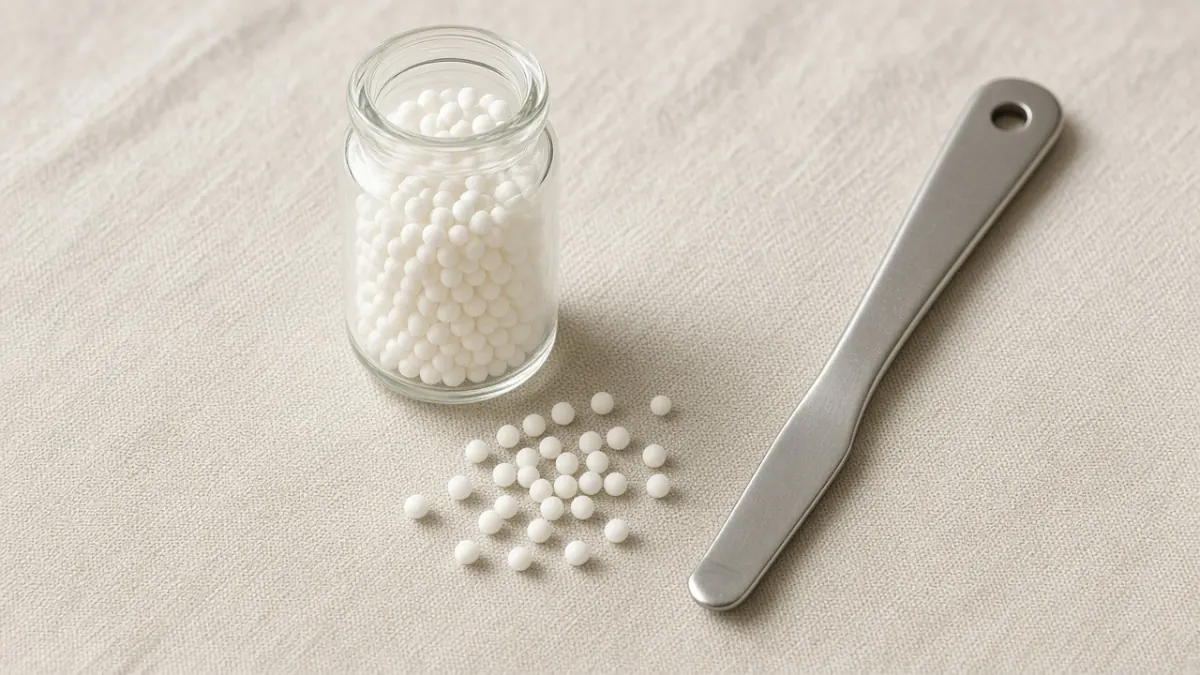
Kali muriaticum 6X is Schüssler's tissue salt of potassium chloride, classically given in the second stage of a cold — thick white or grey mucus, a blocked Eustachian tube, a tonsil with a white coat. It is not a Slow-K tablet. A 6X holds nanograms of KCl. It cannot treat low potassium and cannot cause hyperkalemia. Ear pain with fever still needs a doctor.
This article is for people searching kali muriaticum 6x uses, Kali Mur 6X, or tissue salt no. 5. It is not first aid for a red, bulging eardrum in a child, or for strep throat.
Kali Muriaticum at a glance
| Item | Detail |
|---|---|
| Full name | Kali muriaticum (potassium chloride) |
| Also written | Kali Mur, Kali mur., KCl 6X, cell salt #5 |
| Chemical identity | KCl — the same salt as dietary potassium chloride, not the same dose |
| How it is made | Trituration with lactose; not a plant mother tincture |
| Common Indian forms | Biochemic 3X, 6X, 12X, 30X; globules 30C, 200C |
| Main classical uses | White/grey catarrh, blocked ears, white-coated tonsils, white dandruff |
| Keynote | Second stage after Ferrum phos: fibrinous, white, bland mucus |
| Usual home potency | 6X, about 4 tablets, 3–4 times daily, short course |
| Safety in one line | Not a potassium drug; lactose and delayed care are the issues |
What Kali Muriaticum is
Kali muriaticum is potassium chloride used as a biochemic and homeopathic medicine. Schüssler numbered it 5. Boericke and Dewey put it where Ferrum Phos leaves off: the inflammatory process has moved from dry heat to white, grey, fibrinous exudate.
Indian bottles print Kali Mur 6X, Kali muriaticum 6X, or #5 Kali Mur. US OTC labels (for example Hyland's Kali Mur 6X on) list cold symptoms, sore throat and runny nose, and the standard disclaimer: traditional homeopathic practice, not FDA evaluated.
It is not the potassium chloride tablet a physician prescribes for hypokalemia. Those doses are measured in milliequivalents. Kali Mur 6X is not in that category. Pages that warn of kidney failure, arrhythmia and hyperkalemia from homeopathic Kali Mur have copied the data sheet of material KCl onto a nanogram trituration. Our biochemic tissue salts guide is blunt: Kali Mur has nothing to do with those tablets.
A “Kali muriaticum mother tincture” is not a pharmacopoeial plant Q. KCl is a salt. It is triturated. If a shop sells Kali Mur Q, treat the label as confused.
What the evidence says
There is no reliable trial that Kali muriaticum clears sinus mucus, opens the Eustachian tube, shortens tonsillitis, or treats glue ear. The does not support oral homeopathic medicines for children's acute respiratory infections.
So the uses below are classical pictures, useful for choosing a bottle only if you already understand they are not antibiotics.
What Kali Mur is classically used for
One colour runs through the old books: white or grey, thick, not yet yellow.
Nose and sinus. Stuffy cold with thick white discharge; frontal heaviness; bland rather than burning mucus. Yellow-green, offensive discharge is a different salt (Kali sulphuricum or Hepar).
Ears. The famous biochemic use: blocked Eustachian tube, crackling on swallowing, a feeling of cotton wool, white discharge. Boericke mentions deafness from swelling of the Eustachian tube. That is not a substitute for examining a child with ear infection and fever. Glue ear that lasts weeks needs ENT, not months of 6X.
Throat. Grey-white coat on tonsils; sore throat with white specks; thick white hawking. Bacterial tonsillitis with high fever and pus still needs a clinician. Hepar is the splinter-pain, chilly, touch-intolerant picture.
Mouth. White ulcers, oral thrush-like coats, a thick grey-white tongue. Oral thrush in a baby or in someone on inhaled steroids needs medical treatment, not a tissue salt as the antifungal.
Chest. Cough with thick white phlegm that is hard to raise. Rattling white mucus. This is not pneumonia. Breathlessness, high fever, or rusty sputum needs a hospital, not Kali Mur.
Skin and scalp. White flaky dandruff; some old lists include white-scale eruptions. Dandruff that is thick and oily is often seborrhoeic dermatitis — ketoconazole or a similar wash has evidence. Kali Mur does not.
Joints. Occasional biochemic use for white-swelling around a joint. A hot, red, feverish joint is septic until proven otherwise.
Kali Mur 6X vs 12X vs 30
| Potency | Dilution | Typical use | Repeat |
|---|---|---|---|
| 6X | 1 in 1,000,000 | The bottle most Indians buy for white catarrh | 4 tablets, 3–4 times daily, a few days |
| 12X | 1 in 1,000,000,000,000 | Same picture, more dilute | Same tablet count |
| 30X | Past a realistic molecule | Maker-dependent biochemic use | Short course |
| 30C | No measurable KCl | Acute globule prescribing | 3–5 globules, 2–3 times, then stop |
| 200C | Empty of salt | Constitutional, not a cold | Single dose, practitioner |
Kali muriaticum 6X uses is the query that matches the tissue-salt stage. Kali muriaticum 30 is usually 30C globules — same name, different product.
How to take it
- Indian biochemic convention: about 4 tablets of 6X, three to four times a day, dissolved in the mouth, 15–30 minutes from food and mint. That is the range we use in the tissue salts guide.
- Some US labels: one tablet three times daily (ages 6+).
- Another older Hyland's direction: 4 tablets (ages 7–12), 2 tablets (ages 2–6), three times a day.
- Follow your pack. Set a review at 48–72 hours for an acute cold. Stop if the ear is worse, fever climbs, or breathing changes.
- Do not stack Ferrum Phos + Kali Mur + a bio-combination + a 30C of something else. The sugar adds up; the effect does not.
Side effects — drop the potassium scare
Older WeClinic copy, and many aggregator pages, listed hyperkalemia, kidney strain, heart-rhythm risk and “avoid if you take diuretics.” That is the safety sheet of prescription potassium chloride, not of Kali Mur 6X.
| Claim | Verdict |
|---|---|
| 6X causes high blood potassium | Not realistic. Nanograms of KCl versus milliequivalent medical doses |
| Avoid in kidney disease because of potassium retention | The mineral load is not the issue. Delay in treating a real infection is |
| Safe because “no side effects” | False. Lactose, excipient allergy, and delayed antibiotics all exist |
| Can replace antibiotics for bacterial tonsillitis or otitis | No |
Lactose intolerance, galactosaemia, and stacked biochemic regimens are covered in the side-effects article. Liquid potencies add ethanol.
Kali Mur compared with related remedies
| Remedy | Discharge / stage | Choose it when |
|---|---|---|
| Ferrum phos | None yet; dry heat | First hours of fever/cold |
| Kali mur | White/grey, thick, bland | Second stage; blocked tube; white coat |
| Kali sulph | Yellow, slimy, worse in a warm room | Later catarrh, scaling |
| Hepar sulph | Thick, offensive, splinter pain | Chilly, cannot bear touch |
| Pulsatilla | Yellow-green, bland, changeable | Clingy, worse in a warm room, better open air |
| Hydrastis | Thick, ropey, yellow, post-nasal | Chronic catarrh, not the white stage |
When to see a doctor
- ear pain with fever, swelling behind the ear, or a child under two who is very unwell
- sore throat with drooling, muffled voice, stiff neck, or a rash
- breathlessness, chest pain, coughing blood, or oxygen-level worry
- sinus pain with swelling of the eye or forehead, or confusion
- symptoms lasting more than 10 days, or a cold that sharply worsens after it had started to improve
- hearing that does not return after the cold has gone
Frequently Asked Questions
What is Kali muriaticum 6X used for?
Is Kali muriaticum the same as potassium chloride tablets?
What is the dose of Kali muriaticum 6X?
Can Kali muriaticum 6X be taken daily?
Does Kali mur help ear infection and glue ear?
Kali mur vs Ferrum phos — which first?
Are there side effects of Kali muriaticum 6X?
Is Kali muriaticum safe in pregnancy and for babies?
What is Kali muriaticum 30 used for?
Can I take Kali mur with antibiotics?
Does Kali muriaticum treat tonsillitis?
How long does Kali muriaticum take to work?
Have questions about your symptoms? Talk to a WeClinic™ homeopathic doctor, free.
Call Now - Free Consultation