
Mother Tincture (Q): Drops, Alcohol and Safety
 Dr. Dheeraj Sharma
Published August 26, 2026
Dr. Dheeraj Sharma
Published August 26, 2026
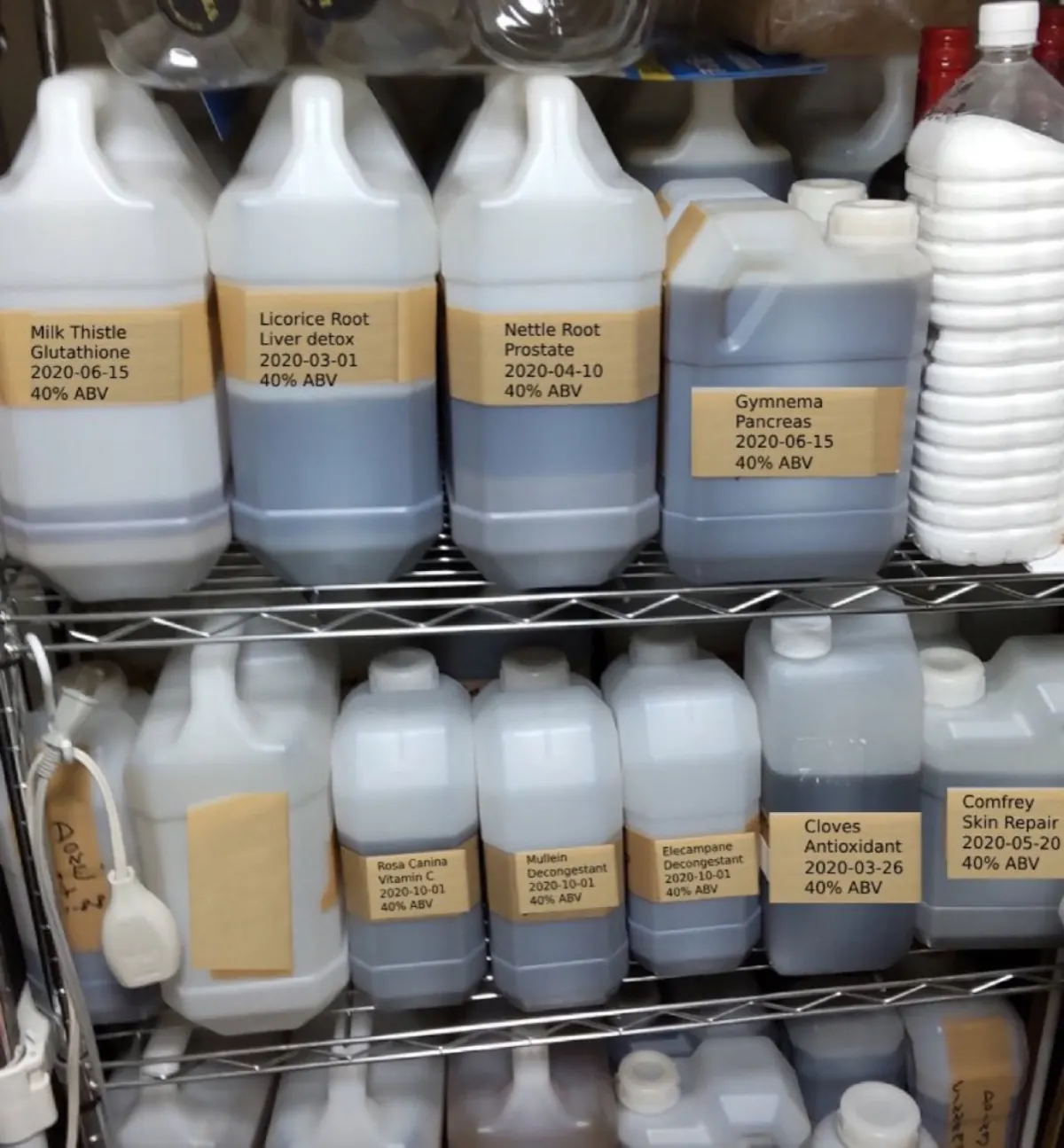
A bottle marked Q is a mother tincture. It is not a homeopathic dilution. It is a full-strength alcohol extract of the plant, and the plant's chemicals are still in it. A usual adult dose is 5 to 10 drops in half a cup of water, two or three times a day. But the right number depends on which plant is in the bottle. A few of the ones sold most often in India are genuinely strong medicine.
On safety, briefly: most tinctures cause nothing worse than a burning throat. A few hold real drug molecules — Rauwolfia contains reserpine, a blood pressure drug — and the alcohol matters for children.
What the Q on your bottle actually means
Q means mother tincture. Some labels print it as Ø. It is the first liquid made from the raw plant, before any dilution happens. The plant is soaked in alcohol, then pressed and filtered.
Nothing is diluted at any stage. The ratio of plant to alcohol differs by plant, and your bottle will not print it.
A mother tincture is not a homeopathic dilution. It is a herbal extract in homeopathic packaging. So questions about dose, side effects and interactions are fair for Q. They are not, in the same way, for a 30C pill.
Q is the strongest form on the shelf, not the weakest
Potencies come on two scales. On the X, or decimal, scale each step dilutes 1 part in 10, so 6X is one part in a million. On the C, or centesimal, scale each step dilutes 1 part in 100.
Near 12C — about the same as 24X — you cross a line. Past it, no molecule of the original substance is left. Chemists call this the Avogadro limit, and our potency guide works through the arithmetic.
" One part juice, one part alcohol — a drug strength of one half, and no potentising step at all.
Q sits far on the other side of that line. Nothing has been removed, so every drop still carries the plant's own chemistry. That is why "homeopathy has no side effects" cannot be carried across to Q — the molecules are still in it. See homeopathy side effects.
| Form | Plant molecules left? | Can it act like a drug? |
|---|---|---|
| Q (mother tincture) | Yes, at full strength | Yes |
| 6C | Yes, a very small amount | Barely |
| 12C | At the limit | No |
| 30C | None | No |
How to use a mother tincture: how many drops, in how much water, how often
For most mother tinctures the common adult dose is 5 to 10 drops in half a cup of water. Take it two or three times a day. Some go higher: Boericke gives Crataegus as "one to fifteen drops."
That number is classical convention plus clinical practice, not a dose worked out from trials. Three things change it: which plant is in the bottle, who is taking it, and what else they take.
One drop is about 0.05 ml
Pharmacy convention counts 20 drops to 1 ml, so one drop is about 0.05 ml. Every number on this page rests on that assumption.
Real tinctures behave differently. Alcohol runs thinner than water, so a bottle often gives two or three times more drops per millilitre — perhaps 40 to 60 instead of 20. That would make each drop half the size, or less.
Dropper size and the angle you hold it matter too. So treat a counted drop as rough. Doubling the dose "just to be safe" is a real increase, not a rounding error.
Put the drops in half a cup of water. Undiluted tincture is strong alcohol and it burns the mouth and throat. Sip it, do not gulp it. Adding water does not make it "more homeopathic" — potency is a different process.
Using one on the skin. Some tinctures are applied locally, thinned in water or in a carrier oil. Never apply an undiluted tincture to broken skin, and never put one in the eye. Patch test a small area and wait a day before using it properly.
Before or after food?
The usual convention is a gap of about 15 to 30 minutes from food, strong flavours and other medicines. Most websites copy that rule onto every remedy without checking, and for at least one common tincture it is wrong. Clarke wrote of Crataegus: "The drug may cause nausea when given in the tincture unless given during or immediately after a meal." So if a tincture makes you feel sick, taking it with food is the correct fix, not a mistake.
How long should you keep taking it?
Some websites say to keep going "till the person gets cured completely." That is poor advice for a material dose of a plant. The liver problems reported with these plants took time to appear — 3 to 8 weeks for Centella, 1 to 6 months for Chelidonium. Build-up is the pattern, and long-term safety data barely exists. For hawthorn, no study has tested safety beyond about 16 weeks.
Set a review point a few weeks out. If nothing has changed by then, stop and get reviewed. Do not raise the dose because it has not worked.
How much alcohol is in a mother tincture
Mother tinctures usually run 60% to 90% alcohol by volume — stronger than wine, stronger than most spirits. Treat that as an approximate trade range. We could not confirm a figure for any Indian brand. Your label almost certainly does not print one.
How much alcohol is in one dose
Here is the sum, so you can redo it with your own numbers. Ethanol is taken as 0.8 g per ml, with beer counted as 4% alcohol by weight and wine as 10%.
Take 15 drops of a 90% tincture. On the 20-drops-per-ml convention that is 0.75 ml. Multiply by 0.90, then by 0.8 g/ml. You get 540 mg of ethanol — about 13.5 ml of beer, or 5.4 ml of wine.
At 60% it is 360 mg. Three times a day, that 90% tincture gives roughly 1.62 g of alcohol daily, about 40 ml of beer. On a finer dropper, all of these figures fall by half or more.
For a 70 kg adult, one 540 mg dose is 7.7 mg per kg. The threshold below which a medicine needs no alcohol warning at all is 15 mg/kg per dose. So for a healthy adult the alcohol in a normal dose is small. Not zero, and it adds up across the day, but small.
The same dose is not the same for a child
These thresholds are set by body weight, not by percentage. The table uses 15 drops as the adult example, the top of the range some tinctures are given at.
| Who is taking it | Dose of a 90% tincture | Alcohol per kg | Warning band |
|---|---|---|---|
| Adult, 70 kg | 15 drops | 7.7 mg/kg | Below the warning line |
| Child, 15 kg | 5 drops | 12 mg/kg | Below the warning line |
| Child, 15 kg | 10 drops | 24 mg/kg | Warning band |
| Child, 15 kg | 15 drops | 36 mg/kg | Warning band |
These figures assume the pharmacy standard of 20 drops per ml. If your dropper gives 40 to 60 drops per ml, divide them by two or three.
The middle band runs from 15 up to 75 mg/kg per dose. A medicine landing in it should carry an alcohol warning.
So on that assumption, the dose that is trivial for a parent can cross a warning line for their child.
Say a parent takes 15 drops. Half of that is about 7 or 8 drops. For a 15 kg child that still works out at around 18 mg per kg — over the 15 mg/kg line.
On a finer dropper it may come out under the line instead. You cannot tell which dropper you have, so halving by eye is not a safe way to set a child's dose. A child's dose should be set by someone who knows the child's weight.
Who should take the alcohol seriously
- Children, for the reason above.
- Pregnancy and breastfeeding. There is no safety data for mother tinctures in pregnancy. No data is not the same as safe.
- Liver disease, and anyone told to avoid alcohol completely — pancreatitis included.
- Anyone in recovery from alcohol dependence. You deserve the real number so you can decide for yourself.
- Anyone on metronidazole or disulfiram — a real interaction, covered below. If any medicine you take came with "do not drink alcohol on this", ask before you take a tincture.
If the alcohol is the problem and the remedy is not, there is another form. Medicated pills and biochemic tissue salts are dispensed on lactose tablets rather than in a bottle of spirit. Ask for the remedy that way, and still check the label, because some pill dispensing uses a little alcohol.
Which mother tinctures need real care
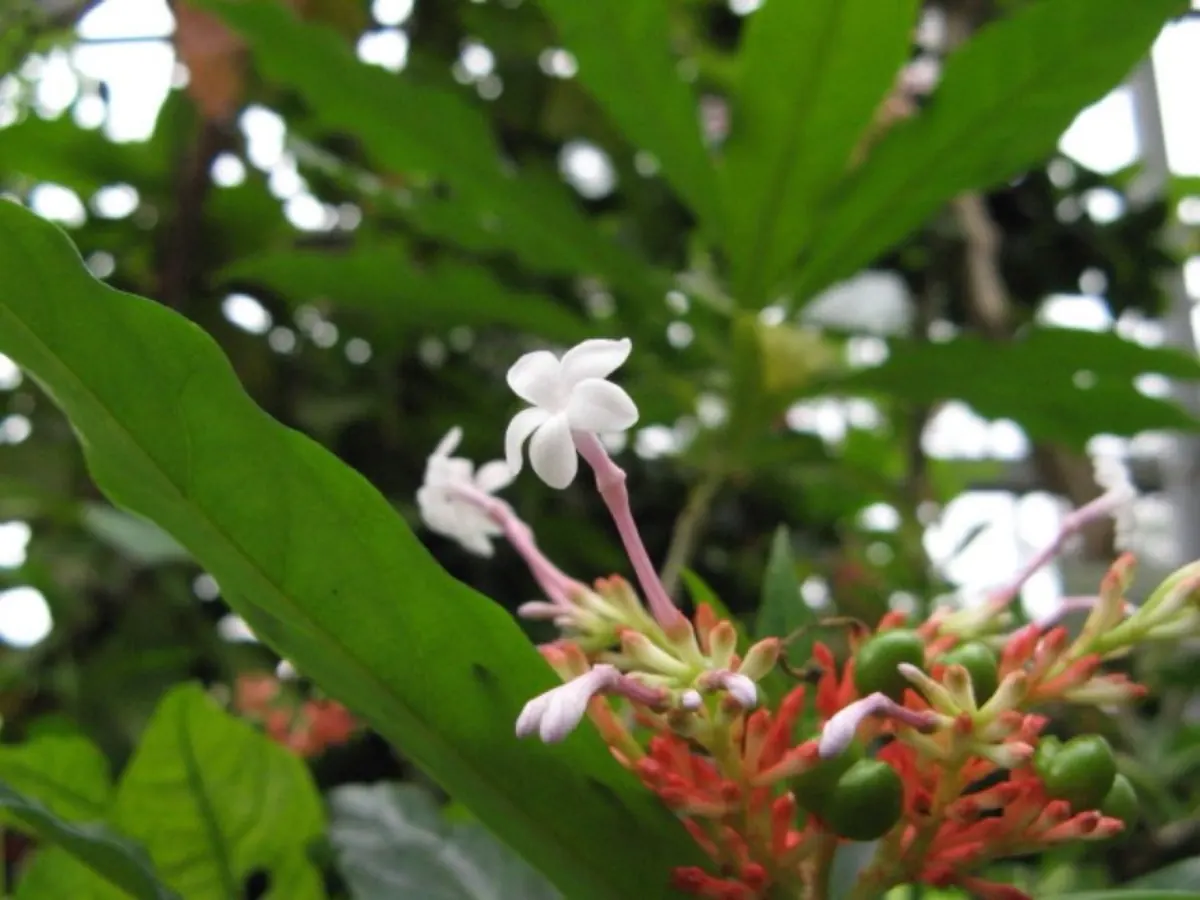
Most tinctures are uneventful. A handful are not.
| Mother tincture | Why it needs care | Take extra care if you |
|---|---|---|
| Rauwolfia serpentina | Contains reserpine, a real BP drug | Have low mood, or take BP medicine, digoxin or quinidine |
| Crataegus oxyacantha | Lowers the pulse and the blood pressure | Take heart or BP medicine, or blood thinners |
| Syzygium, Gymnema, Cephalandra | Bring blood sugar down | Take diabetes tablets or insulin |
| Ginkgo biloba | Adds to bleeding risk | Take warfarin or another blood thinner |
| Chelidonium majus | Documented liver injury | Have any liver problem |
| Hydrocotyle asiatica | Documented liver injury | Have any liver problem |
| Justicia adhatoda | Boericke withdrew his own tincture dose | Are pregnant |
| Jaborandi | Contains pilocarpine, a prescription drug | Have asthma or heart disease, or take beta-blockers |
Rauwolfia serpentina (sarpagandha) is the headline one. Its alkaloid, reserpine, is a genuine blood pressure drug that is still prescribed as one. As a drug it is contraindicated in anyone with a history of depression. That depression can hide behind physical complaints, can last months after stopping, and has been severe enough to lead to suicide. MAO inhibitors are to be avoided, and care is needed with digitalis or quinidine.
A reserpine tablet holds 0.25 mg. But how much reserpine is in a bottle of Rauwolfia Q is not established, and it seems to differ between makers. So nobody can tell you your drops equal a tablet — or that they are harmless. Several sites push it for anxiety and insomnia, the riskiest framing possible. If your mood drops, stop and speak to your doctor. Reserpine was only isolated in 1952, and Rauwolfia appears nowhere in Clarke (1900) or Boericke (1922). See our Rauwolfia serpentina guide.
Crataegus oxyacantha (hawthorn) is sold as a gentle heart tonic. Boericke's opening line says otherwise: "Produces giddiness, lowered pulse, and air hunger and reduction in blood-pressure." Memorial Sloan Kettering lists hypotension and arrhythmia as toxicity risks, and advises avoiding it in pregnancy. On the digoxin worry: hawthorn's alkaloids look like digoxin, but the two were safely given together in one small randomised trial. The real concern is an added effect on a heart already on medication. Boericke's dose is "one to fifteen drops"; Clarke's is 5 drops. Start low, and stop if you get giddy on standing. See our Crataegus page.
** People take these while already on metformin or insulin. Nobody has trialled them alongside prescription diabetes drugs. So this caution is reasoning, not a documented interaction. Two things pushing sugar down together can push it too far. The effect can be real. One trial added Terminalia arjuna bark powder to metformin and cut fasting blood sugar by about 61 mg/dL over 12 weeks. That trial used capsules, not a tincture. Boericke's Syzygium entry holds an oddity too: in the proving it "has an immediate effect of increasing the blood sugar." Test your sugar more often, not less. See Syzygium jambolanum and our diabetes guide.
Ginkgo biloba matters for bleeding. Taking Ginkgo alongside warfarin is linked to a higher risk of major bleeding than warfarin alone. Like Rauwolfia, it is absent from both Clarke and Boericke. See our Ginkgo biloba page.
Chelidonium majus is the uncomfortable one, because people take it for the liver. Greater celandine is a recognised, if uncommon, cause of clinically apparent liver injury. Onset runs 1 to 6 months and it looks like acute viral hepatitis. One review collected 48 cases, Germany added a warning label, and restarting after a reaction is advised against. Clarke prescribed it "in material or semi-material doses" for liver cases, and noted the raw juice "causes vesication when applied to the skin." See Chelidonium majus.
Hydrocotyle asiatica (gotu kola) is the most searched of the lot, and two facts about it go missing everywhere. Boericke's dose line reads "First to sixth potency" — he does not recommend the tincture at all. And the same plant, Centella asiatica, is a recognised though rare cause of clinically apparent liver injury. Onset ran 3 to 8 weeks. In one case ALT and AST reached 30 and 26 times the upper limit of normal. The page ranking first for this search says the tincture "does not damage the liver." That is not supported. See Hydrocotyle asiatica.
Justicia adhatoda (vasaka) carries the most telling evidence of all, because it comes from inside homeopathy. Boericke's 8th edition of 1922 gives the dose as "Tincture and third potency." The later edition reads: "Dose.—Third potency and higher. Severe aggravation have been noticed from lower potencies." He withdrew the tincture and put a warning in its place. Avoid it in pregnancy. See our Justicia adhatoda page.
Jaborandi (Pilocarpus) contains pilocarpine, sold elsewhere as a prescription drug. Boericke contraindicated it "in heart failure, and in post-puerperal uraemia, and in senile cases", and gave the third potency, not the tincture. As a prescription tablet, pilocarpine is contraindicated in uncontrolled asthma. At 10 mg three times daily it causes sweating in 68% of patients against 9% on placebo, and it interacts with beta-blockers. Most people buy it for hair fall and put it on the scalp. Nobody has measured how much pilocarpine gets through the scalp, so those tablet figures cannot be carried across. Patch test first. And never put a tincture in your eye — that advice is harmful, because this is a 60% to 90% alcohol solution. See our Jaborandi page.
Berberis aquifolium is the counter-example. Boericke's dose line reads: "Dose.—Tincture in rather material doses." Take it for a skin complaint and you are doing what the text intends. One caution still belongs here. Berberine, the main alkaloid of Berberis species, can displace bilirubin in a newborn, so this is not one to use in pregnancy or while breastfeeding. The question is never "is Q safe". It is "is Q the form this remedy calls for?"
The ones with no data. Cephalandra indica and Cydonia vulgaris sell well, and we found no dependable safety data for either. Neither is in Clarke or Boericke, and Cydonia's sexual-health claims are unsupported. Acid phosphoricum is a chemical, not a plant, so nothing here about plant toxicity applies. With Aspidosperma for breathlessness and Holarrhena (kurchi) for dysentery, the risk is not the plant. It is treating at home a symptom that needed assessing.
Mixing a tincture with your regular medicines
Metronidazole is the interaction nobody mentions. It is prescribed constantly in India for gut infections. Oral metronidazole is associated with a disulfiram-like reaction to alcohol — abdominal cramps, nausea, vomiting, headaches and flushing. Alcohol should be stopped during treatment and for three days after. A mother tincture is alcohol, whichever plant is in the bottle.
The rest follow the plant:
- Blood pressure medicine with Crataegus or Rauwolfia.
- Digoxin, quinidine or an MAO inhibitor with Rauwolfia. Avoid Rauwolfia too in anyone with a history of depression.
- Beta-blockers with Jaborandi.
- Diabetes tablets or insulin with Syzygium, Gymnema or Cephalandra.
- Warfarin with Ginkgo.
Two rules. Take the bottle to your appointment, to your homeopath and your doctor. And never stop a prescribed medicine because a tincture seems to be working. Keep measuring instead.
Reading the label on your bottle
Your bottle probably does not print its alcohol percentage, and that is legal. India's Drugs Rules 1945 require alcohol content by volume on a homoeopathic label. Then a proviso undoes it: containers of 30 mL or less need not state it.
That is also why it is always a 30 ml bottle. Rule 106B bars any homoeopathic medicine above 12% alcohol from packs larger than 30 mL, except to hospitals at up to 100 mL. Tinctures are far above 12%, so 30 mL is the legal retail maximum. The same threshold caps the bottle and cancels the labelling duty. Bottle size is an artefact of alcohol law, not a decision about your dose.
Check the batch number and the licence number. The rules require both on a mother tincture label. One Indian study screened 456 liver-injury cases and found nine caused by homeopathic remedies. Chemical analysis of 15 formulations turned up industrial solvents, corticosteroids, antibiotics, sedatives, synthetic opioids and heavy metals. Four of the nine patients died. If either number is missing, do not take it.
Reports in 2026 say the rules on medicines above 12% alcohol in packs over 30 mL have been tightened. How that applies to homeopathic products is not settled, and we will update this page when it is.
Three things you will read everywhere that are not true
"Homeopathic medicines have no side effects." Whatever you make of that for a 30C pill, where no molecules remain, it is a category error for a tincture. Q is the one form where the plant's alkaloids are still in the bottle.
"It is natural, so it is gentle." Reserpine is natural. Pilocarpine is natural. Both are prescription drugs.
"If a little helps, more helps faster." Boericke revised his own Justicia dose between editions, dropping the tincture and writing that "severe aggravation have been noticed from lower potencies." A classical author withdrew a recommendation because people were harmed — evidence from inside homeopathy's own literature, not an attack from outside it.
When to see a doctor now
Do not treat any of these at home with a tincture:
- Yellow eyes or skin, dark urine, pale stools, or an ache under the right ribs — stop the tincture and get a liver blood test.
- Chest pain, or breathlessness at rest or lying flat.
- Blood in your stool or vomit.
- Fainting or giddiness on standing while on Crataegus or Rauwolfia.
- Low mood, hopelessness, or thoughts of harming yourself on Rauwolfia — stop it and get help the same day.
- A blood pressure or sugar reading far outside your usual range.
- A child with high fever, or dysentery that is not settling.
- A wheeze getting worse — with Jaborandi, stop it.
What the evidence actually shows
Plainly: there is no reliable clinical-trial evidence that homeopathy is effective for any health condition. The largest independent review of the evidence covered 57 systematic reviews and 176 studies. It concluded that there are no health conditions for which there is reliable evidence that homeopathy is effective, and that homeopathy should not be used for conditions that are chronic, serious, or could become serious. Other major reviews land in the same place.
There is an asymmetry here, and it is why this page exists. For mother tinctures the harms are better documented than the benefits, because the plants contain real drugs. WeClinic prescribes on classical indications and clinical experience, alongside conventional care and never in place of it. Our advice is simple: tell your practitioner what you take, and keep taking your prescribed treatments.
Bring the bottle in
If nobody explained the bottle you were given, bring it to us with your current prescriptions.
We will tell you three things. Whether Q is the right form for that remedy at all. What the dose should be for your weight and your case. And whether it clashes with anything else you take.
WeClinic Homeopathy has 20+ registered homeopathic doctors. Book an online video or phone consultation from anywhere in India, with medicines sent to your door, or call and WhatsApp +91 7905136461. Our Panki clinic in Kanpur is open 10:00 AM to 9:00 PM daily, closed Monday. Packages usually run from about Rs 1,600 to Rs 5,000, depending on the condition.
If you have been on a tincture for weeks with nobody checking it, do it now.
Frequently Asked Questions
What does the Q on a homeopathy bottle mean?
Is a mother tincture the same as an LM or fifty-millesimal potency?
What is the difference between a mother tincture and 30C?
How many drops of mother tincture should I take in a day?
How much water should I mix my mother tincture in?
Should I take mother tincture before or after food?
How long can I keep taking a mother tincture?
How much alcohol is there in a mother tincture?
Can I give mother tincture to my child, and how many drops?
Is mother tincture safe during pregnancy or while breastfeeding?
Can a mother tincture damage the liver?
Can I take a mother tincture along with my BP or sugar tablets?
Why do mother tinctures only come in a 30 ml bottle?
Will a mother tincture show up on a breathalyser test?
Can I take two or three different mother tinctures at the same time?
Does mother tincture expire, and how should I store it?
Have questions about your symptoms? Talk to a WeClinic™ homeopathic doctor, free.
Call Now - Free Consultation