
Chelidonium Majus 30 & Q: Uses, Side Effects, Liver Risk

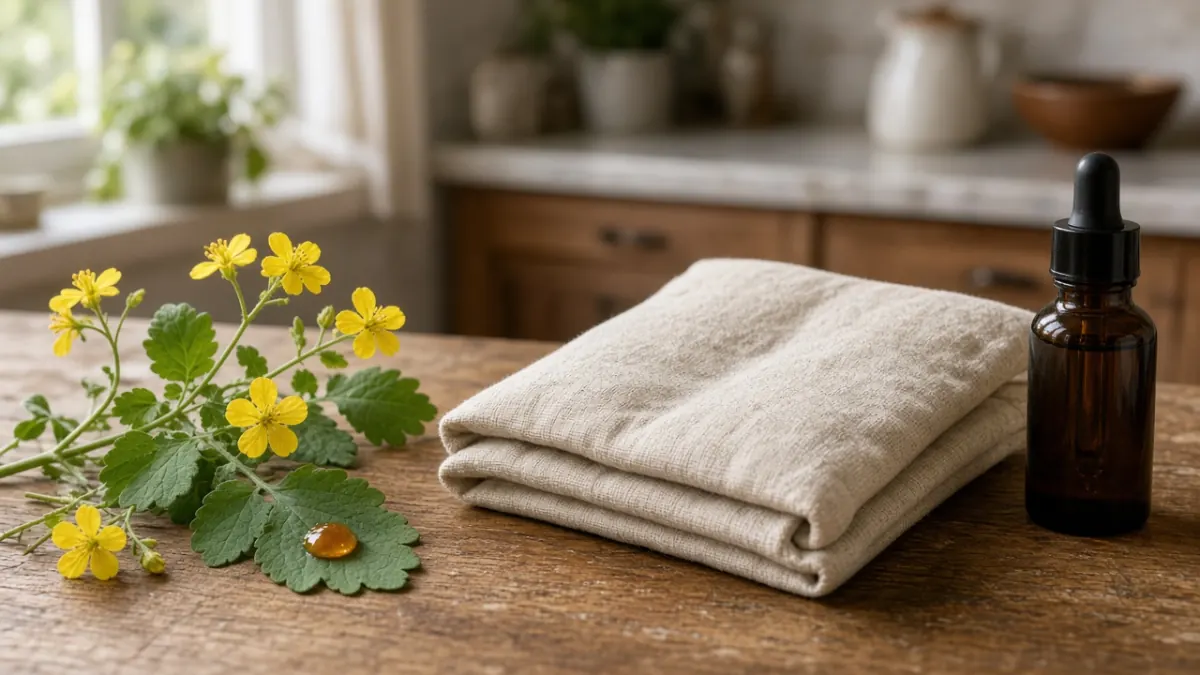
Short answer: Chelidonium majus (greater celandine) is a classical homeopathic remedy for a right-sided liver and gallbladder picture: constant pain under the lower point of the right shoulder blade, a yellow-coated tongue, a bitter taste, pale stools, and a heavy, sluggish feeling. It is sold as 30C pellets (no measurable plant left), as a mother tincture (Q) (a real plant extract), and as raw celandine capsules and teas (herbal products, not homeopathy). The herb and the tincture have been linked to acute liver injury, and no good trial shows that Chelidonium dissolves gallstones or treats jaundice. Yellow eyes, dark urine, or right-upper-abdominal pain need a doctor and tests (LFT, ultrasound) first.
This article is for searches like chelidonium majus, chelidonium 30 uses, chelidonium Q / mother tincture, chelidonium majus benefits, chelidonium majus side effects, chelidonium for liver / gallstones / right shoulder blade pain, and celandine. YMYL: calling a plant that can hurt the liver a “liver tonic” is the wrong way round, and a 30C vial and a celandine capsule are not the same exposure.
Author: Dr. Dheeraj Sharma, BHMS. Based on: Boericke, Chelidonium majus, paraphrased; and published case reports and reviews of liver injury linked to greater celandine products.
Key takeaways
- User intent: “Is Chelidonium good for my liver, gallstones, or right shoulder-blade pain, and which form do I buy?” → the classical picture is real homeopathic teaching. Proof of benefit is not, and the Q and the herb carry a documented liver risk.
- Picture that matters: right-sided complaints, pain under the right shoulder blade, yellow-coated broad tongue, bitter taste, pale or clay-coloured stools, dark foamy urine.
- Claims you will see online that you should not act on: “no known adverse effects,” a 10–20 drop tincture dose for hepatitis and jaundice, “prevents jaundice,” and lab-study claims about cancer and viruses.
- Hard rule: do not start Q or celandine capsules if you have any liver disease, are pregnant, drink regularly, or take medicines that stress the liver. Jaundice is a doctor-and-blood-test problem first.
User-intent map
| Query | Honest need | Section |
|---|---|---|
| chelidonium majus, celandine | What the plant is and which product people mean | At a glance |
| chelidonium 30 uses | The classical picture in a pellet | Uses |
| chelidonium Q / mother tincture | Whether the tincture is safe | Dosage, Side effects |
| chelidonium majus benefits | What is tradition and what is evidence | What the evidence says |
| chelidonium for gallstones / jaundice | Red flags before any remedy | When to see a doctor |
| chelidonium right shoulder blade pain | The keynote, and the non-liver causes | Uses |
Chelidonium majus at a glance
| Item | Detail |
|---|---|
| Botanical name | Chelidonium majus L., greater celandine, poppy family (Papaveraceae). Not lesser celandine (Ficaria verna), a buttercup-family plant |
| Plant part | Fresh whole plant in the mother tincture (makers differ on root and aerial parts). Broken stems bleed an orange-yellow latex |
| Forms sold in India | Mother tincture (Q); 6C, 30C, 200C and higher as pellets or dilution drops. Celandine capsules, tablets, extracts and teas are herbal products |
| Classical sphere | Liver and gallbladder, right-sided complaints: right shoulder-blade pain, right-sided headache, right chest |
| Usual adult dose as labelled | 30C: about 4 pellets, 2–3 times a day, short course. Q: labels commonly say 5–10 drops in water, 2–3 times a day (a label figure, not advice; see Dosage) |
| Evidence snapshot | Classical keynotes only. No good clinical trial shows homeopathic Chelidonium treats gallstones, jaundice, hepatitis, or fatty liver |
| Safety summary | Q and herb: documented acute liver injury, and the fresh latex irritates skin and mucosa. 30C: no measurable plant; the real risk is delay in diagnosis |
What the plant is, and what the vial is
Greater celandine is a yellow-flowered plant whose stems ooze an orange-yellow latex. The latex carries isoquinoline alkaloids such as chelidonine, chelerythrine, and sanguinarine, which make it bitter and a skin and mucosal irritant. Which of these compounds drives the liver injury seen in some users is not settled, and a safe herbal dose has never been established.
Three different products share the name:
- Herbal celandine (capsules, tablets, tea, extract): a material dose of plant. Regulators in a number of countries, Germany among them, have restricted oral celandine products or required liver warnings.
- Mother tincture (Q): an alcohol extract of the fresh plant. It keeps the alkaloids, so treat it as a herbal medicine, not a gentle dilution.
- 30C: diluted past the point where any measurable plant remains. It works, if it works at all, by homeopathic theory, not by pharmacology.
Cell and animal studies of purified celandine alkaloids (antibacterial, antiviral, anticancer) do not tell you what a bottle of pellets or tincture does in a person. They are not a reason to self-treat an infection or a tumour.
What Boericke and the classical materia medica describe
I paraphrase here; the original wording is on the page linked above.
Liver and gallbladder. Boericke names it a prominent liver remedy: jaundice, blocked bile passages, an enlarged liver, gallstone colic. The key sign is a constant pain under the lower inner angle of the right shoulder blade, with a sallow or yellow skin and a reluctance to make any effort.
Digestion. A broad, yellow, flabby tongue with tooth marks. A bitter taste. Stools that are hard round balls, or pale and clay-coloured, or bright yellow and pasty, with constipation alternating with loose stools. Urine that is dark, foamy and turbid, like beer. Remedy lists often add a liking for hot drinks.
Right-sided pains. Headache or neuralgia around the right eye, cheek, and ear; an icy feeling at the back of the head; right-sided chest pain on a deep breath.
Modalities. Worse on the right side, from motion, touch, a change of weather, and very early in the morning. Better after a meal and from pressure.
Skin. Dry, hot, or yellow itching skin and painful pustules are listed as part of this liver-linked picture. It is not a skin remedy in its own right.
The dose line. Boericke points to the tincture and low potencies, and older authors such as Clarke describe near-material doses and note that the raw juice blisters skin. That was written before liver blood tests and before case reports tied celandine products to hepatitis. It is the reason the old dose advice should not be copied today.
Fact check against “liver tonic” pages
| Claim | Fact check |
|---|---|
| “Dissolves gallstones” | No reliable trial shows that. Symptomatic stones are a surgical or specialist question |
| “Safe, no known adverse effects” | Not for Q or herbal products: acute liver injury is documented, usually hepatitis-like and with onset weeks to months after starting |
| “Detoxes the liver, boosts bile” | “Detox” is not a measurable effect. More bile flow can hurt if a duct is blocked |
| “Prevents jaundice” | Jaundice is a sign of disease (viral hepatitis, stones, alcohol, drugs). No remedy prevents it |
| “Treats hepatitis, cirrhosis, fatty liver” | No trial. People with liver disease are the group told to avoid Q and the herb |
| “Apply the sap to warts and corns” | Folk use. The latex burns skin and there are no good trials. Keep it away from children, the face, and mucosa |
| “Half the adult dose for children from age 2” | No safety data. Do not give Q or herbal celandine to children |
Uses — matched to the search
Chelidonium for the liver
The fit is the right-sided picture above: pain under the right shoulder blade, bitter taste, yellow tongue, pale stools, heaviness. It is a classical indication, not a treatment for a liver disease. Fatty liver, for example, responds to weight loss, alcohol control, and blood sugar and lipid care. See fatty liver homeopathy. Compare Carduus marianus and Lycopodium; Carduus leans to left-lobe soreness, Lycopodium to bloating worse in the late afternoon.
Chelidonium for gallstones
Biliary colic is sudden, severe right-upper or upper-middle pain, often after a fatty meal, sometimes reaching the right shoulder blade, with nausea. Chelidonium and Berberis are the classical names in this area, and no trial shows either one clears stones. A stone that keeps causing colic usually needs a surgeon. Read gallbladder stones with homeopathy.
Chelidonium for jaundice
Yellow eyes or skin need a blood test. Common causes include viral hepatitis (A and E are common in India), a stone blocking the bile duct, alcohol, medicines, and blood disorders. Chelidonium is a classical name for the picture, not a way to wait it out. Jaundice with fever and pain is an emergency.
Chelidonium and right shoulder-blade pain
The keynote is a constant ache under the lower inner angle of the right scapula, with liver-type symptoms. Most right shoulder-blade pain is muscle strain or neck-related, and a plain warm compress on a stiff muscle does no harm. Pain there can also be referred from the gallbladder, and rarely from the lung or heart. With breathlessness, sweating, chest pressure, fever, or yellow eyes, get care the same day. Do not rub celandine sap or tincture on the skin.
What people add, and what does not belong
Warts and corns, hepatitis and cirrhosis, cancer, anxiety, rheumatism, and asthma appear on ranking pages. They are not a reason to use Q or the herb. Right chest pain with fast shallow breathing is a reason to see a doctor.
Dosage by form: 30C, Q, and celandine herb
| Form | What is in it | Usual adult dose as commonly labelled | What to do |
|---|---|---|---|
| 30C pellets | No measurable plant | About 4 pellets, 2–3 times a day, short course; stop when the picture improves | Reasonable only for a matching picture a doctor has already checked |
| 200C and above | No measurable plant | Single doses, repeated rarely | Registered homeopath only |
| Mother tincture (Q) | Alcohol extract of the fresh plant, real alkaloids | Labels commonly say 5–10 drops in water, 2–3 times a day | Not a casual home remedy. Only if a doctor has checked liver tests; ask for a stop date and a repeat LFT. Not with liver disease or in pregnancy |
| Celandine capsules, tablets, tea | Herbal material doses | Do not self-dose | Avoid. Do not copy “standardised extract” doses from supplement sites |
| Fresh sap or tincture on skin | Irritant latex | Not a dose | Do not apply |
Take pellets on a clean mouth, 15–30 minutes from food, drink, or strong flavours. Online “10–20 drops three times a day for hepatitis” doses have no safety basis and should be ignored. Do not take Q “until cured.” A review point and a repeat liver test matter more than a longer course. Children: no Q and no herbal celandine; 30C only if a doctor has seen the child. Potency names are in the potency guide, and Q cautions are in the mother tincture guide.
Side effects — what is real
| Risk | Who it hits | What to do |
|---|---|---|
| Acute liver injury: tiredness, nausea, dark urine, yellow eyes, itching | People taking Q or herbal celandine. Reports describe onset weeks to months after starting; many recovered after stopping, but severe cases are on record | Stop. Get an LFT. Do not restart after a reaction |
| Skin and mucosal burns, blisters | Fresh latex on skin, eyes, or mouth | Rinse well and see a doctor if it blisters |
| Stomach upset, bitter taste | Q and herb | Stop if it persists |
| Alcohol in Q and liquid dilutions | Alcohol recovery, liver disease, pregnancy, small children | Read the label strength |
| Brief aggravation | 30C, occasionally | Skip the next dose and wait |
| Missed diagnosis | Anyone treating jaundice, colic, or hepatitis with pellets | See a doctor first |
Avoid Q and celandine herb if you have: liver disease or past jaundice, a blocked bile duct or colicky gallstones, regular alcohol use, pregnancy or breastfeeding, or you take medicines that stress the liver (anti-TB drugs, methotrexate, regular high-dose paracetamol). Because no measurable plant remains at 30C, a herbal-style liver risk is not expected from the pellet, but the benefit remains unproven. See homeopathy side effects.
What the evidence says
There are no good clinical trials showing that homeopathic Chelidonium treats gallstones, jaundice, hepatitis, or fatty liver. What exists is classical teaching and case-based practice. Liver injury from celandine products, by contrast, is described in published case reports and reviews. This is why the old claims of “safe” and “highly effective for the liver” have been removed.
When to see a doctor
- Yellow eyes or skin, dark tea-coloured urine, pale stools, or itching all over
- Right-upper or upper-middle abdominal pain that does not ease in a few hours
- Fever or chills with abdominal pain, or repeated vomiting
- Right shoulder-blade or chest pain with breathlessness, sweating, or pressure
- Known liver disease or a recent abnormal LFT, before any Q
- Tiredness, nausea, or dark urine while already taking Q or celandine: stop and get an LFT
A doctor will usually order an LFT (bilirubin, ALT, AST, ALP) and an abdominal ultrasound, and may add hepatitis tests. Bring the reports.
Emergency India: 108 / 112.
WeClinic, Panki, Kanpur — 10 AM–9 PM, closed Monday. Call +91 7905136461. Bring your LFT and ultrasound reports and the vial, and say if you have been taking celandine tincture or capsules. Author: Dr. Dheeraj Sharma.
How this differs from ranking pages
Most pages list Chelidonium as a safe, effective liver and gallstone remedy with drop doses and “standardised extract” capsules. This page keeps the classical picture, separates 30C from Q and from the herb, and treats jaundice and right-upper-abdominal pain as medical problems first.
Frequently Asked Questions
What is Chelidonium majus used for in homeopathy?
What are the benefits of Chelidonium majus?
What are Chelidonium 30 uses and dose?
Is Chelidonium Q (mother tincture) safe to take daily?
What are the side effects of Chelidonium majus?
Does Chelidonium dissolve gallstones or cure jaundice?
Is Chelidonium good for right shoulder blade pain?
Is Chelidonium safe in pregnancy and for children?
Have questions about your symptoms? Talk to a WeClinic™ homeopathic doctor, free.
Call Now - Free Consultation