
Lycopodium Clavatum 30, 200, 1M: Uses, Dosage, Side Effects

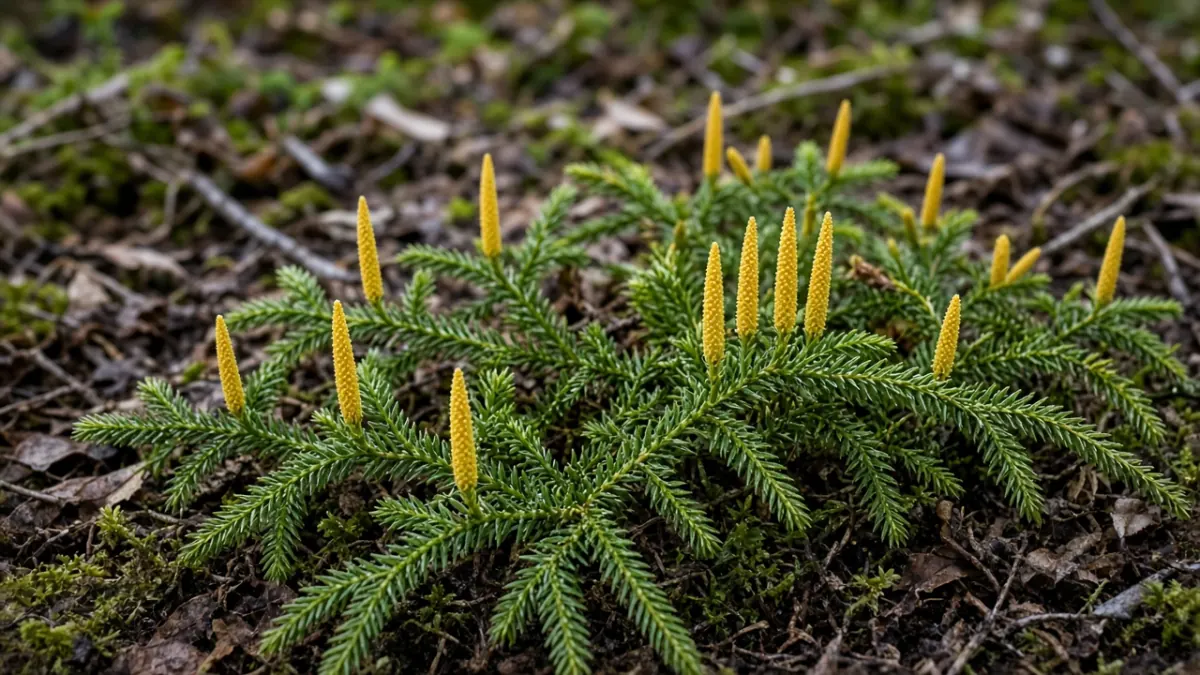
Lycopodium clavatum, prepared from the spores of club moss, is one of homeopathy's great polychrest remedies. It is classically indicated for bloating and flatulence that worsen between 4 pm and 8 pm, right-sided complaints, sluggish liver, red sandy urine, hair fall and anticipatory anxiety. Lycopodium 30 is the usual home potency; 200 and 1M are repeated far less often.
What Is Lycopodium Clavatum (Club Moss)?
Lycopodium clavatum is a low, creeping spore-bearing plant of the family Lycopodiaceae. It is a lycophyte, or fern ally - despite the name it is not a true moss and not a flowering plant.
Club moss, common clubmoss, stag's-horn clubmoss, running clubmoss, running pine, wolf's-foot clubmoss and wolf's-claw clubmoss are all the same remedy as Lycopodium clavatum. The genus name comes from the Greek lykos (wolf) and podion (foot). Old pharmacy books call the spore powder vegetable sulphur. It is sometimes listed as ground pine, though that name belongs to other plants too.
The name also gets shortened. Lyc., Lyco, "Clavatum" and "Clavatum 200" all mean Lycopodium clavatum, so "Lyco 30" and "Lycopodium clavatum 30C" are the same medicine. In homeopathic classification it is a plant remedy Hahnemann proved, and one Kent classes as a deep, long-acting antipsoric polychrest.
One pharmaceutical fact decides everything else. The spore wall is built from sporopollenin, an extremely tough, chemically inert biopolymer, so the spores are inert as collected. Boericke opens his monograph with it: the drug is inert until the spores are crushed, and its properties are disclosed only by trituration and succussion. Manufacturers therefore grind the spores with lactose (classically to 3x, commonly 6x) until soluble, then carry that forward into 6C, 30C, 200C and 1M.
Lycopodium Clavatum At A Glance
| Attribute | Detail |
|---|---|
| Source | Spores of Lycopodium clavatum L., family Lycopodiaceae |
| Common names | Club moss, wolf's-foot clubmoss, stag's-horn clubmoss, vegetable sulphur |
| Also written | Lyc., Lyco, Clavatum, Lycopodium 30, Lycopodium 200 |
| Forms | 6X, 6C, 30C, 200C, 1M and above; triturations; mother tincture (Q) |
| Main classical uses | Flatulent dyspepsia, liver congestion, red sandy urine, impotence and prostate complaints, hair fall, anticipatory anxiety |
| Signature modality | Worse 4 pm to 8 pm; right-sided, spreading right to left; better for warm food and drink |
| Onset | Response on 30C varies and isn't standardised for a potentised remedy; track your own symptom pattern with your prescriber. Constitutional cases (200C, 1M) are judged over weeks |
| Safety | 12C and above contain no measurable original substance; mother tincture is a material alcoholic extract with real cautions |
What Lycopodium Is Classically Used For
Homeopaths choose a remedy on the whole symptom picture and its modalities, not the disease name.
Digestion. The commonest reason it is given. Appetite is vigorous, yet a few mouthfuls fill the person to the throat and leave them bloated, with loud rumbling low in the abdomen. The belly is hard after eating and the belt must be loosened. Onions, cabbage, beans and cold food make it worse; warm food and drink make it better, and sweets are craved. Considered in chronic indigestion, acid reflux and constipation with ineffectual urging.
Liver. A congested, sluggish picture: fullness under the right ribs, intolerance of fatty food, sallow skin, gas building through the late afternoon. It is not a treatment for gallstones or liver disease.
Urinary and kidney. Red sand in the urine is the most quoted urinary keynote (Allen's Keynotes). Boericke records heavy red sediment, straining before the flow starts, and large night-time volumes. Boericke does not specifically localise renal colic to one side, but given the remedy's general right-sided pattern, practitioners often infer a right-sided tendency here too. Also considered in recurrent urine infection.
Male sexual health. Classically indicated for erections that fail during intercourse, performance anxiety in a capable but unconfident man, premature ejaculation. Raw spore powder must never go on broken skin.
Mind. Dread beforehand, competence in the event: anticipatory anxiety before an exam, interview or stage appearance in someone who then performs well. Underneath is low self-confidence, often masked by irritability or by being domineering at home and timid outside. Allen describes the type as intellectually keen but physically weak. It is a constitutional remedy in homeopathic treatment of anxiety.
Throat, chest, children. Sore throat starting on the right and spreading left, better for warm drinks. Boericke records neglected pneumonia with great dyspnoea and flaring of the nostrils; Allen's Keynotes specifically locate it at the base of the right lung. In children it is classically given for poor appetite with a distended belly and thin limbs - under supervision only.
Keynotes and Modalities
Lycopodium symptoms characteristically worsen between 4 pm and 8 pm. Clarke calls this the remedy's single most valuable distinguishing feature.
Lycopodium is a right-sided remedy: complaints begin on the right and often extend right to left - throat, chest, abdomen, liver, ovaries.
- Worse: 4-8 pm, warm rooms and beds, tight clothing at the waist, onions, cabbage, beans, oysters, cold food and drink
- Better: warm food and drink, gentle motion, open air, after midnight, uncovering the head, loosening the clothes
- Cravings: sweets, hot food and hot drinks
- Oddities: one foot hot and the other cold; loud abdominal grumbling; red sandy deposit in the urine
Which Lycopodium Potency? Q, 6C, 30C, 200C and 1M
The core rule is inverse: the higher the potency, the less often it is repeated. Confirm any schedule with a qualified homeopath.
| Potency | Chosen for | Usual dose | How often | How long | Supervision |
|---|---|---|---|---|---|
| Mother tincture (Q) | Dyspeptic and liver complaints in adults | 5-10 drops in half a cup of water | 2-3 times daily | Short courses only | Yes - a material dose |
| 6X / 6C | Mild functional acutes; tentative prescribing | 3-5 pellets or 4-5 drops | 2-3 times daily | Few days to 2 weeks | Not essential |
| 30C | Acute and sub-acute complaints with a clear picture | 3-5 pellets or 5 drops in water | 1-2 times daily; closer together in a sharp acute | Up to about 7 days | Advisable |
| 200C | Recurrent or chronic complaints, constitutional tendencies | 3-5 pellets, single dose | One dose, or 1-3 doses over a week - not daily | Then wait and watch 2-4 weeks | Yes |
| 1M and above | Deep constitutional prescribing | Single dose | Once; repeat only if symptoms return, at a different potency | Weeks to months of observation | Homeopath only |
Lycopodium 30 uses
Lycopodium clavatum 30 (Lycopodium 30C, Lyco 30) is the potency most people are given at home, and it is the strength most searched for on this page. Practitioners typically advise 3-5 pellets or 5 drops in water once or twice daily for a few days. Classical indications specifically tied to the 30C strength include:
- Acute gas and bloating - post-meal fullness with loud rumbling, worse in the 4-8 pm window
- Right-sided sore throat - starting on the right and spreading left, better for warm drinks
- Anticipatory anxiety - before an exam, interview or stage appearance, in someone who then performs competently
- Early, recent-onset hair fall - short courses alongside the wider constitutional picture, not established chronic baldness
- Mild acute urinary complaints - occasional red sandy sediment or straining before the stream starts
Response time varies and isn't standardised for a potentised remedy with no material dose - track your own symptom pattern with your prescriber rather than expecting a fixed window. It is not a maintenance medicine, and 200C or 1M are reserved for deeper or recurrent pictures (see below).
Lycopodium 200 uses and how often to take it
Lycopodium 200 (200C) is used for long-standing flatulent dyspepsia, liver congestion, prostate and potency complaints, chronic anticipatory anxiety and chronic hair fall. Can Lycopodium 200 be taken daily? No. Kent's instruction is the 6th to 200th potency and higher in not-too-frequent doses. Standard practice is a single dose, or one to three doses over a week, then weeks of watchful waiting.
Lycopodium 1M dosage
Lycopodium 1M (also written 1000) is constitutional territory. It is given as a single dose, then observed for two to four weeks or longer, and is not repeated while the person is still improving. If symptoms genuinely return, the homeopath decides whether to repeat and at what potency. Nobody should self-prescribe 1M.
Lycopodium Mother Tincture (Q)
Lycopodium mother tincture, written Q or Ø, is a crude alcoholic extract - not a homeopathic dilution. Q is not "stronger" than 30C; it is a different preparation with a different safety profile. Classical materia medica gives it almost no role here: the clinical literature is built on triturations and potencies, and Boericke's lowest recommendation is already the second or third attenuation, not neat Q.
In contemporary Indian practice Q is typically 5-10 drops in half a cup of water two or three times daily, in adults, for short courses in dyspeptic and hepatic complaints. There is no trial evidence for this. Mother tinctures are typically 60-90% v/v ethanol - check the label - and the plant contains alkaloids the pharmacognosy literature calls poisonous. Lycopodium Q should not be used in pregnancy or breastfeeding, in children, in liver disease or alcohol use disorder, or with disulfiram or metronidazole, and needs care in diabetes.
How To Take Lycopodium Correctly
Leave about 15-30 minutes between the dose and any food, drink or other medicine - customary practice rather than a proven requirement, but worth following. Tip pellets from the cap rather than handling them, let them dissolve under the tongue, and store the vial away from camphor and perfume. Keep coffee, mint, paan, onion, garlic, hing and tobacco out of the mouth around the dose; Clarke lists Coffea (the homeopathic remedy prepared from coffee, not the beverage) among this remedy's antidotes.
In children, use Lycopodium only under a qualified homeopath's supervision - no paediatric schedule is given here on purpose. Two rules matter more than any dose number: stop as soon as clear improvement begins, and if nothing has changed in one to two weeks in an acute complaint, stop and get a conventional assessment rather than raising the potency yourself.
Lycopodium Clavatum Side Effects and Safety
Aggravation versus a true side effect. Clarke warns that Lycopodium is prone to cause aggravations. An aggravation is a short-lived sharpening of symptoms you already have - more wind, more rumbling, a briefly flatter mood - usually in the first day or two. Old symptoms may briefly reappear. The correct response is to stop the remedy and wait, not to push through. Fever, vomiting, severe pain or breathlessness is not a healing crisis and needs medical assessment.
Lycopodium 30 and 200 side effects. Potencies of 12C and above, including 30C, 200C and 1M, contain no measurable original spore material, so chemical toxicity is not the concern. What people report is the aggravation above, occasionally mild nausea or loose stool. With 200C the commoner problem is over-repetition: daily use for weeks keeps a case unsettled. Pellets and triturations are lactose based - relevant in lactose intolerance, galactosaemia and diabetes.
Mother tincture and raw spore powder. These are the genuinely material exposures. Q contains ethanol and crude alkaloids (lycopodine, clavatine, clavatoxine, annotinine) described in the literature as poisonous; in animals lycopodine raises blood pressure, stimulates peristalsis and contracts the uterus. Raw spore powder is a documented respiratory sensitiser that can trigger asthma, and in wounds it has caused foreign-body granulomas that mimic tumour or tuberculosis on imaging.
The biggest risk is none of these. It is delay - using a remedy while something that needs diagnosis goes unassessed.
Who Should Avoid It Or Check First
- Pregnancy and breastfeeding: potencies only on a practitioner's advice; avoid the mother tincture outright
- Children: potentised forms under supervision; mother tincture not at all
- Anyone on prescription medicine: never stop or reduce inhalers, steroids or other drugs to try a remedy
- Lactose intolerance, galactosaemia, diabetes: pellets and triturations are lactose or sucrose based
- Liver disease, alcohol dependence, disulfiram or metronidazole: avoid Q entirely
- Known allergy to clubmoss or lycopodium powder
Remedy Relationships: Complements And Antidotes
| Relationship | Remedies |
|---|---|
| Complementary | Iodum, Chelidonium (Clarke) |
| Follows well after | Calcarea carbonica, Sulphur, Lachesis, Carbo vegetabilis (Clarke, Allen) |
| Compatible | Belladonna, Bryonia (Clarke) |
| Followed well by | Kali bichromicum, Sepia, Sulphur |
| Antidoted by | Camphora, Causticum, Pulsatilla, Aconite, Chamomilla, Graphites, Nux vomica, Coffea |
| Spoils the dose | Coffee, mint, camphor, raw onion, garlic, hing, tobacco, alcohol |
A general classical caution, not a fixed remedy-ordering rule: Allen advises that it is rarely advisable to begin treatment of a chronic disease with Lycopodium unless it is clearly indicated - it is often better to give another antipsoric remedy first. Lycopodium is separately noted to follow Calcarea carbonica well.
Can you take Nux vomica and Lycopodium together? Not at the same time. Clarke lists Nux vomica among the antidotes to Lycopodium, so the two work against each other. A homeopath may use them in sequence instead.
Lycopodium Versus Similar Remedies
| Remedy | Shares with Lycopodium | Choose it instead when |
|---|---|---|
| Nux vomica | Bloating, constipation, liver complaints | Irritable, over-worked, heavy on coffee, alcohol and spice; ineffectual urging for stool; worse early morning |
| Carbo vegetabilis | Wind, distension, fullness after eating | Bloating sits in the upper abdomen, with burning belching, coldness and a desire to be fanned |
| China officinalis | Painless bloating and weakness | Distension follows fluid loss, and belching gives no relief |
| Calcarea carbonica | Appetite oddities, chilliness, slow chronic cases | Stout, sweaty about the head, easily tired, craves eggs; often considered first in a chronic case, per Allen's general caution against opening treatment with Lycopodium |
| Sulphur | Chronic dyspepsia, skin complaints, right-sidedness | Burning is the theme - burning soles, worse for heat and washing, hungry at 11 am |
| Sepia | Worn-out feeling, right-sided liver complaints | Exhaustion, indifference to family, dragging pelvic sensation, better for vigorous exercise |
Dr Reckeweg, Schwabe Or SBL - Does The Brand Matter?
No. Dr Reckeweg, Dr Willmar Schwabe India, SBL and other licensed manufacturers supply the same remedy on the same potency scale, made to the same pharmacopoeial method. Only the dispensing base, pack size, price and availability differ.
When To See A Doctor
- Difficulty swallowing, unexplained weight loss, persistent vomiting, vomiting blood, black tarry stools, or new indigestion after age 45
- Rectal bleeding, a bowel-habit change lasting over three weeks, or severe pain with no stool or wind passing
- Yellow eyes or skin, pale stools with dark urine, or right-upper pain with fever and shivering
- Fever with loin pain, inability to pass urine, blood in the urine, or any urinary symptom in pregnancy
- Breathlessness at rest, chest pain, coughing blood, a cough over three weeks (tuberculosis must be excluded in India), or any asthma attack - and never reduce prescribed inhalers
- New erectile difficulty, which warrants a check for diabetes, blood pressure and heart disease
- Progressive forgetfulness or personality change, since some causes are reversible
A Note On The Evidence
The indications above come from classical materia medica - Boericke, Clarke, Allen, Kent, Hering - recording what practitioners observed over two centuries. They are traditional indications, not effects demonstrated in controlled trials. Separately, the crude plant has real laboratory pharmacology, and one small 2015 animal study tested Lycopodium potencies on memory in rats. None of that is evidence for what a 30C or 200C does in a person, and this plant family's nootropic reputation belongs to huperzine A from a different species, Huperzia serrata. Use homeopathy alongside medical care, not instead of it.
Frequently Asked Questions
What is Lycopodium 30 used for?
What is the difference between Lycopodium 30 and Lycopodium 200?
Can Lycopodium 200 be taken daily?
What is the dose of Lycopodium 1M?
How long does Lycopodium 30 take to work?
What are the side effects of Lycopodium clavatum 200?
What is the antidote of Lycopodium?
Can I take Nux vomica and Lycopodium together?
Is club moss the same as Lycopodium clavatum?
What is Lycopodium mother tincture used for, and what is the dose?
Does Lycopodium help with hair fall and premature greying?
Is Lycopodium clavatum safe during pregnancy?
What are the benefits of Lycopodium 30?
Have questions about your symptoms? Talk to a WeClinic™ homeopathic doctor, free.
Call Now - Free Consultation