
Cina 30 Uses: Irritable Child Picture, Dose, Risks

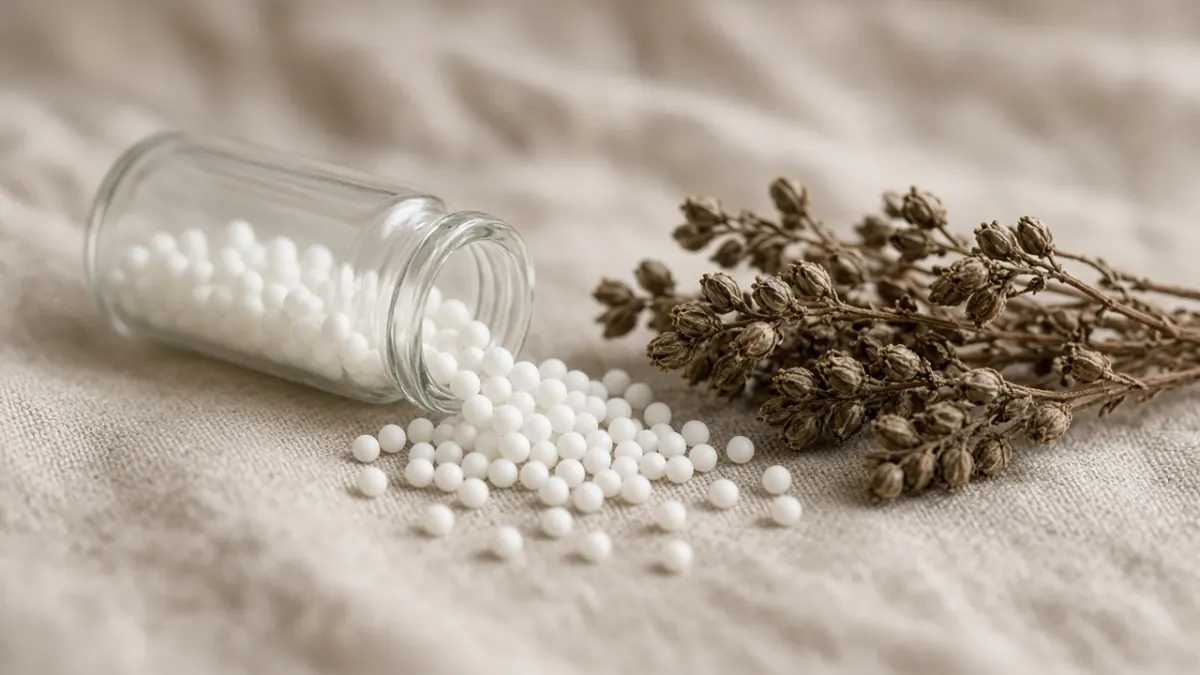
Cina is prepared from the unripe flower heads of Artemisia cina (Levant wormseed). The classical picture is an irritable child who wants to be carried then rejects you, grinds teeth in sleep, picks the nose, and stays hungry after a meal. That is a 19th-century symptom portrait. It is not a substitute for a tape test and a licensed anthelmintic. Crude wormseed and santonin are toxic.
This article is for people holding an SBL, Reckeweg or Schwabe Cina 30 / 200 bottle or a “worm syrup,” or searching cina homeopathic uses. It is not a protocol for confirmed pinworm, roundworm, tapeworm, or a convulsing toddler.
Cina at a glance
| Item | Detail |
|---|---|
| Full name | Cina (Artemisia cina; also listed as Cina maritima on older labels) |
| Also written | Cina, Wormseed, Santonica |
| Source | Dried unripe flower heads of Levant wormseed (Asteraceae) |
| Common Indian forms | Globules 30C, 200C; combination “worm syrups”; occasional Q |
| Mother tincture (Q) | Alcoholic extract that can still hold santonin — treat as a herb |
| Main classical uses | Irritable child, teeth grinding, nose picking, worm picture |
| Keynote | Capricious, cannot bear to be looked at or touched; hungry after eating |
| Usual home potency | 30C, 3–5 globules, 2–3 times a day for a few days |
| Safety in one line | 30C has no santonin; Q and crude wormseed can poison; delay of real worms is the harm |
What Cina is
Cina is the homeopathic name for Levant wormseed. The plant was once a commercial source of santonin, a real anthelmintic that modern medicine abandoned because of toxicity — xanthopsia (yellow vision), vomiting, convulsions. You do not swallow the crude flower heads.
Boericke and Kent describe a child: stiffens when touched, wants things then throws them, bores the nose, grinds teeth, sleeps restlessly, has a white ring around the mouth, and a variable appetite that can look ravenous. Adults with the same picture appear in the books, but Indian search traffic is almost all paediatric.
It is not Artemisia annua (sweet wormwood, source of pharmaceutical artemisinin for malaria). Shopping pages that paste “artemisinin” onto a Cina 30 bottle are mixing two plants.
A Cina syrup on an Indian chemist shelf is usually a commercial mixture (Cina plus other “worm” names). That is marketing, not a regimen.
What the evidence actually says
There is no reliable randomised trial showing that Cina 30, 200 or a homeopathic syrup clears Enterobius, Ascaris, or any other helminth.
US Cina 30C labels (for example) may print “to relieve the symptoms of worms” and the required line: claims based on traditional homeopathic practice, not accepted medical evidence, not FDA evaluated.
For confirmed pinworm, the names mebendazole, pyrantel pamoate or albendazole, given as two doses two weeks apart (the second dose catches worms that hatch from leftover eggs). Household members are often treated together. Hygiene — morning showers, trimmed nails, washed bedding — matters because eggs survive on surfaces. That is the regimen. Cina is not on it.
Everything below is classical indication, not a trial result.
What Cina is classically used for
The irritable, contrary child. Wants to be carried constantly, then arches away. Cannot bear to be watched. Touches and noise aggravate. This is the mental keynote, not a diagnosis of worms and not a diagnosis of ADHD. For that last question see ADHD and homeopathy.
Sleep and teeth. Grinding in sleep, restless tossing, a child who wakes screaming and is hard to soothe. Night grinding has many causes — teeth coming through, habit, occasionally pinworm itch. Cina does not distinguish them.
Nose and belly. Boring a finger into the nose; itching at the anus at night; a belly that is sore to touch; hunger soon after a full plate; a cough that ends in a gag. Old writers tied this cluster to worms. Modern paediatrics ties night anal itch plus visible threadworms to Enterobius and a tape test.
What it is not for: a proven vermifuge, a tapeworm drug, an antihistamine, a seizure medicine, or a daily “immunity” syrup.
Cina 30 vs 200 vs syrup vs Q
| Form | What is in it | Classically chosen for | How it is usually taken | Supervision |
|---|---|---|---|---|
| 30C | No measurable santonin | Everyday Indian bottle for the Cina child picture | 3–5 globules, 2–3 times daily, a few days | Self-care only if the child is otherwise well |
| 200C / 1M | Empty of starting plant | Constitutional prescribing | Single dose, then wait | Registered homeopath |
| Combination syrup | Mixed “worm” names + sugar + alcohol or parabens | Chemist-counter habit | Follow the pack;it is not a guideline anthelmintic course | Do not use instead of a prescribed anthelmintic |
| Q | Material extract; santonin possible | Rare in paediatrics, and should stay rare | Drops only if a practitioner owns the case | Not for infants; treat as a herb |
Cina 30 is not stronger Cina 6, and 200 is not a better worm killer. Higher C numbers are more dilute. Q is the form that can still hold plant chemistry — the form you do not improvise in a toddler.
How to take Cina 30
Filed labels do not agree.
- Typical Indian globule convention: 3–5 globules, dissolved in the mouth (or in a teaspoon of water for a small child), two or three times a day, for a few days, then stop.
- Some US labels say 3–5 pellets three times a day until the picture eases.
- Keep 15–30 minutes off food, mint and other medicines.
- Stop when the picture changes, or when nothing has shifted in 48–72 hours. Do not jump to 200 because 30 “failed.”
- Infants under six months with irritability, poor feeding or fever need a paediatrician, not a worm bottle.
If you can see threadworms, or a tape test is positive: use the medicine the doctor names, plus the second dose at two weeks. Cina can sit beside that only as a symptom picture, never as the vermifuge.
Santonin is not the 30C pellet
This is the claim that does the most harm.
Crude Artemisia cina and pharmaceutical santonin can cause yellow or green vision, vomiting, and seizures. That chemistry is why the crude drug left the modern formulary. A 30C pellet does not contain it. A Q tincture and any kitchen “wormseed tea” might.
Do not grind dried flower heads into honey for a child. Do not buy santonin powder online. Do not read an old herbal dose (10–30 grains of seed) as a homeopathic instruction.
Side effects — what is real
| What people fear | What is actually true |
|---|---|
| Santonin poisoning from 30C | Not realistic; the pellet is empty of the starting drug |
| Santonin poisoning from Q or crude seed | Real. Visual change, vomiting, seizures — emergency |
| “No side effects, it is homeopathic” | False. Alcohol or sugar in syrups, allergy, and delay all exist |
| Drug interaction at 30C | No plausible interaction from ~12C up |
Delay. The harm that matters. Pinworm is uncomfortable. Ascaris load, amoebiasis, and a surgical abdomen are not. A child who is losing weight, passing blood, or has a fever with a rigid belly is not a Cina case.
Syrup vehicles. Sugar, alcohol, and combination ingredients add their own problems in toddlers and in children with diabetes.
Cina compared with other remedies
| Remedy | Picture | Choose it when |
|---|---|---|
| Cina | Capricious, touchy, grinds teeth, hungry after eating | The classical “worm child” portrait |
| Ignatia | Grief, sighing, lump in throat | After a shock or disappointment, not worms |
| Chamomilla | One cheek red, cannot be pleased, teething | Pain and rage that ease when carried and stay eased |
| Nux vomica | Irritable adult after food and stimulants | Useless urging, not a paediatric worm picture |
Cina is not “children’s Nux.” Nux is about spasmodic overwork; Cina is about the contrary, hungry, grinding child.
When to see a doctor
Do not sit on Cina 30 if you notice:
- visible worms, or a positive tape test — treat with a licensed anthelmintic
- weight loss, a swollen belly, or blood in the stool
- fever, a stiff neck, or a child who is floppy or hard to wake
- seizures, yellow vision, or vomiting after a herbal wormseed product
- a child under two who is not feeding, or any infant with fever
- night itch that lasts after a proper two-dose pinworm course (re-infection is common; so is a missed household contact)
Call emergency services (108 / 112 in India) for a child who is convulsing, struggling to breathe, or unresponsive.
If the irritability is about more than worms — school refusal, self-harm talk, a parent at the end of their rope — KIRAN is 1800-599-0019.
WeClinic is in Panki, Kanpur. Hours are 10 AM–9 PM, closed Monday. Packages run about Rs 1,600–5,000. Call +91 7905136461 if you want the child seen as a case, not as a syrup flavour.
Frequently Asked Questions
What is Cina used for in homeopathy?
Does Cina 30 kill worms?
What is the dose of Cina 30 for a child?
Is Cina syrup the same as Cina 30?
Can I give Cina mother tincture to a child?
Is Cina the same as artemisinin or malaria medicine?
How do I know if my child has pinworms?
Can Cina be taken daily for months?
Are there side effects of Cina?
Cina vs Chamomilla for a screaming child?
Is homeopathic Cina safe?
How long does Cina take to work?
Have questions about your symptoms? Talk to a WeClinic™ homeopathic doctor, free.
Call Now - Free Consultation