
Cinchona (China) 30: Weakness After Fluids, Not Malaria

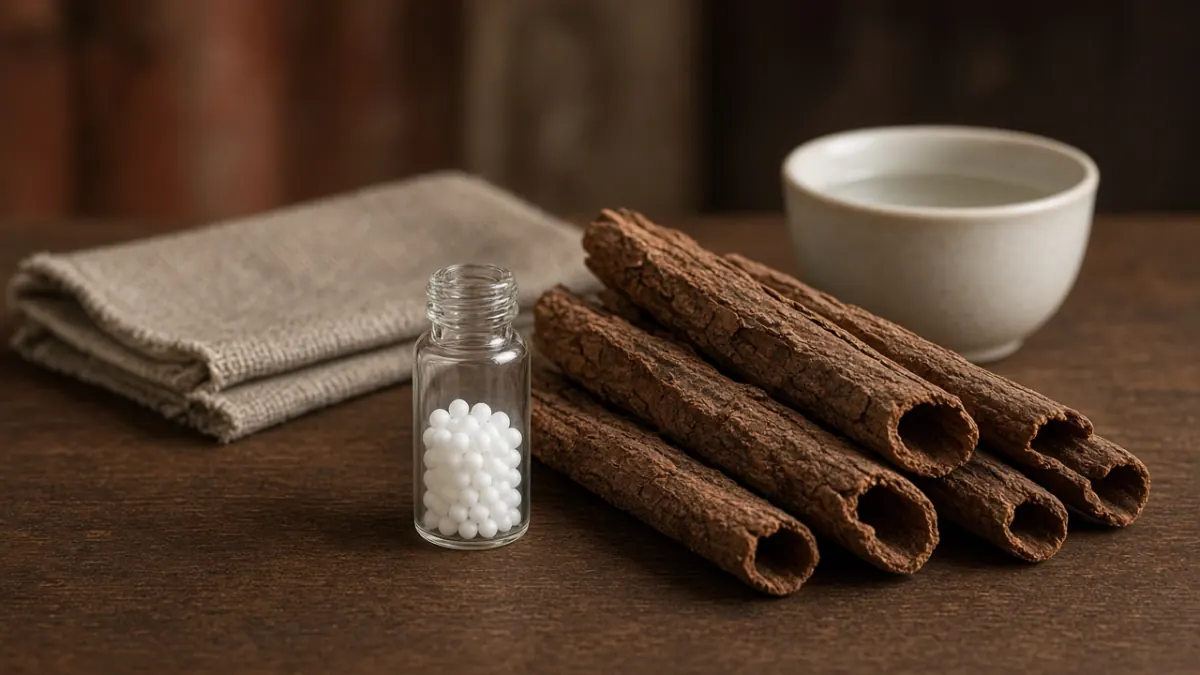
Cinchona officinalis 30 — labelled China, China off., or Cinchona — is the usual home potency of cinchona bark. Homeopaths classically give it for debility after loss of fluids: diarrhoea, sweat, haemorrhage, or long breastfeeding in the old books, with bloating not eased by wind and periodicity. A properly made 30C contains no measurable quinine. Bark tea is not malaria treatment. still wants prompt diagnosis and prescription antimalarials.
This article is for people searching cinchona officinalis 30 uses, China 30, or cinchona for malaria. It is not travel prophylaxis, a quinine prescription, or ORS.
China at a glance
| Item | Detail |
|---|---|
| Botanical | Cinchona officinalis and related Cinchona spp. — Peruvian bark |
| Also written | China, China off., Cinchona, Chin., China 30, China 200 |
| Crude drug | Bark containing quinine and related alkaloids |
| 30C / 200C | Past ~12C: no measurable quinine if manufactured properly |
| Q / bark tea / tonic wine | Material — dose of quinine is unknown and unsafe to guess |
| Main classical uses | Weakness after fluids, noisy bloating, periodicity, anaemia picture |
| Usual home potency | 30C for a matching post-loss picture |
| Safety in one line | Globules ≠ quinine. Fever after travel is not a China bottle |
What China is — and what it is not
Boericke: debility from loss of vital fluids; periodical complaints; abdomen distended, not relieved by belching; ring in the ears; sensitive, irritable, artistic temperament in the old language; hungry yet full after a few bites.
It is not:
- artemether-lumefantrine, atovaquone-proguanil, or prescription quinine sulfate for malaria
- quinidine for arrhythmia
- a substitute for oral rehydration in cholera-like diarrhoea
- a blood transfusion
- tonic wine you dose yourself for “fever and ague”
What the evidence actually says
There is no trial that China 30 treats falciparum malaria, repairs iron-deficiency anaemia, or stops Meniere’s disease.
: treat immediately after species and severity are known. Preferred oral option in many chloroquine-resistant settings is artemether-lumefantrine. Quinine sulfate appears only in specific combination regimens (with doxycycline, tetracycline, or clindamycin), not as bark tea. Untreated falciparum can kill.
Diarrhoea with dehydration needs ORS and medical rules for blood, fever, or a child who will not drink. See diarrhea.
Everything below is classical indication.
What China is classically used for
- Emptied-out weakness. After diarrhoea, vomiting, sweating, blood loss, or a long drain — pale, chilly, wants to be fanned, yet the least draught annoys. Compare Arsenicum (restless, burning, midnight, anxious) and Phosphoric acid (quiet apathy after fluids or grief).
- Bloating. Gas, rumbling, no relief from passing wind. That is a keynote. It is not a bowel-obstruction plan.
- Periodicity. Fevers or neuralgias that clock in. In 2026 that still means test for malaria if there is travel or endemic exposure — not “China because it is periodic.”
- Head and ears. Bursting headache; ringing. Anaemia and quinine toxicity also ring in the ears. Do not confuse them.
- Haemorrhage pictures. Passive oozing in the old books. Active bleeding is a hospital.
China 30 vs 200 vs Q vs quinine
| Form | What is in it | Classically chosen for | How it is usually taken | Supervision |
|---|---|---|---|---|
| Bark tea / herbal cinchona | Unmeasured quinine | Not malaria self-care | Do not | Avoid |
| Prescription quinine | Dosed alkaloid | Selected malaria combos | Only as prescribed | Physician |
| Q / mother tincture | Alcohol + alkaloids | Old “tonic” talk | Not a home fever bottle | Avoid DIY |
| 6C | Trace possible | Mild post-diarrhoea picture | Short | After ORS |
| 30C | No measurable quinine if made properly | Everyday China picture | A few globules, then stop | Self-care if not a malaria fever |
| 200C | Empty | Deeper depletion picture | Single dose | Practitioner preferred |
Cinchonism (quinine toxicity) is tinnitus, headache, visual trouble, cardiac rhythm risk — from the drug or bark, not from a true 30C.
How to take China 30
- Fever plus travel, jungle, or endemic zone: blood test and antimalarial protocol first.
- Matching depletion picture after a known, settling diarrhoea: 4–5 globules, then stop. Keep ORS.
- Do not “cover” a periodic fever with China 200 while parasites multiply.
- Mother tincture guide: Q is not a stronger 30.
Side effects — bark and globule
30C / 200C. Vehicle. Harm is missed malaria, missed bleed, missed dehydration. Side effects.
Bark / Q / tonic. Quinine/quinidine effects: arrhythmia, low platelets, severe hypersensitivity, cinchonism. Pregnancy: malaria is obstetric-infectious care; do not drink bark.
China 30 does not antagonise Coartem. Do not skip the antimalarial.
China compared with nearby remedies
| Remedy | Picture | Choose it when |
|---|---|---|
| China | Weak after loss, bloated without relief, periodical | Drained, gassy, clock-like |
| Arsenicum | Restless, burning, sips, midnight | Food poisoning anxiety |
| Gelsemium | Heavy, drowsy, trembling flu | Not drained-by-stool |
| Ferrum phos | Early fever, haemorrhagic tendency as tissue salt talk | Not China periodicity |
| Nux vomica | Overindulged, chilly, urging | Not emptied-out |
When to see a doctor
- fever after travel to a malaria region — same day, nights included
- black stools, fainting, or heavy vaginal bleeding
- diarrhoea with blood, high fever, or a child with sunken eyes
- ringing ears, visual change, or rash after bark or quinine
- breathlessness and pallor (anaemia work-up, not China 1M)
WeClinic cannot treat falciparum with globules. Kanpur clinic. Bring the travel history.
Frequently Asked Questions
What is Cinchona officinalis 30 used for?
Can China 30 treat or prevent malaria?
China vs quinine sulfate — same medicine?
What is the dose of China 30?
Is cinchona bark tea safe?
China 30 vs 200 for weakness?
Can I take China for ringing in the ears?
Is China safe in pregnancy?
How long does China take to work?
China vs Arsenicum after food poisoning?
Does China 30 interact with heart drugs?
Can children take China 30 after diarrhoea?
Have questions about your symptoms? Talk to a WeClinic™ homeopathic doctor, free.
Call Now - Free Consultation