
Dulcamara 30 Uses: Cold-Damp Dose, Side Effects

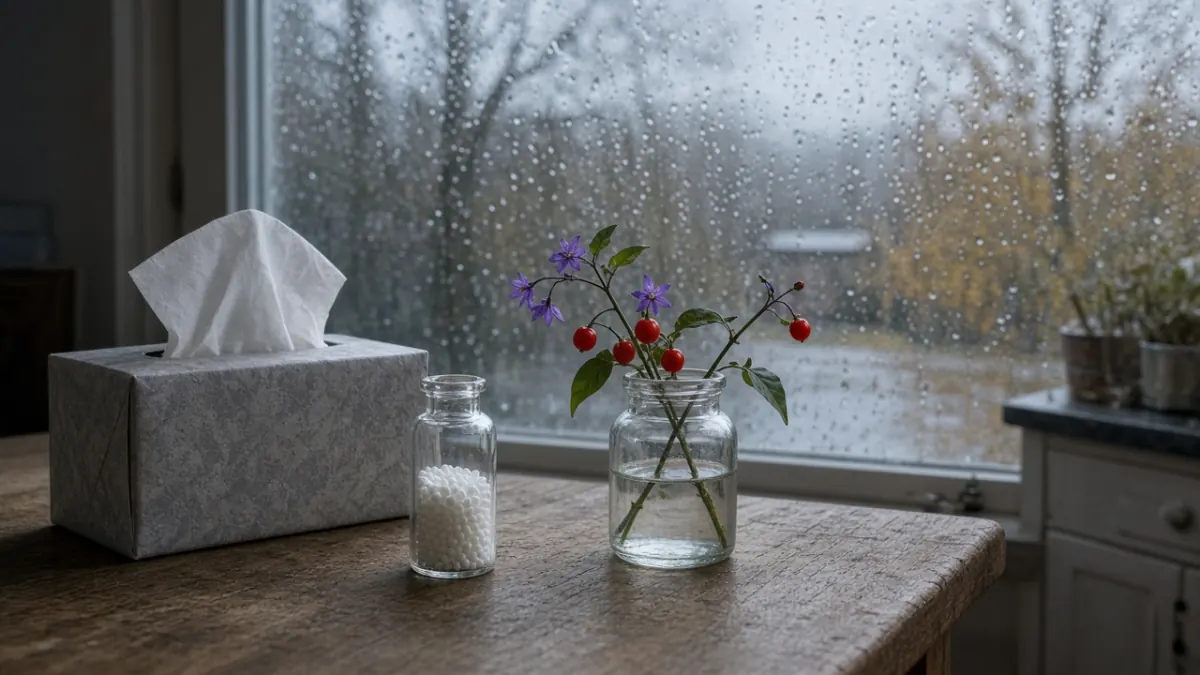
Short answer: Dulcamara (Solanum dulcamara, bittersweet nightshade) is a homeopathic remedy classically chosen when symptoms start or worsen after cold, damp weather, a soaking, or hot days followed by cold nights — especially stuffy nose, joint stiffness, diarrhoea after a chill, and damp-triggered skin. US OTC labels traditionally list stuffy nose or joint pain after cold damp and direct 5 pellets under the tongue, 3 times a day, then stop if nothing improves in about 3 days. A 30C pellet is not herbal tea, not a proven antiviral, and not permission to handle the toxic plant.
This article is for people in India holding an SBL, Reckeweg, Schwabe or Boiron Dulcamara 30 / 200 / Q bottle — or searching dulcamara uses, dulcamara 30 uses, dulcamara dosage, dulcamara side effects. It is YMYL health content: we separate classical tradition from medical evidence, and we do not claim cures.
Reviewed for accuracy against: Boericke’s materia medica (classical indications), DailyMed / HPUS-style OTC labels (dose language), and toxicology sources on Solanum dulcamara (plant safety). Author: Dr. Dheeraj Sharma, BHMS.
Key takeaways
- Intent match: weather modality first — cold damp / wet chill / warm-to-cold swing — then the organ (nose, joints, gut, skin).
- Typical 30C self-care dose (label pattern): 5 pellets, 3× daily; review by day 3–4.
- Evidence: traditional practice only; FDA-style labels state claims are not accepted medical evidence.
- Safety: 30C ≠ plant poisoning; berries/leaves/tea are toxic — never forage.
- Pharmacy pages that say “no side effects” omit delay risk and Q/plant chemistry — that is incomplete.
What searchers usually want (user intent)
| Query type | What you actually need | Where answered |
|---|---|---|
| dulcamara uses | Cold-damp picture + common spheres | Uses section |
| dulcamara 30 uses / dosage | Pellets, how often, when to stop | Dose section |
| dulcamara 200 | Less frequent, practitioner-leaning | Potency table |
| dulcamara Q / mother tincture | Drops ≠ stronger 30; plant extract | Q section |
| dulcamara side effects | Honest risks, not “none” | Safety |
| dulcamara vs Rhus tox | Damp chill vs restless stiffness | Comparison |
Dulcamara at a glance
| Item | Detail |
|---|---|
| Botanical source | Solanum dulcamara L. (bittersweet / woody nightshade), Solanaceae |
| Also written | Dulc., Bittersweet |
| HPUS / label sphere | Stuffy nose or joint pain after cold damp weather (traditional) |
| Classical keynote (Boericke) | Affections from damp cold; colds after wetting; hot days + cold nights |
| Common Indian forms | Globules / dilutions 30C, 200C; Q mother tincture |
| Usual acute dose pattern | 5 pellets, 3×/day, short course (see label) |
| Not the same as | Raw nightshade tea, culinary “nightshade allergy” diets, antibiotics |
What Dulcamara is (and is not)
Dulcamara is prepared from the fresh green shoots/leaves of bittersweet nightshade (pharmacy trituration/dilution pathways), not from kitchen foraging.
It is: a classical remedy whose symptom picture centres on exposure to cold and damp, sudden chill when warm, and autumn-type weather swings (Boericke, Dulcamara).
It is not:
- a licensed treatment that has been shown in modern RCTs to cure colds, eczema, rheumatism or diarrhoea
- the same as eating jamun, neem, or other “damp weather” herbs
- safe to brew from garden berries (the living plant contains toxic glycoalkaloids such as solanine-type compounds — see MedlinePlus / toxicology summaries on woody nightshade)
Google’s people-first / E-E-A-T guidance for health topics rewards accuracy and trust over keyword stuffing. So we will not copy e-commerce lines like “no side effects reported” without context.
What the evidence actually says
- OTC homeopathic labels (DailyMed examples for Dulcamara 30C) state the product is not FDA-evaluated for safety/efficacy and that uses rest on traditional homeopathic practice, not accepted medical evidence. Typical use language: stuffy nose or joint pain after cold damp; 5 pellets, 3× daily; stop if symptoms persist more than 3 days or worsen.
- Boericke (1901) is a classical materia medica, not a clinical trial database. Useful for matching pictures, not for proving outcomes.
- Plant toxicology is real for Solanum dulcamara ingestions (especially children and unripe berries). That risk applies to the botanical, not automatically to a highly diluted 30C pellet.
Everything in the “uses” section below is therefore classical / label tradition, unless marked otherwise.
Dulcamara uses — classical picture that matches search intent
1. Colds, stuffy nose and cough after wet chill
Boericke: nose stuffs in cold rain; thick yellow mucus; cough worse cold wet weather; loose rattling cough that takes a long time to raise phlegm; winter teasing coughs.
Choose Dulcamara when the story starts with rain, damp basement, wet clothes, or AC blast after sweating — not when the picture is purely allergic pollen without weather.
Related reading: throat infection, sinusitis, Allium cepa (acrid nose, bland eyes).
2. Joint and neck stiffness in damp cold
Label + classical: joint discomfort in cold/damp; stiff neck and shoulder lameness after getting cold and wet; rheumatic pains worse every cold change, somewhat better moving (Boericke).
Not a substitute for inflammatory arthritis work-up, septic joint, or fracture. Clinic pathway: arthritis homeopathy, osteoarthritis.
3. Diarrhoea after sudden cold (especially summer chill)
Boericke highlights green, watery, slimy stools when weather suddenly turns cold/damp, or after wetting — a classic Indian monsoon / “cold drink after heat” story people describe.
Still use ORS. Blood, dehydration, high fever, or a floppy child → doctor, not pellets. See gastric troubles.
4. Skin: itching, urticaria, crusted eruptions, warts (classical)
Classical lists: pruritus worse cold wet; urticaria from exposure; thick brown-yellow crusts; large smooth warts on face/palms; eruptions around menses (Boericke). Homeopathy UK also summarises damp-aggravated skin and respiratory complaints.
Chronic eczema, ringworm, or warts still need diagnosis. Dulcamara is a modality clue, not a steroid or antifungal on its own.
5. Urinary urgency after chill (classical)
Boericke: must urinate when chilled; bladder catarrh from cold; wading barefoot in cold water. Rule out UTI with testing when burning, fever or blood is present — urine infection.
What Dulcamara is not for
- Pneumonia, asthma attack, anaphylaxis
- “Immunity tonic” for the whole monsoon
- Eating nightshade berries to “get a stronger dose”
- Replacing prescribed rheumatology or dermatology drugs
Dulcamara dosage: 30 vs 200 vs Q
| Form | What’s in it | Who usually buys it | How it’s typically taken | Supervision |
|---|---|---|---|---|
| 30C pellets | No meaningful plant alkaloid | Most Indian / Boiron self-care bottles | 5 pellets, 3×/day until better; stop by ~3 days if no change (label pattern) | OK for mild acutes if otherwise well |
| 200C | More dilute | Stubborn / broader picture | Often single or infrequent doses | Prefer registered homeopath |
| Q (mother tincture) | Ethanol extract — material chemistry possible | “Drops” marketing | Retail often 3–5 drops (sometimes higher) in water 2–3×/day | Practitioner preferred; not “stronger 30” |
| Dilution liquids (30/200) | Alcohol vehicle | SBL-style dropper bottles | Common retail line: 3–5 drops in ½ cup water 3×/day | Follow physician / label |
Rules that beat thin competitor pages:
- 30C is not weaker 200C. Higher C = more dilute.
- Q is not a megadose of 30C. Different product class.
- Keep 15–30 minutes off food, coffee, mint, camphor, onion/garlic if you follow classical pharmacy advice.
- Children: follow age on the pack; infants with fever, lethargy or poor feeding need urgent care, not experiments.
- If you are pregnant or breastfeeding, ask a clinician before Q (alcohol) or any self-prescription.
Side effects — fact check (competitors often get this wrong)
| Claim you see online | Fact check |
|---|---|
| “No side effects” | Incomplete. Diluted 30C is unlikely to cause nightshade poisoning, but delay, wrong diagnosis, and alcohol in liquids/Q are real issues. |
| “Safe because natural” | The plant is poisonous (nausea, vomiting, diarrhoea; children at higher risk). Never forage. |
| “Can always take with allopathy” | Usually no direct drug–30C interaction — but do not drop antibiotics, inhalers or anti-inflammatories because you started Dulcamara. |
| Kitchen decoction / tea | Unsafe improvisation. Buy pharmacy products only. |
Authoritative plant-toxicity orientation: MedlinePlus — blue/woody nightshade poisoning; EMA herbal assessment literature summarises toxicity of Solanum dulcamara plant parts.
Also read: homeopathy side effects, mother tincture guide.
Dulcamara vs Rhus tox vs Natrum sulph (decision table)
| Remedy | Core trigger / feel | Lean this way when… |
|---|---|---|
| Dulcamara | Cold damp, wet chill, hot→cold nights | Weather/wetting is the clear story |
| Rhus toxicodendron | Restless stiffness, better continued motion | “Must move” dominates more than damp |
| Natrum sulphuricum | Damp aggravation; basement / hydrogenoid type in classical lists | Chronic damp living, different full picture |
| Bryonia | Worse least motion; dry mucosa | Wants absolute stillness |
| Allium cepa | Acrid nasal discharge | Hay-fever pattern without damp keynote |
India-specific notes (monsoon, AC, damp housing)
Search behaviour in India clusters around monsoon colds, joint pain in humid weather, and AC chill after outdoor heat — close to Boericke’s hot days, cold nights and damp basement notes. That does not mean every monsoon cough is Dulcamara. Fever + breathlessness, oxygen need, or chest pain → medical care first.
When to see a doctor (non-negotiable)
Stop self-care and get help if you notice:
- Fever lasting beyond a few days, breathlessness, chest pain, or blue lips
- Dehydration, bloody stools, or a child who will not drink
- Hot swollen joint, inability to walk, or back pain with numbness / bladder change
- Spreading skin infection, facial swelling, or suspected cellulitis
- Ear pain with discharge, stiff neck with fever, confusion
- Pregnancy with fever, reduced fetal movements, or dehydration
Emergency (India): 108 / 112 for collapse, severe breathing difficulty, or unrousable person.
WeClinic (Panki, Kanpur): 10 AM–9 PM, closed Monday. Packages roughly Rs 1,600–5,000. Call +91 7905136461 for case-taking after red flags are cleared — author profile: Dr. Dheeraj Sharma.
How this page is meant to outrank thin competitor articles
Most ranking pharmacy pages (Lybrate/1mg-style SKUs, brand LM pages) repeat indication lists, say “side effects: none”, and skip evidence, toxicity, and differential remedies. Google’s helpful content / E-E-A-T guidance and Search Quality Rater Guidelines treat health as YMYL: trust and accuracy outweigh keyword stuffing.
This rewrite prioritises:
- Intent coverage (uses + dose + side effects + comparisons in one page)
- First-screen answer matching what labels and classical texts actually say
- Fact-checked safety (plant vs potency)
- Clear next steps (stop rules, doctor thresholds, clinic CTA)
- Experience signals (named BHMS author, clinic location, update date)
Frequently Asked Questions
What is Dulcamara used for?
What is the dose of Dulcamara 30?
Dulcamara 30 vs 200 — which is better?
Can I take Dulcamara mother tincture (Q) daily?
Does Dulcamara have side effects?
Is Dulcamara safe for children?
Dulcamara for warts or eczema?
Dulcamara vs Rhus tox for joint pain?
Can I take Dulcamara with allopathic medicine?
How long does Dulcamara take to work?
Have questions about your symptoms? Talk to a WeClinic™ homeopathic doctor, free.
Call Now - Free Consultation