
Bellis Perennis 30: Deep Bruises After Surgery, Safety

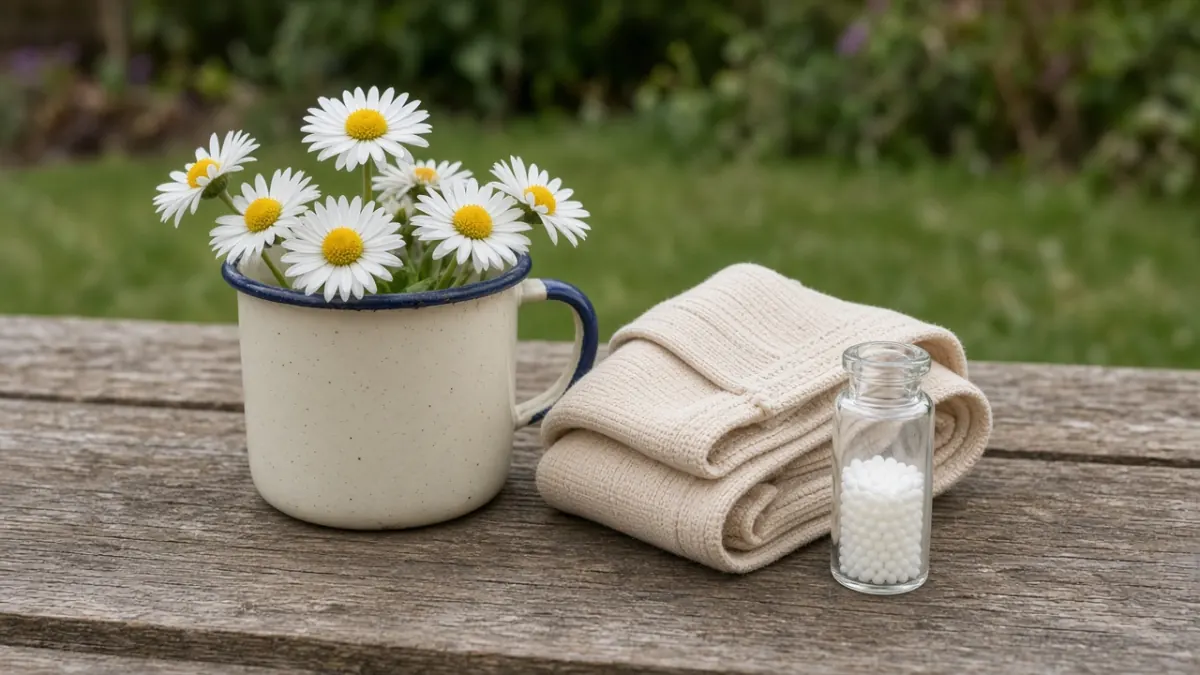
Bellis perennis 30 is the usual home potency of the English daisy. Homeopaths classically give it for deeper, pelvic, or after-surgery bruising — the gardener who is sore in the abdomen and uterus after strain, the breast after a blow, the wound that feels sprained inside. A properly made 30C contains no measurable plant. Bellis is not heparin, not a surgical antibiotic, and not a reason to ignore a hot, red, leaking wound.
This article is for people searching bellis perennis 30 uses, Bellis after surgery, or Bellis vs Arnica. It is not clearance to delay a scan for a post-op swollen calf.
Bellis at a glance
| Item | Detail |
|---|---|
| Botanical | Bellis perennis L., Asteraceae — daisy |
| Also written | Bellis, Bellis per., Bellis 30, Bellis 200 |
| 30C / 200C | Past ~12C: no measurable daisy if manufactured properly |
| Q | Alcoholic extract — not a home DVT drug |
| Main classical uses | Deep bruises, abdominal/pelvic strain, after surgery or labour pictures |
| Usual home potency | 30C; some use it when Arnica’s surface bruise has faded |
| Safety in one line | Globules do not prevent clots or wound infection |
What Bellis is — and what it is not
Boericke: sore, bruised, especially pelvic viscera, after blows, falls, surgery; gardeners; tumours from injury as old language we do not treat as oncology; worse cold baths, uncovering. It is often called “deeper Arnica.”
Clarke: left-sided; sleepless from soreness; veins. Nash uses it when the bruise is in viscera.
It is not:
- LMWH or a DOAC for post-op DVT
- a wound culture and antibiotic
- a proven anti-adhesion drug
- a breast-cancer treatment because a blow preceded a lump (get the lump examined)
- a substitute for a pelvic binder or obstetric review after trauma
What the evidence actually says
There is no convincing RCT that Bellis 30 reduces post-op pain scores, prevents seroma, or treats endometriosis.
Post-operative care is still: wound watch, early mobilisation as advised, clot prevention as the surgeon prescribed, and emergency review for chest pain, one-sided calf swelling, or fever. See Arnica for the surface-bruise cousin.
Everything below is classical indication.
What Bellis is classically used for
- After abdominal or pelvic surgery, when the patient says the inside is bruised, not just the skin. Arnica first for the bang; Bellis if the viscera still complain.
- After labour — bruised pelvic floor picture. Bleeding, fever, or foul discharge is obstetric care.
- Breast after a blow or after surgery to the chest wall. A new lump still needs triple assessment, not daisy 1M.
- Gardeners and labourers — abdominal wall sore from stooping.
- Varicose, bruised veins in some old notes. See Hamamelis and varicose veins.
Bellis 30 vs 200 vs Q vs Arnica
| Form | What is in it | Classically chosen for | Repeat |
|---|---|---|---|
| Q | Plant + alcohol | Not a home post-op drip | Avoid DIY |
| 30C | Empty of plant if made properly | Deep bruise picture | A few globules, then stop |
| 200C | Empty | Longer post-op picture | Not daily |
| Arnica 30 | Empty of helenalin if 30C | Soft-tissue, “don’t touch,” says he’s well | First for a fall |
Do not put daisy Q into a surgical wound. Do not put Arnica herb on broken skin.
How to take Bellis 30
- Only after the surgeon’s instructions are in place.
- 4–5 globules if the deep-bruise picture fits, then stop.
- Keep prescribed pain relief. A 30C does not interact with paracetamol.
- Pregnancy: trauma to the abdomen is obstetric triage, not Bellis first.
Side effects
30C / 200C. Vehicle; missed DVT or dehiscence is the harm. Side effects.
Q. Alcohol; daisy family allergy possible with material extracts.
Bellis compared with nearby remedies
| Remedy | Picture | Choose it when |
|---|---|---|
| Bellis | Deep, pelvic, post-op, gardener | Inside still bruised |
| Arnica | Surface bruise, sore, bed too hard | Fall, blow, fear of touch |
| Hamamelis | Sore veins, bruised veins | Venous, bleeding veins |
| Ruta | Tendon and periosteum | Wrist/ankle overuse |
| Calendula | Surface cuts (topical Q on intact-enough skin) | Skin edge, not viscera |
When to see a doctor
- calf swelling, chest pain, or breathlessness after surgery — clot pathway
- wound that opens, smells, or drains pus; fever
- heavy post-partum bleeding or pelvic pain with dizziness
- a breast lump, skin dimpling, or nipple change
- abdominal trauma with vomiting or increasing pain
WeClinic will not cancel a surgeon’s heparin. Kanpur. Bring the discharge summary.
Frequently Asked Questions
What is Bellis perennis 30 used for?
Bellis vs Arnica after an operation?
What is the dose of Bellis 30?
Can Bellis prevent DVT?
Is Bellis Q stronger?
Can I take Bellis with painkillers?
Is Bellis safe after a C-section?
How long does Bellis take to work?
Can Bellis shrink a lump after a blow?
Bellis vs Hamamelis for sore veins?
Is Bellis safe in pregnancy?
Can gardeners take Bellis 30 every evening?
Have questions about your symptoms? Talk to a WeClinic™ homeopathic doctor, free.
Call Now - Free Consultation