


 Our specialists are online... Call now...
































Key Takeaways
- What it is: Colitis is inflammation of the colon lining, and ulcerative colitis is its chronic autoimmune form, one of the two main types of inflammatory bowel disease (IBD) along with Crohn's disease.
- Who it affects: Ulcerative colitis most often begins between ages 15-30, with a smaller second peak after 60, and can also occur in children.
- Main causes: It results from an overactive immune response attacking the colon lining, while infectious colitis is caused by bacteria, viruses or parasites and ischemic colitis by reduced blood flow.
- Pattern: Ulcerative colitis follows a relapsing-remitting course, alternating between active flares and periods of remission, rather than a single episode that resolves permanently.
- Diagnosis: Colonoscopy with biopsy is the gold-standard test used to confirm colitis and distinguish it from IBS, Crohn's disease and other causes of bloody stools.
- Homeopathy's role: At WeClinic™ Homeopathy, Dr. Swati Pal and team offer individualised homeopathic treatment as a constitutional, root-cause approach alongside ongoing gastroenterology care, aiming to ease symptoms and reduce flare frequency - not as a replacement for medical monitoring.
- Safety point: Because long-standing ulcerative colitis carries a higher risk of complications like colorectal cancer, regular medical follow-up and screening colonoscopies should continue throughout treatment, homeopathic or otherwise.
What Is Colitis?
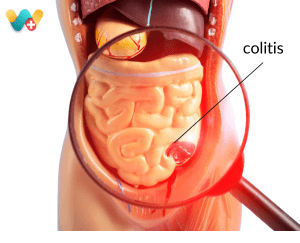
Colitis is inflammation of the colon (large intestine) - the part of the digestive tract that absorbs water and forms stool before it leaves the body. When the colon lining becomes inflamed or irritated, it can no longer function normally, leading to pain, urgency, diarrhea and, in more serious cases, bleeding.
Colitis isn't one single disease - the term covers several distinct conditions with very different causes and outlooks. Understanding which type you're dealing with is the first step towards effective, individualised homeopathic treatment. The types we most commonly see at WeClinic™ Homeopathy in Kanpur are:
- Ulcerative Colitis - a chronic autoimmune condition causing long-term inflammation and ulcers in the colon lining.
- Infectious Colitis - inflammation triggered by bacteria, viruses or parasites such as Salmonella or E. coli.
- Ischemic Colitis - inflammation caused by reduced blood flow to part of the colon.
- Pseudomembranous Colitis - inflammation linked to an overgrowth of C. difficile bacteria, often after antibiotic use.
- Microscopic Colitis - inflammation visible only under a microscope, causing chronic watery diarrhea.
- Allergic / Drug-Induced Colitis - inflammation triggered by food sensitivities or certain medications.
| Also known as | Colon inflammation; ulcerative colitis (UC) is the chronic autoimmune form and one of the two main types of inflammatory bowel disease (IBD) |
|---|---|
| Commonly affects | Most often diagnosed between ages 15-30, with a smaller second peak after age 60; can also occur in children |
| Main symptoms | Abdominal pain, diarrhea, bloody or mucus-mixed stools, urgency, tenesmus, fatigue and weight loss |
| Common causes | Overactive immune response (ulcerative colitis), gut infections (infectious colitis), reduced blood flow (ischemic colitis), or antibiotic-linked C. difficile overgrowth (pseudomembranous colitis) |
| Diagnosis | Colonoscopy with biopsy is the gold standard, supported by stool tests, blood tests and imaging |
| Homeopathic approach | Individualised, constitutional treatment aiming to ease symptoms and reduce flare frequency, used alongside ongoing medical care |
| Typical treatment duration | Initial easing often noticed within 4-8 weeks; chronic ulcerative colitis usually needs a longer, supervised course |
| When to seek urgent care | Heavy rectal bleeding, high fever, severe abdominal distension/pain, or signs of dehydration need immediate medical attention |
Common Symptoms We Treat
Colitis symptoms can range from mild and occasional to severe and persistent. Our doctors regularly see patients with the following presentations -
- Abdominal pain & cramping - often before or during a bowel movement.
- Diarrhea - loose, frequent stools that may be watery.
- Bloody stools - visible blood or mucus mixed with stool.
- Urgency to pass stool - a sudden, hard-to-control need to reach the toilet.
- Tenesmus - a constant feeling of needing to pass stool, even right after doing so.
- Fatigue & weight loss - from ongoing inflammation and reduced nutrient absorption.
- Fever - especially in infectious or severe flares.
What Causes Colitis?
The cause of colitis depends entirely on its type. Common causes our doctors evaluate for include -
- An overactive immune response attacking the colon lining (ulcerative colitis).
- Bacterial, viral or parasitic gut infections.
- Reduced blood flow to the colon (ischemic colitis).
- Overgrowth of C. difficile bacteria, often after antibiotics.
- Genetics & family history of IBD or autoimmune disease.
- Food intolerances or reactions to certain medications.
- Chronic stress, which can worsen existing inflammation.
- Smoking and certain dietary patterns.
Who Is Most at Risk?
While colitis can affect anyone, certain factors make some people more susceptible than others -
- Age: ulcerative colitis is most often diagnosed between 15-30 years, with a second smaller peak after 60.
- Family history: having a close relative with IBD or an autoimmune disease raises risk.
- Recent infections: a recent bacterial or parasitic gut infection increases risk of infectious colitis.
- Existing conditions: heart disease, low blood pressure or blood vessel problems raise the risk of ischemic colitis.
- Antibiotic use: recent or prolonged antibiotic courses increase the risk of C. difficile-related colitis.
Common Diagnostic Tests
To confirm the type and severity of colitis, doctors typically recommend -
- Colonoscopy with biopsy - to directly view the colon lining and confirm inflammation or ulcers.
- Stool tests - including fecal calprotectin, to check for inflammation, infection or parasites.
- Blood tests - to check for anemia, infection markers and general inflammation.
- Imaging (CT / MRI) - to assess the extent of inflammation or rule out complications.
Note: These tests are usually recommended by your gastroenterologist to confirm diagnosis and are an important step before starting any treatment, especially if there is bleeding, fever or persistent symptoms.
Ulcerative Colitis vs Crohn's Disease
Ulcerative colitis and Crohn's disease are both forms of inflammatory bowel disease (IBD), but they differ in where and how deeply they affect the gut. Ulcerative colitis causes continuous inflammation limited to the innermost lining of the colon and rectum only, whereas Crohn's disease can affect any part of the digestive tract from mouth to anus, typically in patchy areas with healthy tissue in between, and can penetrate deeper layers of the intestinal wall.
Bloody diarrhea and urgency are more characteristic of ulcerative colitis, while Crohn's disease more often presents with mouth ulcers, abdominal pain away from the colon, and complications such as fistulas or strictures. Because the two conditions are managed differently, an accurate diagnosis from a gastroenterologist - usually via colonoscopy and biopsy - is essential before deciding on any treatment plan, including homeopathic care.
Colitis Flares vs Remission
Ulcerative colitis typically follows a relapsing-remitting course rather than a single episode that resolves for good. A flare is a period when symptoms - abdominal pain, diarrhea, urgency and bloody stools - are active, while remission is a period when inflammation is controlled and symptoms largely settle.
Flares can be triggered by factors such as missed medication, certain foods, infections or stress, though the exact trigger isn't always identifiable. Because the condition can return even after symptoms disappear, our doctors at WeClinic™ recommend continuing an agreed treatment and monitoring plan through both flares and remission, rather than stopping care as soon as you start feeling better.
Possible Complications of Untreated or Poorly Managed Colitis
Long-standing or poorly controlled ulcerative colitis can lead to complications beyond day-to-day symptoms, which is why regular medical monitoring matters -
- Extraintestinal manifestations: around a quarter of patients develop symptoms outside the gut, including joint pain and swelling, skin conditions such as erythema nodosum, mouth ulcers, and eye inflammation such as uveitis or episcleritis.
- Toxic megacolon: a rare but serious complication where the colon becomes severely dilated, causing distension, fever and abdominal pain - this needs emergency medical treatment.
- Increased colorectal cancer risk: patients with long-standing ulcerative colitis, especially disease active for eight or more years or affecting a large portion of the colon, have a higher risk of colorectal cancer than the general population, which is why surveillance colonoscopies are recommended at more frequent intervals.
- Anemia and malnutrition: from ongoing blood loss and reduced nutrient absorption during active disease.
- Severe dehydration: from persistent diarrhea, particularly in children and older adults.
This is factual information to help you understand why long-term monitoring matters - it is not meant to alarm you. Most patients on a consistent, supervised treatment plan do not experience these complications. Please continue your gastroenterologist's recommended screening schedule even while exploring homeopathic care.
Colitis in Children
Ulcerative colitis can affect children and teenagers, not just adults, though it is less common than in adults. Paediatric colitis can present with the same core symptoms - abdominal pain, diarrhea and bloody stools - but may also show up as growth delay, delayed puberty or poor weight gain, since ongoing inflammation affects nutrient absorption during a critical growth period.
Diagnosis and treatment in children should always be supervised by a paediatric gastroenterologist. At WeClinic™, homeopathic treatment for younger patients is considered only as a complementary approach alongside that medical supervision, using gentle, individualised remedies appropriate for the child's case.
Colitis Diet: Flare vs Remission, and Other Tips
What you eat does not cause ulcerative colitis, but diet can meaningfully affect symptom comfort, and the right approach differs between a flare and remission -
- During a flare: favour smaller, more frequent, low-fibre meals; limit spicy, oily and heavily processed foods.
- During a flare: reduce caffeine, alcohol and carbonated drinks, which can worsen urgency and diarrhea.
- During remission: gradually reintroduce a varied, balanced diet with fruits, vegetables and adequate fibre as tolerated.
- At all times: stay well hydrated, especially during diarrhea episodes.
- At all times: practice good hand hygiene to lower the risk of infectious colitis.
- At all times: manage stress with regular sleep, exercise or relaxation techniques, since stress is a recognised flare trigger even though it does not cause the disease.
Our doctors provide a free personalised diet chart alongside treatment to help identify and manage your specific trigger foods.
How Homeopathy Treats Colitis
It's important to be upfront here - ulcerative colitis is a genuine, chronic autoimmune condition that requires ongoing medical management, and no treatment, homeopathic or otherwise, can promise a guaranteed cure for every patient. At WeClinic™, homeopathy is offered as a constitutional, root-cause approach that many patients explore alongside their regular gastroenterology care, with the goal of reducing flare frequency, easing abdominal pain and supporting overall gut health.
Allopathy typically manages colitis with anti-inflammatory drugs, immunosuppressants or steroids that control flares effectively but don't always prevent recurrence, and long-term use can bring side effects. Homeopathy takes a different, individualised approach focused on your overall constitution rather than the colon in isolation.
The Homeopathic Approach - Treating the Root Cause, Not Just the Symptom
Homeopathy doesn't treat colitis as an isolated "bowel problem" - it looks at your overall constitution. Our doctors at WeClinic™ take a detailed case history: the exact nature of your stools, what triggers or eases your pain, associated symptoms like urgency or mucus, and your general physical and mental makeup. Based on this, an individualised remedy and potency is prescribed for your specific case.
Commonly Referenced Homeopathic Remedies for Colitis
Classical homeopathic literature references several medicines for colitis-type symptoms, each suited to a different presentation, such as -
Commonly referenced for colitis with blood and mucus in the stool, constant urging and painful straining that isn't relieved by passing stool.
Considered for frequent, loose stools with bleeding where the patient feels no satisfaction even after repeated bowel movements.
For burning abdominal pain and diarrhea that is worse after eating or drinking, with marked restlessness and exhaustion.
Often considered for cramping pain with ineffectual urging, especially linked to spicy food, irregular eating or stress.
For severe, cutting abdominal cramps that feel better when bending double or with firm pressure on the abdomen.
Associated with sudden urgency right after eating or drinking, with jelly-like mucus in loose stools.
Often considered where diarrhea with mucus and blood is accompanied by marked flatulence and anticipatory anxiety.
Referenced for early-morning diarrhea that drives the patient out of bed, with redness and burning around the anus.
Important: This information is for educational purposes only. Please do not self-medicate, especially if you have been diagnosed with ulcerative colitis or another chronic condition. WeClinic™ doctors prescribe the right remedy and dosage only after a detailed personal case-history consultation, and any conventional medication prescribed by your gastroenterologist should be continued as advised - book your free consultation to discuss your case.
Benefits of Homeopathic Colitis Treatment
- Natural treatment with no side effects
- No risk of dependency - completely non-addictive
- Focuses on the root cause, alongside your medical care
- Safe for long-term, chronic use
- Suitable for all age groups
Homeopathy vs Allopathy for Colitis
Both approaches aim to control colitis symptoms, but they work very differently -
Allopathy
- Focuses on rapid control of active flares with anti-inflammatory or immunosuppressant drugs
- Essential for confirming diagnosis and managing severe or emergency flares
- Long-term use of some drugs can bring side effects
- Primarily targets the colon and immune response directly
Homeopathy
- Focuses on the patient's overall constitution alongside medical care
- Aims to reduce flare frequency with a complete, supervised course
- Natural remedies, safe for long-term use
- Best explored as a complement to, not a replacement for, gastroenterology care
Frequently Asked Questions About Colitis Homeopathy
Can homeopathy cure ulcerative colitis?
Ulcerative colitis is a genuine chronic autoimmune condition, and no system of medicine can promise a permanent cure for every patient. Homeopathy is explored as a constitutional, root-cause approach alongside your regular medical care, and many patients see a meaningful reduction in flare-ups, abdominal pain and bloody stools with consistent treatment. It should never replace the ongoing monitoring your gastroenterologist recommends, especially during active flares.
Is colitis the same as IBS?
No. Colitis, including ulcerative colitis, involves actual visible inflammation and often ulceration of the colon lining that shows up on a colonoscopy, while Irritable Bowel Syndrome (IBS) is a functional disorder where the bowel is sensitive but there is no structural damage or inflammation. The symptoms can overlap, so a proper diagnostic workup is important before starting any treatment.
Is bloody diarrhea always a sign of colitis?
Not always, but it is one of the most common warning signs of colitis and should never be ignored. Bloody stools can also occur with piles, fissures or infections, so a doctor needs to examine you and, if required, recommend a colonoscopy or stool test to confirm the exact cause before treatment begins.
Which is the best homeopathic medicine for colitis?
There is no single best medicine - homeopathy is individualised, and remedies like Mercurius Corrosivus, Mercurius Solubilis, Arsenicum Album, Nux Vomica, Colocynthis and Aloe Socotrina are commonly referenced in classical literature for different colitis presentations. The right remedy and potency depend entirely on your specific symptoms, so it should only be prescribed after a proper case-history consultation with a qualified homeopathic doctor.
Is ulcerative colitis an autoimmune disease?
Yes. Ulcerative colitis is classified as an autoimmune, chronic inflammatory bowel disease in which the immune system mistakenly attacks the lining of the colon and rectum. This is different from infectious colitis, which is caused by bacteria, viruses or parasites, or ischemic colitis, which is caused by reduced blood flow to the colon.
How long does homeopathic treatment take to show results in colitis?
Many patients notice some easing of abdominal pain, stool frequency and urgency within 4-8 weeks of starting treatment, though this varies with the type of colitis, how long you have had it, and its current severity. For chronic conditions like ulcerative colitis, doctors usually recommend a longer, supervised course rather than stopping as soon as symptoms settle.
Does diet trigger colitis flare-ups?
Diet does not cause ulcerative colitis, but certain foods - such as very spicy, oily or high-fibre foods during a flare, caffeine, alcohol and carbonated drinks - can trigger or worsen symptoms in many patients. Our doctors provide a personalised diet chart alongside treatment to help you identify and avoid your specific triggers.
Does homeopathic colitis treatment have any side effects?
No. Homeopathic remedies used at WeClinic™ are natural and prescribed in individualised, minimal doses, so they do not carry the side effects commonly associated with long-term steroid or immunosuppressant use, such as bone thinning or lowered immunity. That said, patients on prescribed conventional medication should never stop it without their treating doctor's advice.
What is the difference between ulcerative colitis and infectious colitis?
Ulcerative colitis is a long-term autoimmune condition where the immune system attacks the colon lining, causing recurring flares over years. Infectious colitis is usually a short-term inflammation caused by bacteria, viruses or parasites (such as Salmonella or E. coli), which typically resolves once the infection is treated or clears on its own.
What causes colitis?
Colitis can be caused by several factors depending on its type - an overactive immune response attacking the colon lining in ulcerative colitis, bacterial, viral or parasitic infections in infectious colitis, reduced blood flow to the colon in ischemic colitis, or reactions to certain antibiotics in pseudomembranous colitis. Identifying the specific type and cause is an essential first step before choosing the right treatment.
Is Mercurius Corrosivus effective for colitis with blood and mucus in stool?
Mercurius Corrosivus is one of the homeopathic remedies most frequently referenced in classical literature for colitis-type diarrhea with blood, mucus and constant, unsatisfying urging. It is a case-specific remedy, however, so it should be prescribed by a doctor after evaluating your exact symptom pattern, not self-administered.
What is the difference between ulcerative colitis and Crohn's disease?
Ulcerative colitis and Crohn's disease are both types of inflammatory bowel disease (IBD), but they differ in where and how they affect the gut. Ulcerative colitis causes continuous inflammation limited to the innermost lining of the colon and rectum, while Crohn's disease can affect any part of the digestive tract from mouth to anus, often in patchy areas, and can involve deeper layers of the intestinal wall. Bloody diarrhea is more typical of ulcerative colitis, while Crohn's is more associated with mouth ulcers, fistulas and abdominal pain away from the colon.
What is the difference between a colitis flare and remission?
A flare is a period when ulcerative colitis symptoms - abdominal pain, diarrhea, urgency and bloody stools - are active and noticeable, while remission is a period when inflammation is controlled and symptoms largely settle down. Ulcerative colitis typically follows this relapsing-remitting pattern over a lifetime, which is why doctors recommend continuing an agreed treatment and monitoring plan even during symptom-free periods rather than stopping care once you feel better.
Can ulcerative colitis affect parts of the body other than the colon?
Yes. Around a quarter of ulcerative colitis patients develop extraintestinal manifestations - symptoms outside the gut - such as joint pain and swelling, skin conditions like erythema nodosum, mouth ulcers, and eye inflammation such as uveitis or episcleritis. These occur because ulcerative colitis is a systemic autoimmune condition, not one confined only to the colon, which is why ongoing medical monitoring matters even when bowel symptoms are mild.
Does stress cause colitis flare-ups?
Stress does not cause ulcerative colitis itself, but it is a well-recognised trigger that can worsen symptoms or bring on a flare in someone who already has the condition. Managing stress through sleep, gentle exercise and relaxation techniques is a useful supportive measure alongside your prescribed medical and homeopathic treatment, though it is not a substitute for that treatment.
Can children get colitis?
Yes, ulcerative colitis can develop in children and teenagers, not only adults, and paediatric cases sometimes present with growth delay or poor weight gain in addition to the usual digestive symptoms. Diagnosis and treatment in children should always be supervised by a paediatric gastroenterologist, with homeopathic treatment at WeClinic™ considered only as a complementary option alongside that medical care.
Does ulcerative colitis increase the risk of colon cancer?
Long-standing ulcerative colitis, particularly when it has been active for eight years or more or affects a large portion of the colon, is associated with a higher risk of colorectal cancer compared to the general population. This is exactly why gastroenterologists recommend regular surveillance colonoscopies for patients with long-term disease, and it is a key reason ulcerative colitis needs continued medical monitoring even when homeopathic treatment is helping control symptoms.
Start Your Journey to Lasting Digestive Relief Today
Book a free consultation with WeClinic™'s experienced homeopathic doctors and get a treatment plan made for your specific case.
Call Now - Book Free Consultation Prefer to visit in person? Book a Clinic Appointment