


 Our specialists are online... Call now...

































Key Takeaways
- What it is: An anal fistula is an abnormal tunnel connecting the anal canal to the skin near the anus, and it almost always develops after an anal abscess drains.
- Who it affects: It is reported more often in men than women, typically between the ages of 30 and 50, and is common in people with Crohn's disease.
- Main cause: Most fistulas begin with an infected anal gland that forms an abscess; other causes include Crohn's disease, tuberculosis, prior anal surgery and radiation.
- Standard treatment: Anal fistula is generally regarded as a surgical condition, treated with procedures such as fistulotomy, seton placement, the LIFT technique or an advancement flap.
- Where homeopathy fits: WeClinic™ offers individualised homeopathic support as complementary or post-surgical care, hedged and never positioned as a replacement for a needed surgical evaluation.
- Treatment timeframe: Simple fistulas often heal within a few weeks after fistulotomy, while complex or Crohn's-related fistulas may take several months and carry a higher chance of recurrence.
- Safety point: Delaying a surgical evaluation for a confirmed fistula in favour of home remedies alone can allow infection to persist or worsen.
What Is an Anal Fistula?
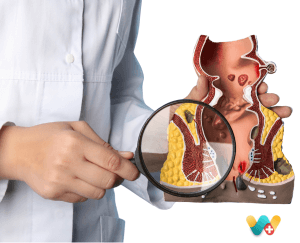
An anal fistula is an abnormal, tunnel-like tract that forms between the inside of the anal canal and the skin surrounding the anus. It most commonly develops after an anal abscess - a pocket of infection in one of the small glands lining the anal canal - either drains on its own or is surgically opened, leaving behind a connecting channel that keeps discharging fluid or pus. Unlike a simple skin wound, a true fistula tract usually does not close by itself and tends to flare up repeatedly until it is properly treated.
Doctors classify anal fistulas by how they relate to the surrounding sphincter muscles, which affects both the treatment approach and the risk involved. The common types include -
- Simple (Low / Intersphincteric) Fistula - a shorter, low tract that involves a smaller portion of the sphincter muscle.
- Complex (High / Transsphincteric) Fistula - a deeper or branching tract involving a larger portion of the sphincter muscle.
- Horseshoe Fistula - a tract that curves around the anus, often connecting two external openings.
- Recurrent Fistula - a fistula that returns after previous drainage or surgery.
- Blind / Incomplete Fistula - a tract with only one visible opening, internal or external.
- Crohn's-Related Fistula - a fistula linked to underlying inflammatory bowel disease, often more complex and prone to recurrence.
| Also known as | Fistula-in-ano, anorectal fistula, perianal fistula |
|---|---|
| Commonly affects | Adults aged roughly 30-50, more often men than women; also common in people with Crohn's disease |
| Main symptoms | Persistent pus or blood discharge, pain and swelling near the anus, recurrent abscess, skin irritation |
| Common causes | Prior anal abscess, Crohn's disease, tuberculosis, prior anal surgery, radiation, rarely malignancy |
| Diagnosis | Clinical examination, anoscopy, MRI or endoanal ultrasound, fistulogram in select complex cases |
| Standard treatment | Surgical - fistulotomy, seton placement, LIFT procedure or advancement flap, depending on tract type |
| Homeopathic approach | Individualised, hedged supportive care for comfort and recovery - not a surgical alternative |
| Typical treatment duration | A few weeks for simple fistulas after surgery; several months for complex or recurrent cases |
How a Fistula Develops From an Abscess
Most anal fistulas begin as an anal abscess - a collection of pus that forms when one of the small glands lining the anal canal becomes blocked and infected. When that abscess is drained, either on its own or by a doctor, the infected tunnel connecting the gland to the skin surface sometimes fails to close completely. This leftover tract is what becomes a fistula. Studies commonly cited by colorectal surgeons suggest that roughly one in three to one in two people who have had an anal abscess go on to develop a fistula, which is why follow-up after an abscess is drained matters even after the initial pain and swelling resolve.
Common Symptoms We Treat
Anal fistula symptoms can range from mild, intermittent discharge to significant pain and repeated abscess formation. Patients typically describe -
- Persistent discharge or pus - fluid leaking from a small opening near the anus.
- Pain and swelling - especially while sitting, walking or passing stool.
- Recurrent abscess - repeated painful swelling in the same area.
- Bleeding - occasional blood mixed with discharge or stool.
- Skin irritation and itching - around the opening due to ongoing discharge.
- Foul-smelling drainage - a persistent unpleasant odour near the anus.
What Causes an Anal Fistula?
An anal fistula almost always begins with an infection. Common causes and contributing factors include -
- An anal abscess that drains on its own or is surgically opened.
- Crohn's disease and other inflammatory bowel conditions.
- Tuberculosis affecting the anal region, in some cases.
- Prior anal or rectal surgery.
- Radiation therapy to the pelvic region.
- Diverticulitis or other bowel conditions, occasionally.
- Trauma or injury to the anal region.
- Rarely, an underlying malignancy.
Who Is Most at Risk?
While anyone can develop an anal fistula, certain factors make it more likely -
- Prior anal abscess: a history of anal abscess is the single biggest risk factor for a subsequent fistula.
- Inflammatory bowel disease: Crohn's disease and ulcerative colitis significantly raise the risk of complex, recurring fistulas.
- Diabetes and lowered immunity: these can slow healing and make infections more likely to persist.
- Chronic constipation or diarrhoea: repeated straining or irritation can contribute to gland blockage and infection.
- Gender: anal fistulas are reported more commonly in men than in women.
- Smoking and obesity: both are associated with slower wound healing and higher recurrence rates.
Common Diagnostic Approach
Confirming an anal fistula and mapping its exact path is important before deciding on treatment. Doctors typically use -
- Clinical examination and probing - a physical exam to locate the external opening and trace the tract.
- Anoscopy or proctoscopy - to view the internal opening inside the anal canal.
- MRI or endoanal ultrasound - to map complex or high fistula tracts in detail before surgery.
- Fistulogram - an imaging test using contrast dye, used in select cases.
- Colonoscopy or further gut evaluation - if Crohn's disease or another underlying bowel condition is suspected.
Goodsall's Rule: How Surgeons Predict a Fistula's Path
Goodsall's rule is a classical anatomical guideline colorectal surgeons use to estimate the internal course of a fistula tract from where its external opening sits. If the external opening lies behind an imaginary line drawn across the anus (posterior to the transverse anal line), the tract usually curves inward to open at the back of the anal canal in the midline. If the external opening lies in front of that line (anterior), the tract usually runs a straight, direct course inward. Surgeons use this rule as a helpful starting point for planning surgery, though modern imaging such as MRI is used alongside it because Goodsall's rule is less reliable for complex, high or anteriorly-placed fistulas.
MRI and Fistulogram for Complex Fistulas
For a straightforward, low fistula, a clinical exam is often enough to plan treatment. For complex, high, branching or recurrent fistulas - and especially where Crohn's disease is suspected - surgeons commonly ask for an MRI of the pelvis, which gives a detailed, three-dimensional map of the tract, any side-branches and its relationship to the sphincter muscles. A fistulogram, where contrast dye is injected into the tract and X-rayed, is used less often today but can still help in select complex or recurrent cases. Accurate mapping before surgery reduces the chance of an incomplete procedure, which is one of the main reasons fistulas recur.
What Is a Seton Procedure?
A seton is a piece of surgical thread or rubber band that a surgeon loops through the fistula tract and leaves in place, rather than cutting the tract open immediately. It is most often used for complex or high fistulas where an immediate fistulotomy could risk cutting through too much sphincter muscle and affecting bowel control. A "draining" seton keeps the tract open so infection and discharge continue to drain out while inflammation settles, sometimes as a first stage before a more definitive procedure. A "cutting" seton is tightened gradually over weeks so it slowly divides the muscle while the tissue behind it heals and scars, which can lower the risk of incontinence compared with a single cut. Seton placement is a standard surgical technique, not a homeopathic or non-surgical procedure.
Note: An anal fistula is generally considered a surgical condition in mainstream medicine. Once a fistula tract is confirmed, procedures such as a fistulotomy, seton placement, LIFT procedure or advancement flap are the standard, evidence-based treatments recommended by colorectal surgeons. Please get a proper surgical or proctology evaluation before deciding on any treatment path.
Possible Complications of an Untreated Fistula
Leaving an anal fistula untreated can lead to ongoing problems beyond the discomfort of discharge and swelling. Possible complications include -
- Repeated abscess formation in the same area, as infection keeps re-accumulating in the tract.
- Spread of the tract into new branches, turning a simple fistula into a complex one over time.
- Chronic pain, persistent foul-smelling discharge and skin breakdown around the anus.
- Scarring that can affect the anal sphincter and, in longstanding cases, bowel control.
- Systemic infection or fever if an abscess is not drained promptly.
- A very small but recognised risk of malignant change in fistulas that go untreated for many years.
Why fistulas recur so often: A key reason anal fistulas have a relatively high recurrence rate is inadequate initial treatment - a missed side-branch, an internal opening that wasn't identified, or a tract that wasn't fully addressed at surgery. This is why accurate pre-surgical mapping (MRI, endoanal ultrasound) and follow-up with an experienced colorectal surgeon matter as much as the procedure itself.
Day-to-Day Hygiene and Discharge Management
Living with an active fistula, or recovering from fistula surgery, mainly comes down to keeping the area clean and protecting the skin from ongoing discharge. Practical day-to-day steps include -
- Gentle cleaning after every bowel movement - rinse with plain warm water rather than scrubbing or using harsh soaps.
- Pat dry, don't rub - use a soft towel or clean cloth to avoid irritating already-sensitive skin.
- Use a gauze pad or panty liner - to absorb ongoing discharge and keep clothing clean, changing it regularly through the day.
- Sitz baths - sitting in warm, shallow water for 10-15 minutes a few times a day can soothe discomfort and keep the area clean.
- Loose, breathable underwear and clothing - to reduce friction and moisture build-up around the area.
- Track discharge changes - note any increase in volume, colour change, new odour or fever, and report these to your doctor promptly as they can signal a fresh abscess.
Care & Prevention Tips
- Get any anal abscess drained and treated promptly - don't let it linger.
- Maintain good anal hygiene, especially after bowel movements.
- Manage constipation and diarrhoea with adequate fibre and hydration.
- Keep underlying conditions like Crohn's disease or diabetes well controlled.
- Avoid prolonged sitting on hard surfaces where possible.
- Don't ignore recurring discharge or swelling - seek evaluation early.
How Homeopathy Approaches Anal Fistula
Homeopathy approaches anal fistula as conservative, individualised supportive care - not as a replacement for surgery. In mainstream colorectal medicine, an anal fistula is regarded as a structural, surgical condition: once an abnormal tract has formed between the anal canal and the skin, it typically does not close on its own or with medicine alone. Procedures such as fistulotomy, seton placement, the LIFT technique or an advancement flap remain the standard, definitive treatment recommended by colorectal surgeons worldwide, particularly for confirmed, persistent or complex fistulas.
At WeClinic™ Homeopathy in Kanpur, we believe in being transparent about this, and our reviewing physician, Dr. S P Verma, is clear with every patient on this point. We do not claim that homeopathy replaces surgery for an anal fistula. What our doctors offer instead is individualised, constitutional homeopathic support that some patients explore in specific situations - such as very early or mild discharge while awaiting a formal surgical opinion, as complementary care to help with discomfort and recurring abscess tendency alongside standard treatment, or as post-surgical recovery support once the definitive procedure has been carried out. In every case, we encourage a proper evaluation by a colorectal surgeon or proctologist alongside any homeopathic consultation.
The Homeopathic Approach - Individualised, Case-Based Support
When patients consult us about fistula symptoms, our doctors take a detailed case history - the nature and colour of the discharge, the pain pattern, how often abscesses recur, any underlying conditions like Crohn's disease or diabetes, and the patient's general health and constitution. This case-specific information guides whether homeopathic supportive care is appropriate for that individual, and whether an urgent surgical referral is needed first.
Commonly Referenced Homeopathic Remedies for Fistula Symptoms
Classical homeopathic literature references several remedies for the discharge, pain and suppurative tendency associated with fistula, each suited to a different presentation, such as -
Commonly referenced where there is copious, foul-smelling or blood-tinged pus discharge and a tendency towards slow-healing suppuration.
Often considered for thick, yellowish discharge, typically in its biochemic tissue-salt form.
Associated with sharp, shooting or stitching pain around the anus and rectal region.
Referenced in classical texts for supporting drainage and comfort in suppurative, abscess-prone conditions.
Considered for extreme tenderness to touch, chilliness and a marked tendency towards recurring abscess formation.
Sometimes referenced for a relatively painless fistula with persistent discharge, particularly where general tissue healing is sluggish.
Referenced in classical texts for a pulsating type of pain around the fistula opening.
Traditionally associated with marked pain and itching around the anus alongside fistula symptoms.
Important - please read: This information is for educational purposes only and is not a substitute for a surgical or proctology evaluation. Anal fistula is generally a surgical condition, and self-medicating or delaying a proper diagnosis can allow infection to persist or worsen. WeClinic™ doctors only suggest supportive remedies after a detailed case-history consultation, and will always advise you to seek surgical assessment where one is warranted.
What Homeopathic Support May Offer
- Natural, individualised supportive care
- No known dependency or long-term side effects
- Can be used alongside standard surgical treatment
- Support for comfort during post-surgical recovery
- Personalised, case-history based approach
Homeopathy vs Allopathy (Surgery) for Anal Fistula
These two approaches play very different roles in fistula care, and understanding that difference matters for making a safe decision -
Allopathy (Surgery)
- The standard, definitive treatment for a confirmed fistula tract
- Directly closes or removes the abnormal tract
- Well-established outcomes for simple fistulas
- Recommended evaluation for complex, recurrent or Crohn's-related cases
Homeopathy (Supportive Care)
- Does not replace surgery for a confirmed fistula tract
- May support comfort, discharge symptoms and general well-being
- Considered for very early or mild presentations, under medical guidance
- Often used alongside or after surgery, as complementary recovery support
Frequently Asked Questions About Anal Fistula Homeopathy
What is an anal fistula and what causes it?
An anal fistula is an abnormal tunnel that forms between the inside of the anal canal and the skin around the anus. It most commonly develops after an anal abscess - a pocket of infection in one of the small glands inside the anal canal - drains on its own or is surgically opened, leaving behind a tract. Less commonly, it can be linked to Crohn's disease, tuberculosis, prior anal surgery, radiation or, rarely, cancer.
What are the symptoms of an anal fistula?
The most common symptoms are persistent or recurrent discharge of pus or blood near the anus, pain and swelling that may worsen when sitting or passing stool, skin irritation and itching around the opening, a foul smell, and repeated abscess formation in the same area. Some patients also notice fever during an active flare-up.
Is anal fistula linked to Crohn's disease?
Yes, in some patients. Ongoing gut inflammation in Crohn's disease and other forms of inflammatory bowel disease makes the perianal tissue more prone to abscess and fistula formation, and these fistulas tend to be more complex and more likely to recur. If you have a known history of Crohn's disease along with fistula symptoms, it is important that your gastroenterologist and colorectal surgeon are both involved in your care.
Is surgery always required for an anal fistula?
In mainstream colorectal medicine, surgery is considered the standard and most reliable treatment for a confirmed anal fistula, because once the abnormal tract has formed it typically does not close on its own with medicine alone. Depending on the type of fistula, doctors may recommend a fistulotomy, seton placement, LIFT procedure or an advancement flap. A proper evaluation by a colorectal surgeon or proctologist is strongly recommended before deciding on any treatment path.
Can homeopathy cure an anal fistula without surgery?
We want to be honest with you: an anal fistula is generally a surgical condition, and we do not claim that homeopathy can replace surgery once a fistula tract is confirmed. What our doctors offer is individualised homeopathic support - which some patients explore for very early or mild presentations under close medical monitoring, for easing discomfort and recurring abscess tendency, or alongside and after surgical treatment. Homeopathy is not positioned as a substitute for a surgical evaluation.
What homeopathic support does WeClinic offer for anal fistula?
Our doctors take a detailed case history - the nature of the discharge, pain pattern, recurrence, and your general health - before considering remedies that are commonly referenced in classical homeopathic literature, such as Silicea, Calcarea Sulphurica, Berberis Vulgaris, Myristica Sebifera and Hepar Sulphuris Calcareum. These are prescribed only after a proper consultation and are meant to support comfort and recovery, not to replace a surgical opinion where one is needed.
How long does recovery take after fistula treatment?
Recovery time depends heavily on the type of fistula and the treatment path chosen. After a straightforward fistulotomy for a simple fistula, healing often takes a few weeks; complex fistulas treated with a seton or staged surgery can take several months to fully heal. If you are using homeopathic supportive care post-surgery, your doctor will track your progress over follow-up consultations rather than promise a fixed timeline.
Can an anal fistula come back after surgery?
Yes, recurrence is possible, particularly with complex, high or Crohn's-related fistulas, or if the underlying abscess was not fully treated. This is why long-term follow-up with your surgeon is important, along with good anal hygiene, prompt treatment of any new abscess, and management of underlying conditions like Crohn's disease or diabetes that can increase recurrence risk.
Does homeopathic treatment for fistula have side effects?
Homeopathic remedies used at WeClinic™ are natural and prescribed in individualised, minimal doses, so they are generally well tolerated and do not carry the side effects associated with long-term antibiotic or painkiller use. That said, homeopathy should never be used to delay a necessary surgical evaluation for a confirmed fistula, as an untreated tract can lead to repeated infection.
Can homeopathy help with recovery after fistula surgery?
Some patients look for supportive, natural care alongside their surgical recovery to help with residual discharge, discomfort and general well-being while the wound heals. Our doctors can review your case post-surgery and, where appropriate, suggest individualised homeopathic support to complement - not replace - the care and follow-up advised by your operating surgeon.
How is an anal fistula related to an anal abscess?
An anal fistula usually develops directly from a previous anal abscess. The abscess is a pocket of infection in one of the small glands lining the anal canal; when it drains, either on its own or through surgical incision, the connecting tunnel sometimes fails to heal completely and becomes a persistent fistula. This is why prompt, complete treatment of an abscess - and follow-up afterwards - matters even once the initial pain has settled.
What is Goodsall's rule and how is it used for anal fistula?
Goodsall's rule is a classical anatomical guideline surgeons use to predict a fistula tract's likely path from the position of its external opening. Openings behind the transverse anal line typically curve inward to the back of the anal canal, while openings in front of that line usually track in a straighter, direct course. Surgeons use it as a useful starting point for planning treatment, though it is considered less reliable for complex or high fistulas and is often combined with MRI or ultrasound imaging.
What is a seton and why do surgeons use it for anal fistula?
A seton is a surgical thread or band that a surgeon threads through the fistula tract and leaves in place, typically for complex or high fistulas where an immediate cut could risk sphincter muscle and affect bowel control. A draining seton keeps the tract open so infection continues to drain while inflammation settles; a cutting seton is tightened gradually over weeks to slowly divide the tissue while it heals behind it. Seton placement is a standard surgical technique, not a form of homeopathic treatment.
What complications can happen if an anal fistula is left untreated?
An untreated anal fistula can lead to repeated abscess formation in the same area, spread into new branching tracts that turn a simple fistula into a complex one, chronic pain and skin breakdown from ongoing discharge, scarring that can affect sphincter function and bowel control over time, and, in longstanding untreated cases, a small but recognised risk of malignant change. These risks are a key reason early evaluation is recommended rather than letting symptoms persist.
How should I manage discharge and hygiene with an anal fistula?
Day-to-day management of an anal fistula centres on gentle hygiene and protecting the skin from ongoing discharge - rinsing with warm water after bowel movements instead of scrubbing, patting the area dry, using a gauze pad or panty liner to absorb discharge, taking warm sitz baths for comfort, wearing loose breathable underwear, and tracking any increase in discharge, odour or fever to report to your doctor promptly, as these can signal a fresh abscess.
When is an MRI or fistulogram needed for anal fistula?
An MRI or fistulogram is generally recommended for complex, high, branching or recurrent fistulas, and for patients with suspected Crohn's disease, because these cases need a detailed map of the tract and its relationship to the sphincter muscles before surgery. A straightforward, low fistula can often be diagnosed and planned with a clinical examination alone, without needing advanced imaging.
Get Honest, Personalised Guidance for Your Fistula Symptoms
Book a free consultation with WeClinic™'s experienced homeopathic doctors and get a supportive care plan suited to your specific case.
Call Now - Book Free Consultation Prefer to visit in person? Book a Clinic Appointment