


 Our specialists are online... Call now...

































Key Takeaways
- What it is: Benign prostatic hyperplasia (BPH) is a non-cancerous enlargement of the prostate gland that narrows the urethra and affects urine flow.
- Who it affects: BPH becomes increasingly common with age, affecting a large proportion of men over 50 and the majority of men in their 70s and 80s.
- Main causes: Age-related hormonal changes, particularly shifts in testosterone and dihydrotestosterone (DHT), are the primary driver, with family history, obesity and diabetes as contributing factors.
- Not prostate cancer: BPH is benign and does not turn into prostate cancer, though the two conditions can share early symptoms and should be told apart with a PSA test.
- Homeopathic approach: Individualised homeopathic treatment aims to manage BPH symptoms such as frequent urination and weak stream through a constitutional, root-cause approach.
- Typical timeframe: Many patients report noticeable symptom improvement within 4-8 weeks of starting a properly prescribed course, though full response varies by case.
- Safety point: Persistent, worsening or sudden urinary symptoms - including inability to urinate or blood in urine - need prompt medical evaluation and should never be managed with self-medication alone.
What Is Prostate Enlargement (BPH)?
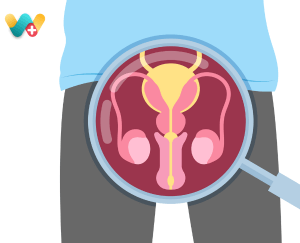
Benign prostatic hyperplasia (BPH), commonly called prostate enlargement, is a non-cancerous increase in the size of the prostate gland - the small, walnut-sized gland that sits just below the bladder and surrounds the urethra. As the prostate enlarges with age, it can press on and narrow the urethra, making it harder for urine to pass and causing the bladder to work harder to push urine out.
BPH is one of the most common conditions affecting men as they get older, and it is important to understand that it is a benign, non-malignant change - the enlarged cells do not spread to other parts of the body. Still, the urinary symptoms it causes can significantly affect day-to-day comfort and sleep, which is why timely treatment matters.
- Non-cancerous - BPH is a benign enlargement, distinct from prostate cancer.
- Age-related - becomes increasingly common after age 50.
- Progressive - symptoms often develop gradually over months or years.
- Very common - affects a large proportion of ageing men worldwide.
- Manageable - most cases respond well to medical or homeopathic management.
- Not a cancer risk - having BPH does not increase your chance of prostate cancer.
| Also known as | Benign prostatic hyperplasia (BPH), prostate enlargement, enlarged prostate |
|---|---|
| Commonly affects | Men aged 50 and above; prevalence rises steadily with each decade of age |
| Main symptoms | Frequent urination, weak stream, nighttime urination, incomplete emptying, hesitancy |
| Common causes | Age-related hormonal changes, family history, obesity, type 2 diabetes, sedentary lifestyle |
| Diagnosis | Digital rectal exam, PSA blood test, uroflowmetry, ultrasound, IPSS symptom questionnaire |
| Homeopathic approach | Individualised, constitutional remedies aimed at easing urinary symptoms and supporting bladder function |
| Typical treatment duration | Initial improvement often reported within 4-8 weeks; full course length varies by case severity |
| When to seek urgent care | Inability to urinate, blood in urine, fever with urinary symptoms, or severe pain |
Common Symptoms We Treat
BPH symptoms, often grouped as lower urinary tract symptoms (LUTS), tend to develop gradually and can range from mildly bothersome to significantly disruptive. Our doctors regularly see patients with the following presentations -
- Frequent urination - needing to urinate more often than usual, day and night.
- Weak or slow urine stream - a noticeably reduced flow when urinating.
- Nighttime urination (nocturia) - waking up multiple times at night to urinate.
- Incomplete bladder emptying - feeling like the bladder hasn't fully emptied.
- Urinary hesitancy - difficulty starting the urine stream.
- Straining & dribbling - needing to strain to urinate, or dribbling at the end.
- Urgency - a sudden, hard-to-postpone need to urinate.
- Interrupted stream - the flow starting and stopping during urination.
How Doctors Measure BPH Severity: The IPSS Score
The International Prostate Symptom Score (IPSS) is the standard 8-question tool doctors use to grade how severe BPH symptoms are and track response to treatment. The first seven questions score frequency, nocturia, weak stream, hesitancy, intermittent flow, incomplete emptying and urgency on a 0-5 scale, and the eighth question rates how much these symptoms affect quality of life. A total score of 0-7 is considered mild, 8-19 moderate, and 20-35 severe. Your doctor may use the IPSS at your first visit and periodically afterward to objectively track whether your symptoms are improving.
BPH vs Prostatitis: What's the Difference?
BPH and prostatitis are two different prostate conditions that are often confused because both can cause urinary symptoms. BPH is a benign, age-related enlargement of prostate tissue with no infection or inflammation involved, and it typically develops gradually over months or years, mainly in men over 50. Prostatitis, by contrast, is inflammation or infection of the prostate gland that can affect men of any age, usually comes on more suddenly, and is often accompanied by pain - in the pelvis, lower back or during ejaculation - which is uncommon in straightforward BPH. Because the two conditions can also occur together, a doctor's evaluation is needed to tell them apart and treat each correctly.
Possible Complications of Untreated BPH
Untreated or poorly managed BPH can gradually lead to complications beyond day-to-day urinary discomfort. These include -
- Acute urinary retention: sudden, complete inability to urinate, which is a medical emergency requiring immediate catheterisation.
- Recurrent urinary tract infections: incomplete bladder emptying leaves residual urine that allows bacteria to multiply.
- Bladder stones: minerals in retained urine can crystallise into stones, causing pain or blood in urine.
- Bladder damage: a bladder that has to strain against a blocked urethra for years can gradually weaken and lose its ability to empty properly.
- Kidney damage: long-standing, severe blockage can cause urine to back up toward the kidneys, a condition called obstructive nephropathy that can impair kidney function over time.
These complications are more likely with long-standing, severe, untreated obstruction. They are one of the key reasons doctors advise against ignoring persistent BPH symptoms, whichever treatment path - allopathic, surgical or homeopathic - a patient chooses.
What Causes BPH?
The exact cause of prostate enlargement isn't completely understood, but it is closely linked to the hormonal changes that occur naturally as men age. Common contributing factors include -
- Natural ageing & hormonal changes (shifting testosterone levels).
- Family history of BPH.
- Obesity & excess body weight.
- Type 2 diabetes.
- Sedentary lifestyle with little physical activity.
- Metabolic conditions such as high cholesterol.
- Heart disease and related cardiovascular risk factors.
- Erectile dysfunction, which often occurs alongside BPH.
Who Is Most at Risk?
While almost every ageing man will experience some prostate growth, certain factors make bothersome symptoms more likely -
- Age: risk increases significantly after 50 and continues to rise with age.
- Family history: having a father or brother with BPH raises your own risk.
- Obesity & inactivity: excess weight and a sedentary lifestyle are linked to more severe symptoms.
- Underlying conditions: type 2 diabetes and heart disease are associated with a higher likelihood of BPH.
Important: BPH is a benign, non-cancerous condition and does not turn into prostate cancer. However, since BPH and prostate cancer can share early symptoms such as frequent or weak urination, any persistent or worsening urinary symptoms should be evaluated by a doctor with a PSA test and clinical examination to rule out more serious causes.
Common Diagnostic Tests
To confirm BPH and rule out other conditions, doctors typically recommend -
- Digital Rectal Exam (DRE) - a quick physical check of the prostate's size, shape and texture.
- PSA blood test - measures prostate-specific antigen levels, helping assess prostate health and screen for cancer risk.
- Uroflowmetry - measures the speed and volume of urine flow to gauge how much BPH is affecting urination.
- Ultrasound - checks prostate size, bladder emptying and rules out other urinary tract issues.
Note: These tests are usually recommended based on your symptoms and are not required for every patient. Your doctor will decide which are appropriate for your case.
Lifestyle & Bladder Health Tips
- Maintain a healthy body weight through diet & exercise.
- Stay physically active with regular, moderate exercise.
- Reduce fluids in the evening, especially before bedtime.
- Limit caffeine & alcohol, which can irritate the bladder.
- Avoid holding urine for long periods - urinate when you feel the urge.
- Eat a balanced diet rich in fruits, vegetables & whole grains.
- Practice timed voiding to train bladder habits.
- Go for regular checkups, especially after age 50.
Medical & Surgical Options for BPH (For Comparison)
Conventional medicine treats BPH with a step-up approach depending on symptom severity, starting with medication before considering procedures. Understanding these options helps put homeopathic treatment in context -
- Alpha-blockers (e.g. tamsulosin, alfuzosin): relax the muscle fibres in the prostate and bladder neck to ease urine flow quickly, though they can cause dizziness, low blood pressure and ejaculation changes.
- 5-alpha-reductase inhibitors (e.g. finasteride, dutasteride): shrink the prostate gland over months by blocking the hormone that drives its growth, but are linked to reduced libido and erectile difficulty in some men, which can persist even after stopping the drug.
- Combination therapy: using both drug classes together for larger prostates or more severe symptoms, at the cost of a higher combined side-effect burden.
- TURP (transurethral resection of the prostate): the standard surgical procedure for moderate-to-severe BPH, involving removal of excess prostate tissue; effective but carries risks of ejaculation problems and, less commonly, erectile dysfunction.
- Minimally invasive procedures: options such as laser prostatectomy, UroLift and prostate artery embolisation are used in select cases to relieve blockage with shorter recovery than traditional surgery.
Sexual side effects - reduced libido, ejaculation changes or erectile difficulty - are a recognised consideration with several BPH medications and with TURP surgery. Discuss this openly with your treating doctor when weighing treatment options, and mention any such concerns during your homeopathic case-history consultation as well.
How Homeopathy Treats BPH
Homeopathy manages BPH symptoms through an individualised, constitutional approach rather than the medication or surgical routes described above - it aims to ease frequent urination, weak stream and nighttime urgency without the sexual side effects associated with some allopathic drugs. Homeopathy takes an entirely different approach to managing the symptoms of prostate enlargement, working with the whole person rather than the prostate in isolation.
The Homeopathic Approach - Treating the Whole Person, Not Just the Prostate
Homeopathy doesn't look at BPH as an isolated urinary problem - it considers your overall constitution. At WeClinic™ Homeopathy in Kanpur, Dr. Satyam Vaishya and our team of doctors take a detailed case history: the nature of your urinary symptoms, what makes them better or worse, how long you've had them, your general physical health and other associated complaints. Based on this, an individualised remedy and potency is prescribed for your specific case.
Commonly Referenced Homeopathic Remedies for Prostate Enlargement
Classical homeopathic literature references several medicines for BPH-related urinary symptoms, each suited to a different type of case, such as -
Often considered for a frequent urge to urinate, especially at night, along with a weak or dribbling stream.
Traditionally referenced for a sensation of fullness in the perineum with straining and incomplete emptying.
Commonly associated with a urine flow that starts and stops repeatedly during urination.
Often considered in older, sluggish patients with prostate enlargement and a sudden, frequent urge to urinate.
Referenced for a slow, split or forked stream with a persistent urge to urinate, often worse at night.
Traditionally used for cases of difficult urination where considerable straining is needed to pass urine.
Sometimes referenced where urinary retention is accompanied by a weak, slow or paralysed-feeling bladder.
Commonly considered for cases with a delayed start to the urine stream and a sediment or brick-dust deposit in urine.
Traditionally referenced for a constant urge to urinate with a sensation of a drop remaining after passing urine.
Important: This information is for educational purposes only. Please do not self-medicate. WeClinic™ doctors prescribe the right remedy and dosage only after a detailed personal case-history consultation, so book your free consultation before starting any treatment. Persistent or worsening urinary symptoms should always be medically evaluated to rule out prostate cancer or other conditions.
Benefits of Homeopathic Treatment for Prostate Enlargement
- Natural treatment with no side effects
- No risk of dependency - completely non-addictive
- Treats the root cause, not just the symptoms
- Safe for long-term, chronic use
- May help manage mild-to-moderate symptoms without surgery
Homeopathy vs Allopathy for Prostate Enlargement
Both approaches aim to relieve BPH symptoms, but they work very differently -
Allopathy
- Focuses on relaxing the prostate muscle or shrinking the gland with medication
- Symptoms can return once medicine is stopped
- Long-term use can bring side effects
- Surgery is considered for severe, unresponsive cases
Homeopathy
- Focuses on the root-cause, constitutional imbalance
- Aims for lasting symptom relief with a complete course
- Natural remedies, safe for long-term use
- May help avoid or delay the need for surgery in suitable cases
Frequently Asked Questions About Prostate Enlargement Homeopathy
Is prostate enlargement (BPH) the same as prostate cancer?
No. BPH (benign prostatic hyperplasia) is a non-cancerous enlargement of the prostate - the extra cells are not malignant and do not spread to other parts of the body. Prostate cancer is a separate, more serious condition. Because both can cause similar urinary symptoms, persistent or worsening symptoms should always be evaluated by a doctor with a PSA blood test and, if needed, a digital rectal exam to rule out prostate cancer.
Can homeopathy shrink an enlarged prostate?
Homeopathy is commonly used to manage the symptoms of BPH - frequent urination, weak stream and nighttime urgency - by working on the underlying constitutional imbalance. Many patients experience gradual, meaningful symptom relief over a course of treatment, though the extent of change in prostate size varies from person to person and should be monitored by your doctor alongside standard diagnostic tests.
Is BPH common with age?
Yes. Prostate enlargement is one of the most common conditions affecting men as they get older, with the likelihood increasing significantly after age 50. It occurs due to natural hormonal changes in the body over time and is considered a normal part of ageing for many men rather than a disease in itself.
Does BPH lead to prostate cancer?
No, having BPH does not increase your risk of developing prostate cancer, and BPH does not turn into cancer over time. However, since both conditions can occur at the same time and share some early symptoms, doctors recommend regular checkups and a PSA test so that any changes are caught and evaluated early.
Which homeopathic medicine is best for prostate enlargement?
There is no single best medicine - homeopathy is individualised, and remedies like Sabal Serrulata, Chimaphila Umbellata, Conium Maculatum, Baryta Carbonica, Thuja Occidentalis and Pareira Brava are commonly referenced in classical literature for different BPH presentations. The right remedy and potency depend entirely on your specific symptoms, so it should only be prescribed after a proper case-history consultation with a qualified homeopathic doctor.
Is surgery always needed for an enlarged prostate?
No, surgery is usually reserved for severe cases with significant blockage or complications. Many men with mild-to-moderate BPH symptoms are managed with medication, lifestyle changes or homeopathic treatment first, and surgery is considered only if symptoms are severe or do not respond to other approaches.
How long does homeopathic treatment take to show results in BPH?
Most patients notice an improvement in urinary frequency, stream strength and nighttime urgency within 4-8 weeks of starting treatment, though this varies with the severity of enlargement and how long symptoms have been present. For lasting relief, doctors usually recommend completing the full course rather than stopping as soon as symptoms ease.
Is homeopathic treatment for BPH safe for long-term use?
Yes, homeopathic medicines are prepared from natural sources and, when taken in the doctor-prescribed dose, are safe for long-term use with no known dependency or side effects. This makes homeopathy a suitable option for a chronic, age-related condition like BPH that often needs sustained management.
What causes prostate enlargement?
Prostate enlargement is mainly linked to hormonal changes that occur naturally with age, as shifts in testosterone and other hormones cause prostate cells to multiply over time. Other contributing factors include family history, obesity, type 2 diabetes and a sedentary lifestyle.
What urinary symptoms need immediate medical evaluation?
You should see a doctor promptly if you notice blood in your urine, inability to urinate at all, severe pain while urinating, fever with urinary symptoms, or unexplained weight loss along with urinary changes. These can indicate complications or a more serious underlying condition that needs urgent evaluation rather than home management.
What is the IPSS score and how is BPH severity measured?
The International Prostate Symptom Score (IPSS) is an 8-question tool doctors use to grade BPH severity as mild (0-7), moderate (8-19) or severe (20-35), based on symptoms like frequency, nocturia, weak stream and how much they affect quality of life. Doctors use it at diagnosis and periodically afterward to track whether treatment is helping.
What complications can untreated BPH cause?
Untreated BPH can lead to complications such as acute urinary retention (sudden inability to urinate), recurrent urinary tract infections, bladder stones, a weakened bladder that cannot empty properly, and, in severe long-standing cases, kidney damage from urine backing up toward the kidneys. These risks are a key reason persistent urinary symptoms should not be ignored, regardless of which treatment approach is chosen.
Do BPH medications affect sexual function?
Yes - some conventional BPH medications can affect sexual function. Alpha-blockers are linked to ejaculation changes, while 5-alpha-reductase inhibitors are associated with reduced libido and erectile difficulty that can sometimes persist even after stopping the drug. TURP surgery also carries a risk of ejaculation problems and, less commonly, erectile dysfunction. These are worth discussing openly with your treating doctor when choosing a treatment path.
What is the difference between BPH and prostatitis?
BPH is a benign, age-related enlargement of the prostate that develops gradually and is not caused by infection or inflammation, while prostatitis is inflammation or infection of the prostate that can affect men of any age, tends to come on more suddenly, and is often accompanied by pain that is uncommon in straightforward BPH. The two conditions can occur together, so a doctor's evaluation is needed to distinguish them.
Can lifestyle changes help reduce nighttime urination from BPH?
Yes - simple lifestyle changes can meaningfully reduce nighttime urination linked to BPH. Reducing fluid intake in the evening, limiting caffeine and alcohol (both of which irritate the bladder), avoiding holding urine for long periods, and practising timed voiding during the day can all help. These measures work alongside, not instead of, medical or homeopathic treatment for more persistent symptoms.
Start Your Journey to Better Urinary Health Today
Book a free consultation with WeClinic™'s experienced homeopathic doctors and get a treatment plan made for your specific case.
Call Now - Book Free Consultation Prefer to visit in person? Book a Clinic Appointment