


 Our specialists are online... Call now...




























Key Takeaways
- What it is: A varicocele is an abnormal enlargement of the veins in the scrotum, caused by faulty valves that let blood pool instead of draining normally.
- Who it affects: It develops in roughly 15% of adult men and about 1 in 5 adolescent boys, most often first noticed during the growth spurt of puberty.
- Left-side pattern: Varicocele is far more common on the left side because the left testicular vein drains into the left renal vein at a steeper, less favourable angle than the right.
- Fertility link: A varicocele can raise scrotal temperature and reduce blood oxygenation around the testicle, which may impair sperm production in some men - it is found in about 4 in 10 men evaluated for infertility.
- Not always treatment-needed: Many varicoceles are mild and symptom-free and only require periodic monitoring rather than active treatment.
- Homeopathy's role: WeClinic™ Homeopathy in Kanpur offers individualised homeopathic support for symptomatic comfort in mild, medically-monitored cases - it is used alongside, never instead of, urology care.
- Standard of care: Surgery (varicocelectomy) or embolization remains the evidence-based treatment for higher-grade varicoceles, significant pain or confirmed fertility impact.
What Is a Varicocele?
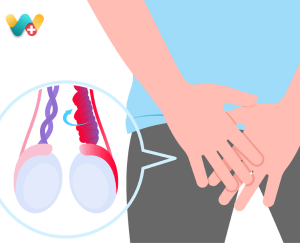
A varicocele is an enlargement of the veins within the loose bag of skin that holds the testicles (the scrotum) - similar in nature to varicose veins that can develop in the legs. It happens when the small valves inside the veins of the spermatic cord don't work properly, causing blood to pool instead of draining efficiently, which makes the veins widen and become engorged over time.
Varicoceles usually form during puberty and develop gradually. They are far more common on the left side of the scrotum - largely because of how the left testicular vein drains into the left renal vein at a less favourable angle compared to the right side. Doctors grade a varicocele by how easily it can be felt or seen on examination -
- Subclinical (Grade 0) - not felt on exam, only detected on ultrasound.
- Grade I - felt only while performing the Valsalva manoeuvre (bearing down).
- Grade II - can be felt without straining, but not visible to the eye.
- Grade III - clearly visible through the scrotal skin, often described as a "bag of worms".
| Also known as | Varicose veins of the scrotum / spermatic cord |
|---|---|
| Commonly affects | Adolescent boys and men, usually the left side of the scrotum |
| Main symptoms | Dull ache or heaviness, worse on standing; visible/palpable veins; often no symptoms at all |
| Common causes | Faulty valves in the spermatic vein, anatomy of the left testicular vein, increased pressure during puberty |
| Diagnosis | Physical exam with Valsalva manoeuvre, scrotal ultrasound with Doppler, semen analysis if fertility is a concern |
| Homeopathic approach | Individualised, constitutional support for symptomatic comfort in mild, medically-monitored cases |
| Typical treatment duration | Symptomatic relief sometimes noticed within 4-8 weeks; does not reverse the enlarged vein itself |
| When to seek urgent care | Sudden onset in older age, rapid swelling, severe pain, or a lump that doesn't fit the classic description - needs prompt urology evaluation |
Common Symptoms We Treat
Many men with a varicocele have no symptoms at all and only discover it during a routine exam or a fertility work-up. When symptoms are present, our doctors commonly see -
- Dull, aching pain or heaviness in the scrotum.
- Discomfort that worsens with standing or exertion, and eases lying down.
- Visible or palpable swollen veins above the testicle.
- A size difference between the two testicles in some longstanding cases.
- No noticeable symptoms - found incidentally on examination.
- Fertility concerns prompting a work-up that reveals a varicocele.
What Causes a Varicocele?
A varicocele develops when the normal one-way flow of blood out of the scrotum is disrupted. Common contributing factors include -
- Faulty valves inside the spermatic vein that allow blood to pool and reflux.
- The anatomy of the left testicular vein, which drains at a steeper angle - explaining why it is more common on the left.
- Increased pressure within the abdomen or pelvis.
- Developing during puberty, as blood flow to the testicles increases.
- Standing for long periods, which can increase venous pressure.
- Rarely, a mass in the abdomen pressing on the veins - a reason sudden-onset varicoceles in older men need prompt evaluation.
Who Is Most at Risk?
While a varicocele can develop in any male, certain factors make it more likely -
- Age: most commonly develops during puberty, roughly between the ages of 10 and 20.
- Family history: having a close relative with a varicocele can increase your likelihood of developing one.
- Fertility evaluation: around 4 in 10 men assessed for fertility problems are found to have a varicocele.
- Occupation and lifestyle: jobs involving prolonged standing may make symptoms more noticeable, though they don't necessarily cause the varicocele.
Varicocele in Teenagers: What Parents Should Know
Varicocele most often first appears during the growth spurt of puberty, affecting roughly 1 in 5 adolescent boys. It is frequently picked up incidentally during a school health check or a routine physical exam rather than because the teenager reports pain, since most adolescent varicoceles cause no symptoms at all.
The main reason doctors monitor varicocele closely in teenagers is testicular growth - in some boys, a varicocele can be associated with the affected testicle growing more slowly than the other side. For this reason, paediatric urologists typically recommend periodic size comparison (either by physical measurement or ultrasound) rather than immediate treatment, and only consider surgery if there is a significant, persistent size difference, pain, or a large (Grade III) varicocele. Most adolescent varicoceles are simply tracked through the teenage years without needing any intervention.
Common Diagnostic Tests
To confirm and grade a varicocele, and to understand whether it may be affecting fertility, doctors typically recommend -
- Physical examination - a standing exam, often combined with the Valsalva manoeuvre, to feel for enlarged veins.
- Scrotal ultrasound with Doppler - confirms the diagnosis, grades the varicocele and rules out other causes of scrotal swelling.
- Semen analysis - recommended if fertility is a concern, to check sperm count, motility and morphology.
- Hormonal blood tests - occasionally used to assess overall testicular function.
Note: Not every patient needs every test - your doctor decides what's necessary based on your symptoms, examination findings and whether fertility is a current concern.
Care & Monitoring Tips
- Avoid prolonged standing where possible, and take regular breaks.
- Wear supportive underwear during exercise or long periods on your feet.
- Maintain a healthy weight and stay physically active.
- Keep track of any changes in scrotal size, shape or discomfort.
- Go for periodic ultrasound or semen analysis if you are trying to conceive.
- Don't ignore a newly developed varicocele in older age - get it evaluated promptly.
How Homeopathy Approaches Varicocele
Because a varicocele is fundamentally a structural, mechanical problem with the valves inside a vein, surgery (varicocelectomy) or radiological embolization remains the standard, evidence-based treatment recommended by urologists - particularly for higher-grade varicoceles, significant or persistent pain, a noticeable size difference between the testicles, or when fertility investigations point to the varicocele as a contributing factor. Homeopathy is not a substitute for these procedures when they are medically indicated.
That said, many varicoceles are mild, low-grade and symptom-free, and simply require periodic monitoring rather than immediate surgery. For these medically-confirmed, closely-watched cases, some patients choose to explore individualised homeopathic care alongside their urologist's guidance - mainly for symptomatic comfort such as heaviness or dull ache, rather than as a way to reverse the enlarged vein itself.
The Homeopathic Approach - Supporting Comfort, Not Replacing Medical Correction
Our doctors at WeClinic™ take a detailed case history before deciding whether homeopathic support is appropriate for your case - which side is affected, the exact nature and triggers of the discomfort, what makes it better or worse, any associated complaints, and your general constitution. We always recommend staying under your urologist's monitoring for grading and fertility assessment, and will refer you for a surgical opinion when your case warrants it.
How a Varicocele May Affect Fertility
Varicocele is thought to affect fertility mainly by raising the temperature inside the scrotum. The testicles normally function a couple of degrees cooler than core body temperature, which is important for healthy sperm production; pooled blood from a varicocele reduces this cooling effect and may also lower local oxygen levels, both of which can affect sperm count, motility and shape over time. This is a gradual, cumulative effect - not every man with a varicocele develops fertility problems, and the impact depends on the grade, duration and individual sensitivity of the testicular tissue. WeClinic™ Homeopathy's doctors in Kanpur explain this mechanism to patients so they understand why semen analysis and urology monitoring, not just symptom relief, matter when fertility is a concern.
Commonly Referenced Homeopathic Remedies
Classical homeopathic literature references several remedies for venous congestion and related discomfort, such as -
Often referenced for a congested, draining sensation in the veins, with drawing pain in the scrotum that is worse from standing or prolonged sitting.
Considered for heaviness and swelling with wandering, drawing pains, typically worse in warm, stuffy rooms and better in the open air.
Referenced for chronic venous congestion and a general loss of elasticity in vein walls.
Referenced in classical literature for congested, swollen veins with a bursting sensation that worsens when the limb hangs down.
Commonly referenced for a heavy, congested, "full" sensation in the veins with dull, dragging pain, often used where venous circulation feels sluggish.
Important: This information is for educational purposes only and is not a recommendation to self-medicate or to delay medically indicated surgery or embolization. WeClinic™ doctors assess your grade, symptoms and fertility status, and will recommend a urology referral when that is the appropriate course, rather than offering homeopathy as a replacement for it.
What Homeopathic Support May Offer
- Natural, individualised care for symptomatic comfort
- No known dependency at doctor-prescribed doses
- Can be used alongside regular urology monitoring
- Considered for mild, low-grade, closely-watched cases
- Attention to your overall constitutional health
Homeopathy vs Allopathy (Surgery) for Varicocele
Both approaches have a role to play, but they address very different aspects of a varicocele -
Allopathy (Surgery / Embolization)
- Directly corrects the faulty vein - the mechanical source of the problem
- Standard recommendation for higher grades, significant pain, testicular atrophy or infertility
- Generally a one-time procedure with a defined recovery period
- Carries standard, generally low, surgical or procedural risks
Homeopathy
- Focuses on individualised, constitutional symptomatic comfort
- Considered for mild, low-grade, medically-monitored cases
- Does not physically correct the enlarged vein
- Used to complement - not replace - urology care when surgery is indicated
Frequently Asked Questions About Varicocele Homeopathy
Can homeopathy shrink or cure a varicocele?
Homeopathy is explored as a supportive, constitutional approach for scrotal heaviness, discomfort and mild venous congestion associated with a varicocele. However, an enlarged vein is a structural issue, and there is no scientific evidence that any medicine - including homeopathy - can physically shrink or reverse dilated veins. For higher-grade varicoceles, or when infertility is a concern, surgery (varicocelectomy) or embolization remains the standard, evidence-based treatment.
Is a varicocele always harmful, or can it be left untreated?
No. Many men have a mild, asymptomatic varicocele that never causes pain or fertility problems and simply needs periodic monitoring rather than active treatment. Roughly 8 out of 10 men with a varicocele do not go on to have fertility issues. Treatment - whether homeopathic support for comfort or surgical repair - is usually considered when there is persistent pain, a noticeable testicle size difference, or confirmed fertility concerns.
Does a varicocele always cause infertility?
No. While varicocele is one of the most common identifiable causes of male infertility - found in around 4 in 10 men evaluated for fertility issues - the majority of men with a varicocele conceive without difficulty. Whether it affects fertility depends on the grade, duration and its effect on semen parameters, which is why a semen analysis is recommended when fertility is a concern.
Which homeopathic medicine is best for varicocele?
There is no single best medicine - homeopathy is individualised, and remedies such as Hamamelis Virginica, Pulsatilla Nigricans, Calcarea Fluorica and Vipera are commonly referenced in classical literature for venous congestion and related discomfort. The right remedy and potency depend entirely on your specific case, so it should only be prescribed after a proper consultation with a qualified homeopathic doctor, not self-administered.
Does varicocele always need surgery?
Not always. Small, symptom-free varicoceles are often simply monitored. Surgery (varicocelectomy) or embolization is recommended by urologists when there is significant pain, a noticeably smaller testicle, or infertility linked to poor semen parameters, since these procedures directly correct the underlying vein problem. For mild, medically-monitored cases without these red flags, some patients explore homeopathy for symptomatic comfort alongside regular urology follow-up.
How common is varicocele?
Varicocele is quite common - it is estimated to affect around 15% of adult men in the general population, and a higher proportion of men being evaluated for infertility. It usually develops during puberty and is more common on the left side because of how the left testicular vein drains.
How long does homeopathic treatment take to show results?
For symptomatic relief such as heaviness or dull ache, some patients notice improvement within 4-8 weeks of starting individualised treatment, though this varies with the grade and duration of the varicocele. Homeopathy does not reverse the vein enlargement itself, so regular follow-up with ultrasound and, if relevant, semen analysis is important to track the actual clinical picture.
What is the difference between Grade I, II and III varicocele?
Grade I is the mildest - the enlarged veins can only be felt during a Valsalva manoeuvre (bearing down). Grade II can be felt without straining but usually is not visible. Grade III is the most pronounced - the enlarged, twisted veins are visible through the skin of the scrotum, often described as a "bag of worms". Grading, done through physical exam and ultrasound, helps guide whether monitoring, homeopathic support or surgical correction is most appropriate.
Can homeopathy help with discomfort even if surgery is eventually needed?
Yes, some patients use individualised homeopathic care for symptomatic comfort - heaviness, dull ache - while they are being monitored or awaiting a urology decision on surgery. It is not a substitute for surgery or embolization when these are medically indicated, particularly in cases involving significant pain, testicular atrophy or fertility concerns, so it should always be pursued alongside your urologist's guidance, not instead of it.
Why is varicocele more common on the left side?
Varicocele is more common on the left side because of how the left testicular vein is anatomically positioned - it drains into the left renal vein at a steeper, less favourable angle, which creates more resistance to blood flow than on the right side, where the testicular vein drains more directly into a larger vessel. This anatomical difference makes the left testicular vein more prone to valve failure and blood pooling, which is why roughly 80-90% of varicoceles occur on the left.
How does varicocele affect fertility?
Varicocele can affect fertility mainly by raising the temperature inside the scrotum above the level needed for healthy sperm production, since pooled blood from the enlarged veins reduces the testicle's normal cooling mechanism and may lower local oxygen levels. Over time, this can reduce sperm count, motility or shape in some men, though the effect varies with the grade and duration of the varicocele - a semen analysis is the only way to know if a specific case is affecting fertility.
Can varicocele occur in teenagers?
Yes, varicocele commonly first appears during the growth spurt of puberty and affects roughly 1 in 5 adolescent boys, most often found incidentally during a routine physical exam rather than because of pain. The main concern in teenagers is whether the affected testicle is growing at the same rate as the other side, so doctors typically monitor testicular size periodically rather than recommending immediate treatment unless there is a significant size difference, pain, or a large, visible varicocele.
Does varicocele surgery guarantee improved fertility?
No, varicocele repair (varicocelectomy or embolization) often improves semen parameters such as sperm count and motility, but medical evidence on how much it improves actual natural conception rates is mixed, and outcomes vary by individual case, varicocele grade and underlying fertility factors. Your urologist can explain the realistic, case-specific likelihood of benefit based on your semen analysis and fertility work-up before deciding on surgery.
What is the difference between a varicocele and a hydrocele?
A varicocele is caused by enlarged, dilated veins in the scrotum and typically feels like a soft, twisted mass often described as a "bag of worms", usually with a dull ache that worsens on standing. A hydrocele, by contrast, is a painless, smooth, fluid-filled swelling around the testicle caused by fluid buildup rather than vein problems, and unlike varicocele it is not generally linked to fertility issues. An ultrasound easily distinguishes between the two conditions.
Get Expert Guidance for Your Varicocele Today
Book a free consultation with WeClinic™'s experienced doctors to understand your grade, symptoms and the right next step for your case.
Call Now - Book Free Consultation Prefer to visit in person? Book a Clinic Appointment