

 Our specialists are online... Call now...















Key Takeaways
- What it is: Acne is a common inflammatory skin condition that occurs when hair follicles become clogged with excess oil and dead skin cells, producing whiteheads, blackheads, pimples and, in severe cases, painful cysts.
- Who it affects: Acne is most common in teenagers during puberty but also affects many adults, particularly women over 25, in whom breakouts along the jawline and chin are often hormonal.
- Main causes: The core drivers of acne are excess sebum, clogged pores, acne-causing bacteria and hormonal changes during puberty, the menstrual cycle, pregnancy or PCOS.
- Grades: Acne is graded as mild (mostly whiteheads and blackheads), moderate (many papules and pustules) or severe (widespread inflamed nodules and cysts that scar).
- What homeopathy does: Homeopathy takes an individualised, constitutional approach that aims to control breakouts and reduce the underlying tendency toward oily skin and inflammation rather than only clearing the surface.
- Treatment timeframe: Many patients treated at WeClinic™ Homeopathy in Kanpur notice fewer new breakouts within 4-8 weeks, with the full course continued for lasting, root-cause relief.
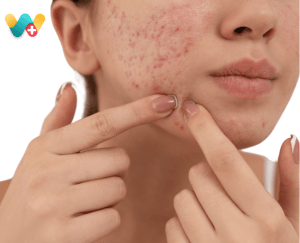
- Safety point: Picking or popping pimples pushes inflammation deeper and is a leading cause of permanent scarring, so lesions should be left alone and treated rather than squeezed.
What Is Acne?
Acne (acne vulgaris) is a common skin condition that develops when hair follicles become clogged with oil (sebum) and dead skin cells, creating an environment where acne-causing bacteria can thrive and trigger inflammation. It most often appears on the face, forehead, chest, upper back and shoulders, and while it's most common during the teenage years, it can affect people well into adulthood.
Understanding which type of acne lesion you're dealing with is the first step towards effective, individualised homeopathic treatment. The most common presentations we see at WeClinic™ are:
- Whiteheads - closed, clogged pores that stay just beneath the skin.
- Blackheads - open, clogged pores that darken on contact with air.
- Papules - small, tender, inflamed red bumps.
- Pustules - pus-filled pimples with a red, inflamed base.
- Nodules - large, hard, painful lumps deep under the skin.
- Cystic Acne - the most severe form, with deep, pus-filled lesions prone to scarring.
| Also known as | Acne vulgaris, pimples, breakouts, zits |
|---|---|
| Commonly affects | Teenagers during puberty and adults up to their 40s, especially women with hormonal or jawline acne |
| Main symptoms | Whiteheads, blackheads, papules, pustules, nodules, cysts, oily skin and post-acne marks or scars |
| Common causes | Excess sebum, clogged pores, acne-causing bacteria and hormonal changes (puberty, periods, pregnancy, PCOS) |
| Grades | Mild (whiteheads/blackheads), moderate (papules/pustules), severe (nodulocystic acne that scars) |
| Diagnosis | Clinical skin examination; hormonal blood tests in women with cystic or PCOS-related acne |
| Homeopathic approach | Individualised, constitutional remedies aimed at controlling breakouts and the underlying oil-gland and hormonal tendency |
| Typical treatment duration | Fewer new breakouts often within 4-8 weeks; full course continued for lasting relief |
| When to seek urgent care | Rapidly worsening, deep painful cysts or widespread scarring warrant prompt professional evaluation |
Common Acne Symptoms We Treat
Acne symptoms vary from person to person and by type. Our doctors regularly treat patients with the following presentations -
- Oily, shiny skin - caused by excess sebum production.
- Facial breakouts - across the forehead, nose, chin & cheeks (T-zone).
- Chest & back acne - especially in hot, humid weather.
- Hormonal jawline acne - breakouts along the jaw & chin, often cyclical.
- Painful cystic lesions - deep, tender bumps that don't come to a head.
- Post-acne marks & scarring - dark spots or pitted scars after healing.
What Causes Acne?
Acne develops due to a combination of oil-gland, bacterial and hormonal factors. Common causes and triggers include -
- Excess sebum (oil) production clogging pores.
- Build-up of dead skin cells within hair follicles.
- Acne-causing bacteria multiplying in clogged pores.
- Hormonal changes during puberty, periods, pregnancy or PCOS.
- Family history & genetics.
- Certain medications, including steroids.
- High-glycemic diet & dairy, in sensitive individuals.
- Stress, lack of sleep & heavy, comedogenic cosmetics.
Who Is Most at Risk?
While acne can affect anyone, certain factors make some people more susceptible than others -
- Age: most common in teenagers and young adults during puberty, though it can persist or begin in adulthood.
- Gender: hormonal (adult) acne is more common in women, often linked to the menstrual cycle or PCOS.
- Family history: a parent with a history of severe acne raises your own risk.
- Skin type: naturally oily skin is more prone to clogged pores and breakouts.
Acne Grades: Mild, Moderate & Severe
Acne is graded by how many lesions are present and how deep and inflamed they are, and knowing the grade helps our doctors judge how intensive treatment needs to be. The widely used grading is -
- Mild (Grade 1): mostly whiteheads and blackheads with a few small papules, usually without much inflammation.
- Moderate (Grade 2): a greater number of papules and pustules (inflamed, pus-filled pimples) concentrated on the face.
- Moderately severe (Grade 3): numerous papules and pustules along with occasional inflamed nodules, sometimes spreading to the chest and back.
- Severe (Grade 4): widespread large, painful nodules and cysts that are the most likely to leave permanent scars.
Milder grades often respond to consistent care and skincare, while moderate-to-severe and cystic acne is best addressed early with a structured, individualised plan to limit scarring.
Possible Complications of Untreated Acne
Untreated or repeatedly aggravated acne can lead to lasting skin and emotional effects that are far harder to reverse than the breakouts themselves. The main complications include -
- Permanent scarring - deep or picked lesions can leave pitted (atrophic) or raised scars.
- Post-inflammatory hyperpigmentation - flat brown or dark marks left after a pimple heals, more common in Indian and darker skin tones.
- Persistent redness - lingering pink or red discoloration where inflamed lesions once were.
- Secondary infection - squeezing or scratching can introduce bacteria and worsen inflammation.
- Emotional impact - visible acne can affect self-esteem, confidence and social comfort.
Controlling active breakouts early is the single most effective way to prevent scarring and pigmentation. Deep, pitted scars that have already formed usually respond better to dermatological procedures alongside homeopathic care.
Common Diagnostic Tests
To confirm the type and possible drivers of acne, doctors typically recommend -
- Clinical skin examination - most acne is diagnosed simply by examining the skin and its pattern.
- Hormonal blood tests - recommended for women with hormonal or cystic acne to check for conditions like PCOS.
- Skin swab/culture - occasionally used to rule out other infections in unusual or resistant cases.
Note: These tests are usually recommended in more advanced, hormonal or treatment-resistant cases and are not required for every patient.
Prevention & Skincare Tips
- Wash your face gently, twice a day, with a mild, oil-free cleanser.
- Avoid harsh scrubbing - it can irritate skin and worsen breakouts.
- Choose non-comedogenic, oil-free skincare & makeup.
- Avoid touching or picking at pimples to prevent scarring.
- Wash pillowcases & face towels regularly.
- Use a broad-spectrum sunscreen daily.
- Keep hair oil & styling products away from your face and hairline.
- Manage stress and prioritise adequate sleep.
How Homeopathy Treats Acne
Homeopathy treats acne by addressing the internal tendency that causes breakouts - the overactive oil glands, hormonal imbalance and heightened skin sensitivity - using individualised remedies chosen to match each patient's overall constitution rather than only the visible pimples. Allopathy typically manages acne with topical retinoids, benzoyl peroxide, antibiotics or isotretinoin that clear existing breakouts but don't always address the underlying tendency - and long-term antibiotic or isotretinoin use can bring side effects such as dryness, irritation or other systemic effects. Homeopathy takes an entirely different, constitutional approach.
The Homeopathic Approach - Treating the Root Cause, Not Just the Breakout
Homeopathy doesn't treat acne as an isolated "skin problem" - it looks at your overall constitution. Our doctors at WeClinic™ Homeopathy in Kanpur, led by physicians such as Dr. Sonali Verma, take a detailed case history: which areas are affected, whether breakouts are cyclical or hormonal, the exact nature of the lesions (oily, painful, pus-filled, scarring), and your general physical and mental makeup. Based on this, an individualised remedy and potency is prescribed for your specific case.
Commonly Referenced Homeopathic Remedies for Acne
Classical homeopathic literature references several homeopathic medicines for acne relief, each suited to a different presentation, such as -
For painful, pus-filled pimples that are extremely sensitive to touch and prone to forming abscesses.
Often considered for deep-seated, slow-healing cysts and acne prone to scarring.
Commonly referenced for acne on the face, chest & shoulders, especially when itchy and prone to leaving marks.
For oily, unhealthy-looking skin with breakouts that itch and burn, worse from heat and washing.
For acne on oily skin, particularly along the hairline, often linked with emotional stress.
Considered for acne on the cheeks with a thick, crusted appearance and a tendency to worsen from heat.
Often referenced for chronic acne with a tendency to leave dark marks and pigmentation, and where clearing the complexion is a goal.
Commonly considered for acne in adolescent girls and young women linked to menstrual irregularities and hormonal changes.
Often used where pimples are pustular with thick, yellow discharge that is slow to heal.
Important: This information is for educational purposes only. Please do not self-medicate. WeClinic™ doctors prescribe the right remedy and dosage only after a detailed personal case-history consultation, so book your free consultation before starting any treatment.
Benefits of Homeopathic Acne Treatment
- Natural treatment with no side effects
- No risk of dependency - completely non-addictive
- Treats the root cause, not just the breakout
- Safe for long-term, chronic use
- Suitable for teenagers & adults alike
Homeopathy vs Allopathy for Acne
Both approaches aim to relieve acne, but they work very differently -
Allopathy
- Focuses on quick relief with topical creams, antibiotics & isotretinoin
- Breakouts often return once medicine is stopped
- Long-term antibiotic/isotretinoin use can cause side effects
- Treats the skin in isolation
Homeopathy
- Focuses on the root cause of the breakout tendency
- Aims for lasting relief with a complete course
- Natural remedies, safe for long-term use
- Treats the patient's overall constitution
Frequently Asked Questions About Acne Homeopathy
Can homeopathy cure acne permanently?
Homeopathy treats acne at a constitutional level, addressing the underlying hormonal, oil-gland and immune tendencies rather than just clearing the skin from the outside. Many patients experience significant, long-term reduction in breakouts when they follow the complete course prescribed by the doctor, though acne is a tendency that can be influenced by hormones and lifestyle, so results vary from person to person.
Does homeopathy help with acne scars?
Homeopathic treatment primarily focuses on controlling active breakouts and preventing new lesions, which is the most effective way to limit further scarring. For marks and pigmentation left by past acne, our doctors may also guide you on supportive skincare, though deep, pitted scars usually respond better to dermatological procedures alongside homeopathic care.
Which homeopathic medicine is best for acne?
There is no single best medicine - homeopathy is individualised, and remedies like Hepar Sulphuris, Silicea, Kali Bromatum, Sulphur and Natrum Muriaticum are commonly referenced in classical literature for different acne presentations. The right remedy and potency depend entirely on your specific symptoms, skin type and triggers, so it should only be prescribed after a proper case-history consultation with a qualified homeopathic doctor.
Is acne caused by diet?
Diet is not the primary cause of acne, but in some individuals high-glycemic foods and dairy products can worsen existing breakouts by influencing hormone and oil-gland activity. Our doctors assess your specific history before recommending any dietary changes rather than suggesting blanket restrictions for every patient.
Is hormonal acne different from teenage acne?
Hormonal acne and teenage acne are different in both cause and pattern. Teenage acne is usually driven by the surge in androgen hormones during puberty and tends to appear across the forehead, nose and chin. Hormonal acne in adults, more common in women, is often linked to the menstrual cycle, pregnancy, PCOS or stress, and typically appears along the jawline and chin, so the underlying case history and treatment approach differ.
How long does homeopathic treatment take to show results in acne?
Most patients notice fewer new breakouts and calmer skin within 4-8 weeks of starting treatment, though this varies with the type and severity of acne and your individual hormonal pattern. For lasting, root-cause relief, doctors usually recommend completing the full course rather than stopping as soon as symptoms ease.
Is homeopathic treatment safe for teenagers?
Homeopathic acne treatment is considered gentle and safe for teenagers. The medicines are prepared from natural sources and, when prescribed by a qualified doctor in an age-appropriate dose, make a suitable option for the hormonal breakouts common during puberty.
Does stress cause acne?
Stress doesn't directly cause acne, but it can worsen existing breakouts by increasing stress-hormone levels that stimulate the oil glands and by disrupting sleep and hormonal balance. Managing stress alongside constitutional treatment is often an important part of controlling stress-related flare-ups.
Does homeopathic acne treatment have any side effects?
Homeopathic acne treatment does not carry the side effects of conventional acne drugs. The remedies used at WeClinic™ are natural and prescribed in individualised, minimal doses, so they avoid the effects commonly associated with long-term antibiotic or isotretinoin use, such as dryness, irritation or other systemic effects.
What causes acne?
Acne develops due to a combination of factors - excess oil (sebum) production, a build-up of dead skin cells that clog hair follicles, acne-causing bacteria multiplying in the clogged pore, and hormonal changes during puberty, the menstrual cycle, pregnancy or conditions like PCOS. Genetics, certain medications, stress and comedogenic cosmetics can also contribute.
Does chocolate or oily food cause pimples?
Chocolate and oily food do not directly cause acne, and the long-held belief that they do is largely a myth. Some research links high-glycemic foods (sugary and refined carbohydrates) and dairy to worsening of existing breakouts in sensitive individuals, but eating oily food or chocolate does not by itself create pimples in most people. At WeClinic™ Homeopathy in Kanpur, our doctors focus on the root hormonal and oil-gland tendency rather than blaming a single food.
Why does popping pimples make acne worse?
Popping or squeezing pimples pushes bacteria, oil and pus deeper into the skin, increases inflammation, and damages surrounding tissue - which is exactly what leads to longer healing, dark marks and permanent pitted scars. Even a pimple that looks ready to pop is best left alone; controlling the breakout tendency with proper treatment is a far safer way to protect the skin from scarring.
Can homeopathy help with acne dark spots and hyperpigmentation?
The brown or dark marks left after a pimple heals are called post-inflammatory hyperpigmentation, and they usually fade gradually over weeks to months once new breakouts are controlled. Homeopathic treatment works mainly by calming active acne and preventing fresh lesions, which is the single most important step in stopping new marks from forming; alongside this, sun protection and gentle skincare help existing pigmentation fade faster.
Why do adults over 25 still get acne?
Adult acne after the age of 25 is most often driven by hormonal fluctuations, and in women it is frequently linked to the menstrual cycle, PCOS, stress or discontinuing birth control. This late-onset or persistent acne typically appears along the jawline, chin and lower cheeks rather than the T-zone, and because it is rooted in an internal hormonal pattern, a constitutional homeopathic approach that addresses that underlying tendency is often more suitable than surface treatment alone.
How do I treat acne on my back and chest?
Acne on the back and chest, commonly called bacne, forms the same way as facial acne - clogged pores, excess oil and bacteria - but is often aggravated by sweat, tight or non-breathable clothing and friction. Showering promptly after sweating, wearing loose cotton fabrics and avoiding heavy oil-based body products help, while individualised homeopathic treatment addresses the internal oil-gland and hormonal tendency that drives body acne.
Start Your Journey to Clear, Confident Skin Today
Book a free consultation with WeClinic™'s experienced homeopathic doctors and get a treatment plan made for your specific case.
Call Now - Book Free Consultation Prefer to visit in person? Book a Clinic Appointment