

 Our specialists are online... Call now...


























Key Takeaways
- What it is: Eczema (atopic dermatitis) is a chronic inflammatory skin condition that makes the skin dry, intensely itchy, red and prone to flare-ups.
- Who it affects: Eczema most often begins in babies and young children, though it can appear or persist in adults, and frequently occurs alongside asthma and allergic rhinitis (the "atopic triad").
- Main causes: Eczema is caused by a combination of genetics, an overactive immune response and a weakened skin barrier, with flare-ups triggered by soaps, detergents, dust mites, sweat, wool, dry weather and stress.
- Not contagious: Eczema cannot be caught from or passed to another person by touch, as it is an immune and barrier problem rather than an infection.
- Homeopathy's role: Homeopathy takes an individualised, constitutional approach that aims to calm the underlying allergic tendency and reduce itching, dryness and recurrence rather than only soothing the skin surface.
- Treatment timeframe: Many patients report a reduction in itching and redness within 3-6 weeks, though chronic or long-standing eczema usually needs a longer, doctor-guided course.
- Safety: Eczema that becomes very painful, weeping yellow crusts, blistered or feverish may be infected and needs prompt medical review; homeopathic treatment at WeClinic™ Homeopathy is prescribed only after a personal case history by a qualified doctor.
What Is Eczema?
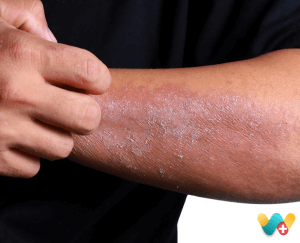
Eczema is a chronic, inflammatory skin condition that causes the skin to become dry, intensely itchy, red, inflamed and sometimes cracked, oozing or crusted. Also known as dermatitis, it is not a single disease but a group of related conditions; atopic dermatitis is the most common form and is a long-term condition that tends to flare up periodically before settling down again, often alongside a personal or family history of allergies, asthma or hay fever.
Understanding which type of eczema you're dealing with is the first step towards effective, individualised homeopathic treatment. The most common types we see at WeClinic™ are:
- Atopic Dermatitis - the classic, chronic form often linked with allergies.
- Contact Dermatitis - a reaction to a direct skin irritant or allergen.
- Dyshidrotic Eczema - small, intensely itchy blisters on hands & feet.
- Nummular Eczema - coin-shaped, itchy patches on the arms & legs.
- Seborrheic Dermatitis - scaly, flaky patches on oily areas of skin.
- Childhood Eczema - atopic dermatitis appearing in infancy or early years.
| Also known as | Atopic dermatitis, dermatitis, atopic eczema |
|---|---|
| Commonly affects | Babies and young children most often, but also adults; frequently linked with asthma and allergic rhinitis |
| Main symptoms | Intense itching, dryness, redness, scaly patches, oozing or crusting, and thickened, leathery skin from scratching |
| Common causes | Genetics, immune overactivity and a weakened skin barrier, with flare-ups from irritants, allergens, sweat, wool, dry weather and stress |
| Diagnosis | Clinical skin examination and allergy history; patch testing or IgE blood tests in selected cases |
| Homeopathic approach | Individualised, constitutional remedies chosen from the whole case history to address the underlying allergic tendency |
| Typical treatment duration | Often 3-6 weeks for early relief; several months for chronic, long-standing eczema |
| When to seek urgent care | Signs of skin infection - spreading redness, warmth, yellow crusts, pus, blisters or fever |
Common Eczema Symptoms We Treat
Eczema symptoms vary from person to person and by type. Our doctors regularly treat patients with the following presentations -
- Intense itching - often the most troubling symptom, worse at night.
- Dry, scaly skin - rough patches that can crack and flake.
- Red or inflamed patches - on the face, hands, elbows or behind the knees.
- Oozing or crusting - in more severe or infected flare-ups.
- Thickened, leathery skin - from repeated scratching over time.
- Small, fluid-filled blisters - especially on the palms and soles.
What Causes Eczema?
Eczema is most commonly caused by a combination of an inherited tendency, an overactive immune response and a weakened skin barrier that lets moisture escape and irritants and allergens enter. On top of this underlying cause, specific triggers set off individual flare-ups. Common causes and triggers include -
- Genetics & family history of eczema, asthma or allergies.
- Immune system dysfunction causing excess inflammation.
- A weakened skin barrier that lets moisture escape and irritants in.
- Environmental allergens - dust mites, pollen, pet dander.
- Irritants - harsh soaps, detergents, synthetic fabrics, fragrances.
- Weather changes - cold, dry air or excessive heat & sweating.
- Stress & emotional triggers.
- Certain foods, particularly in sensitive children.
Who Is Most at Risk?
While eczema can affect anyone, certain factors make some people more susceptible than others -
- Family history: children with one or both parents who have eczema, asthma or hay fever are at higher risk.
- Age: atopic dermatitis most often begins in infancy or early childhood.
- Existing allergic conditions: people with asthma or allergic rhinitis are more prone to eczema.
- Environment: urban living, pollution and low-humidity climates can increase risk.
Common Diagnostic Tests
To confirm the type and possible triggers of eczema, doctors typically recommend -
- Physical examination & medical history - most eczema is diagnosed by examining the skin and reviewing family/allergy history.
- Patch testing - to identify contact allergens that may be triggering flare-ups.
- Allergen-specific IgE blood test - to check for underlying food or environmental allergies.
- Skin biopsy - occasionally used to rule out other skin conditions in unclear cases.
Note: These tests are usually recommended in more advanced, unclear or recurrent cases and are not required for every patient.
Prevention & Trigger-Avoidance Tips
- Moisturise skin daily with a fragrance-free emollient.
- Take short, lukewarm showers instead of long, hot baths.
- Use mild, fragrance-free soaps & laundry detergents.
- Identify and avoid your personal triggers.
- Keep nails trimmed to reduce damage from scratching.
- Manage stress through relaxation techniques.
- Use a humidifier in dry or winter weather.
- Wear soft, breathable cotton clothing.
Eczema in Babies & Children
Eczema in babies and children is very common and usually appears as dry, red, itchy patches on the cheeks, scalp, and the creases of the elbows and knees. In infants it often starts on the face and outer limbs, while in older children it tends to settle into the skin folds. Most childhood eczema is atopic dermatitis, and many children improve markedly as they grow, though some carry the tendency into adult life.
Because a child's skin is delicate and constant scratching can break the skin and lead to infection, gentle daily moisturising, soft cotton clothing, short lukewarm baths and keeping nails trimmed are important everyday measures. At WeClinic™ Homeopathy in Kanpur, Dr. Sonali Verma prescribes age-appropriate, individualised homeopathic medicines aimed at reducing the itching and flare-ups gently, so a child is more comfortable day and night.
The Atopic Triad - Eczema, Asthma & Allergic Rhinitis
Eczema, asthma and allergic rhinitis (hay fever) together form what doctors call the "atopic triad" - three allergic conditions that share the same underlying tendency and often occur in the same person or family. A child who has eczema early in life has a higher chance of later developing asthma or nasal allergies, a pattern sometimes described as the "atopic march." This is why homeopathy treats eczema constitutionally rather than as an isolated skin issue, taking the whole allergic tendency into account.
Possible Complications of Untreated Eczema
Untreated or poorly managed eczema can lead to complications beyond itching and dryness, mainly because repeated scratching damages the protective skin barrier. Possible complications include -
- Bacterial skin infection from scratching, with weeping, yellow crusts or pus.
- Viral infections such as eczema herpeticum, which needs urgent medical care.
- Thickened, leathery skin (lichenification) from long-term scratching.
- Skin discolouration or scarring in affected areas.
- Disturbed sleep from night-time itching, affecting mood and concentration.
- Lowered confidence and social discomfort, especially in visible eczema.
Eczema Diet: What to Eat and Avoid
There is no single eczema diet that suits everyone, but for people whose flare-ups are food-linked, adjusting the diet can help reduce inflammation and itching. Foods commonly considered supportive include -
- Omega-3-rich foods like flaxseed, walnuts and oily fish.
- Plenty of water to keep the skin hydrated.
- Colourful fruits and vegetables rich in antioxidants.
- Probiotic foods such as curd, which support gut and immune balance.
Foods that more often trigger or worsen eczema in sensitive individuals - particularly children - include cow's milk, eggs, peanuts and tree nuts, wheat and soy. Because reactions differ from person to person, our doctors evaluate your specific history before advising any restriction rather than removing foods unnecessarily.
When to See a Doctor Urgently
You should seek prompt medical care if eczema shows signs of a skin infection or is no longer under control. Warning signs that need urgent attention include -
- Signs of infection: spreading redness, warmth, swelling, yellow crusts, pus or a bad smell.
- Fever with a worsening rash: which may indicate an infected flare-up.
- Painful, clustered blisters: that can signal a viral infection such as eczema herpeticum.
- Rapidly spreading eczema or eczema that stops responding to your usual routine.
Homeopathic treatment works well for the underlying eczema tendency, but an active skin infection is a genuine medical emergency that should be evaluated by a doctor without delay.
How Homeopathy Treats Eczema
Allopathy typically manages eczema with steroid creams, antihistamines or immunosuppressants that calm the skin temporarily but don't address the underlying allergic and immune tendency - and long-term steroid use can bring side effects such as skin thinning, discolouration or rebound flare-ups. Homeopathy takes an entirely different, constitutional approach.
The Homeopathic Approach - Treating the Root Cause, Not Just the Skin
Homeopathy doesn't treat eczema as an isolated "skin problem" - it looks at your overall constitution. Our doctors at WeClinic™ take a detailed case history: which areas are affected, what makes the itching better or worse (heat, cold, scratching, stress), the exact nature of the eruption (dry, oozing, blistered), and your general physical and mental makeup. Based on this, an individualised remedy and potency is prescribed for your specific case.
Commonly Referenced Homeopathic Remedies for Eczema
Classical homeopathic literature references several homeopathic medicines for skin relief, each suited to a different eczema presentation, such as -
For thickened, cracked skin that oozes a sticky, honey-like discharge, in both dry and moist eczema.
For intensely itchy skin that's worse from heat, scratching and bathing, and often worse at night.
For eczema with small blisters oozing clear fluid, itching worse at night, relieved by warmth.
For dry, deeply cracked and fissured skin that tends to worsen in cold winter weather.
Often considered for chronic, very dry eczema behind the ears, on the hands and in skin folds.
Associated with eczema prone to secondary infection, oozing and skin that's extremely sensitive to touch.
Often considered where eczema forms thick crusts with a sticky discharge underneath, with intense itching that's worse from warmth.
Commonly referenced for dry, raw eczema in the skin folds or at the hairline, often linked with stress or grief.
Considered for dry, scaly eczema with burning itching that is relieved by warmth, in anxious, restless patients.
Associated with chronic, intensely itchy eczema in skin folds that feels worse from warmth of the bed.
Important: This information is for educational purposes only. Please do not self-medicate. WeClinic™ doctors prescribe the right remedy and dosage only after a detailed personal case-history consultation, so book your free consultation before starting any treatment.
Benefits of Homeopathic Eczema Treatment
- Natural treatment with no side effects
- No risk of dependency - completely non-addictive
- Treats the root cause, not just the symptoms
- Safe for long-term, chronic use
- Suitable for all age groups, including children
Homeopathy vs Allopathy for Eczema
Both approaches aim to relieve eczema symptoms, but they work very differently -
Allopathy
- Focuses on quick relief with steroid creams & antihistamines
- Symptoms often return once medicine is stopped
- Long-term steroid use can cause side effects
- Treats the skin in isolation
Homeopathy
- Focuses on the root cause of the skin problem
- Aims for lasting relief with a complete course
- Natural remedies, safe for long-term use
- Treats the patient's overall constitution
Frequently Asked Questions About Eczema Homeopathy
Can homeopathy cure eczema permanently?
Homeopathy treats eczema at a constitutional level, working on the underlying immune and allergic tendencies rather than just calming the skin from the outside. Many patients experience significant, long-term relief in itching, dryness and flare-ups when they follow the complete course prescribed by the doctor, though eczema is a chronic tendency and results vary from person to person.
What is the difference between eczema and psoriasis?
Eczema typically causes intensely itchy, dry, inflamed patches that can ooze or crust, often starting in childhood and linked with allergies or asthma. Psoriasis usually produces thicker, well-defined red patches covered with silvery-white scales, is driven by a different immune mechanism, and commonly affects the scalp, elbows, knees and lower back. A doctor's examination is the most reliable way to tell the two apart, as they can sometimes look similar.
Is eczema contagious?
No - eczema is not contagious and cannot spread to another person through touch, sharing clothes or close contact. Eczema develops due to a combination of genetics, immune system behaviour and environmental triggers, not through infection.
Which homeopathic medicine is best for eczema?
There is no single best medicine - homeopathy is individualised, and remedies like Graphites, Sulphur, Rhus Toxicodendron, Petroleum and Sepia are commonly referenced in classical literature for different eczema presentations. The right remedy and potency depend entirely on your specific symptoms, skin type and triggers, so it should only be prescribed after a proper case-history consultation with a qualified homeopathic doctor.
Can food allergies trigger eczema?
Yes - in some people with eczema, particularly children, certain foods such as milk, eggs, nuts or wheat can trigger or worsen flare-ups. Not everyone with eczema has a food trigger, so WeClinic™ doctors evaluate your specific history before recommending any dietary changes rather than suggesting blanket restrictions.
Is eczema hereditary?
Eczema does tend to run in families. Children with one or both parents who have eczema, asthma or hay fever (allergic conditions collectively known as atopy) have a notably higher chance of developing it themselves, though environmental factors also play an important role in whether and how severely it appears.
How long does homeopathic treatment take to show results in eczema?
Most patients notice a reduction in itching and redness within 3-6 weeks of starting treatment, though this varies with how long you have had the condition, its severity and your individual triggers. For lasting, root-cause relief, doctors usually recommend completing the full course rather than stopping as soon as symptoms ease.
Is homeopathy safe for children's eczema?
Yes - homeopathic medicines for children's eczema are prepared from natural sources and, when prescribed by a qualified doctor in an age-appropriate dose, are considered gentle and safe, including for chronic conditions like childhood eczema that need sustained care.
Does homeopathic eczema treatment have any side effects?
No. Homeopathic remedies used at WeClinic™ are natural and prescribed in individualised, minimal doses, so they do not carry the side effects commonly associated with long-term steroid cream use, such as skin thinning, discolouration or rebound flare-ups.
What causes eczema flare-ups?
Eczema flare-ups can be triggered by several factors - dry weather, sweating and overheating, harsh soaps or detergents, synthetic fabrics, dust and pollen, stress, and in some cases certain foods. Identifying your personal triggers alongside constitutional treatment is an important part of managing eczema effectively.
Can homeopathy treat eczema in babies and infants?
Homeopathy is commonly used for eczema in babies and infants, using gentle, individualised medicines in age-appropriate doses that aim to reduce itching and flare-ups without the risks of long-term steroid creams. Because a baby's skin is delicate, treatment at WeClinic™ Homeopathy is always guided by a doctor alongside simple daily care such as fragrance-free moisturising and soft cotton clothing.
Does eczema in children go away with age?
Many children with eczema improve significantly as they grow, and in some the condition clears altogether by adolescence, while others carry a milder tendency into adult life. Constitutional homeopathic treatment during childhood aims to reduce the frequency and intensity of flare-ups and support the child through the years when eczema is most active.
Why does eczema appear on the hands and face?
Eczema often appears on the hands and face because these areas have the most contact with irritants such as soaps, detergents, water, cosmetics and the weather, and the facial skin is thin and sensitive. Hand eczema is especially common in people with frequent wet work, and homeopathic treatment looks at both the local triggers and the person's overall allergic tendency.
Can adults develop eczema for the first time?
Yes - although eczema most often begins in childhood, adults can develop it for the first time, sometimes triggered by stress, a new irritant or allergen at work or home, hormonal changes or dry skin with age. Adult-onset eczema is assessed at WeClinic™ Homeopathy with a full case history so that treatment addresses the specific triggers and the underlying tendency together.
How should I moisturise and bathe to manage eczema?
To manage eczema, take short lukewarm (not hot) showers, use a mild fragrance-free cleanser, pat the skin dry gently, and apply a fragrance-free moisturiser within a few minutes of bathing to lock in moisture. Moisturising at least twice a day, and more often during flare-ups or dry weather, helps strengthen the skin barrier and reduce itching between doses of homeopathic medicine.
Start Your Journey to Clearer, Calmer Skin Today
Book a free consultation with WeClinic™'s experienced homeopathic doctors and get a treatment plan made for your specific case.
Call Now - Book Free Consultation Prefer to visit in person? Book a Clinic Appointment