

 Our specialists are online... Call now...






























Key Takeaways
- What it is: Skin pigmentation (hyperpigmentation) is a skin condition in which patches of skin become darker than the surrounding skin due to excess melanin production.
- Who it affects: It can affect anyone of any age or gender, but people with a family history of pigmentation, prolonged sun exposure or a history of acne and skin injury are more prone to it.
- Main causes: Sun exposure, post-inflammatory marks from acne or injury, hormonal changes, ageing and genetics are the most common causes of skin pigmentation.
- Homeopathic approach: Homeopathy for skin pigmentation uses individualised, constitutional remedies aimed at the underlying tendency toward excess melanin production rather than only bleaching the visible spot.
- Typical timeframe: Many patients notice a gradual reduction in pigmentation within 8-12 weeks of starting an individualised homeopathic treatment course.
- Not the same as melasma: General skin pigmentation covers localized dark spots such as sun spots and post-acne marks, while melasma is a distinct, usually symmetrical, hormone-driven pigmentation pattern on the face.
- Safety point: Homeopathic remedies for skin pigmentation are prescribed only after a personal case-history consultation and should not be self-administered based on online information alone.
What Is Skin Pigmentation?
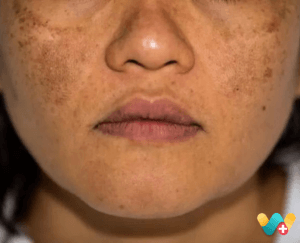
Skin pigmentation is a common skin condition in which certain patches of skin turn darker than the surrounding skin because of excess melanin, the natural pigment that gives skin its colour. This darkening, also called hyperpigmentation, typically develops in response to sun exposure, inflammation, injury or hormonal changes. It is one of the most common skin concerns doctors see, and while it isn't harmful, it can affect confidence and appearance.
This page focuses on general and localized pigmentation - dark spots, sun tan, sun spots and marks left behind by acne or injury. It is distinct from melasma, a specific, usually symmetrical, hormone-driven pattern of facial pigmentation that we cover separately as its own condition. The most common types of general skin pigmentation and hyperpigmentation our doctors treat are -
- Sun Spots (Solar Lentigines) - tan to dark brown spots from cumulative sun exposure, common on the face, hands & forearms.
- Post-Inflammatory Hyperpigmentation - dark marks left behind after acne, cuts, burns or skin inflammation heal.
- Age Spots - flat, brown patches that develop with age on frequently sun-exposed skin.
- Freckles (Ephelides) - small tan or brown spots, often appearing in childhood, that darken with sun exposure.
- Uneven Skin Tone - patchy or blotchy pigmentation spread across larger areas of the face or body.
- Suntan (Tanning) - temporary to semi-lasting darkening of the skin from recent or repeated sun exposure.
- Dark Circles (Periorbital Pigmentation) - darkened skin around the eyes, often linked to genetics, thin skin or lack of sleep.
| Also known as | Hyperpigmentation, dark spots, sun spots, uneven skin tone |
|---|---|
| Commonly affects | Adults of any age with sun-exposed skin, a history of acne/skin injury, or hormonal changes; more noticeable on the face, hands, forearms & chest |
| Main symptoms | Brown, tan or grey-black patches, sun spots, freckles, post-acne marks and blotchy, uneven skin tone that is not itchy or painful |
| Common causes | Sun exposure, post-inflammatory marks from acne or injury, hormonal changes, ageing, genetics & harsh skincare products |
| Diagnosis | Visual/dermatological examination, Wood's lamp examination, medical history review, and dermoscopy in unclear cases |
| Homeopathic approach | Individualised constitutional remedies (such as Sepia, Lachesis & Berberis Aquifolium) selected after a detailed case-history consultation |
| Typical treatment duration | Gradual improvement is usually noticed within 8-12 weeks, with the full course recommended for lasting results |
Common Symptoms We Treat
Skin pigmentation can look different from person to person, depending on skin type and the underlying cause. Our doctors regularly treat patients with the following presentations -
- Dark spots or patches - brown, tan or grey-black discolouration on the skin.
- Sun spots - on the face, hands, forearms & chest from years of sun exposure.
- Freckles - small tan or brown spots that darken further with sun exposure.
- Post-acne marks - dark marks left behind after acne, cuts or burns heal.
- Patchy, uneven skin tone - blotchy discolouration across larger areas.
- Non-itchy, non-painful spots - that mainly affect appearance and confidence.
- Gradually darkening spots - existing marks that deepen with continued sun exposure.
- Dark circles under the eyes - periorbital pigmentation that persists despite rest.
- Skin that doesn't tan back to its original shade - lingering suntan or darkening after sun exposure.
What Causes Skin Pigmentation?
Skin pigmentation develops due to a combination of environmental, hormonal and genetic factors. Common causes include -
- Prolonged, unprotected sun exposure (UV radiation) & suntan.
- Post-inflammatory marks from acne, eczema or injury.
- Hormonal changes (pregnancy, thyroid or PCOS) & certain medications.
- Natural ageing of the skin.
- Genetics & family history of pigmentation.
- Frequent friction or scratching of the skin.
- Harsh skincare products or aggressive treatments.
- Underlying skin conditions left untreated.
- Nutritional deficiencies & chronic stress affecting skin tone.
Who Is Most at Risk?
People with sun-sensitive skin, a family history of pigmentation, or a history of acne, eczema or skin injury are most at risk of developing skin pigmentation. Specific risk factors include -
- Skin type: skin that produces more melanin in response to sun or inflammation tends to pigment more easily.
- Sun exposure history: years of unprotected outdoor exposure significantly raise the risk of sun spots and age spots.
- Family history: a genetic tendency toward pigmentation can run in families.
- Skin trauma history: people prone to acne, eczema, burns or injuries are more likely to develop dark marks afterward.
Common Diagnostic Tests
To confirm the type and depth of pigmentation, doctors typically recommend -
- Visual / dermatological examination - to assess the colour, pattern and distribution of pigmented areas.
- Wood's lamp examination - to help identify how deep the pigment lies in the skin.
- Medical history review - to identify triggers such as sun exposure, medications or hormonal changes.
- Dermoscopy - for closer examination when spots need to be distinguished from other skin changes.
Note: These tests are usually recommended in more advanced or unclear cases and are not required for every patient.
Prevention & Sun-Care Tips
- Apply a broad-spectrum sunscreen (SPF 30 or higher) daily, even indoors.
- Wear a wide-brimmed hat and protective clothing outdoors.
- Avoid peak sun hours between 10 am and 4 pm where possible.
- Avoid picking or scratching acne, insect bites or scabs.
- Treat skin inflammation early to reduce the chance of dark marks.
- Use gentle, non-irritating skincare products suited to your skin type.
How Homeopathy Treats Skin Pigmentation
Homeopathy treats skin pigmentation by working at a constitutional level to address the underlying tendency toward excess melanin production, rather than simply bleaching the visible spot from the outside. This is different from allopathy, which typically manages pigmentation with bleaching creams, chemical peels or laser treatments that lighten the spot but don't address why the skin is producing excess melanin in the first place - and strong creams used long-term can bring side effects such as skin thinning, irritation or rebound darkening.
The Homeopathic Approach - Treating the Root Cause, Not Just the Spot
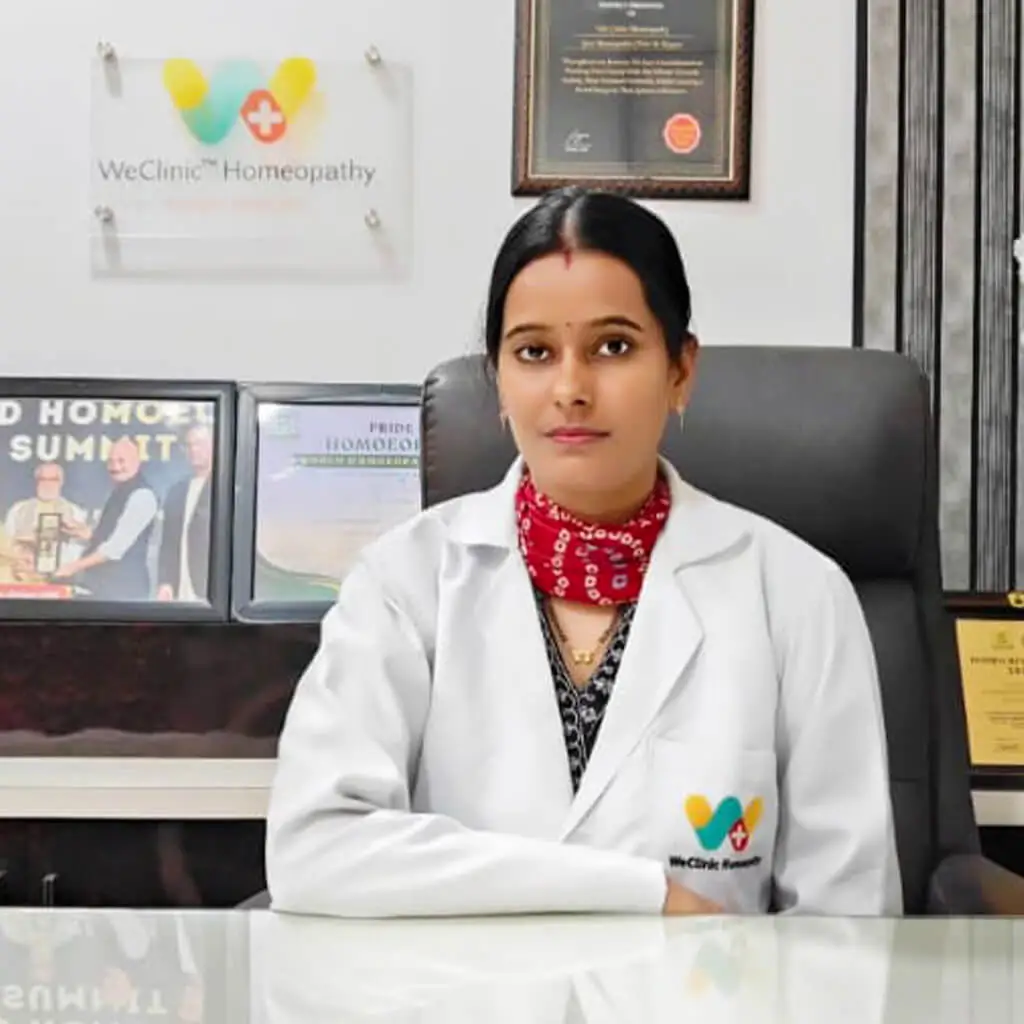
Homeopathy doesn't treat pigmentation as an isolated "surface problem" - it looks at your overall constitution. At WeClinic™ Homeopathy in Kanpur, doctors including Dr. Sonali Verma take a detailed case history: where the pigmentation appears, what triggered it (sun, acne, hormonal changes), its colour and pattern, and your general physical and mental makeup. Based on this, an individualised remedy and potency is prescribed for your specific case.
Commonly Referenced Homeopathic Remedies for Skin Pigmentation
Classical homeopathic literature references several homeopathic medicines for pigmentation, each suited to a different presentation, such as -
Often considered for facial pigmentation across the cheeks, forehead and nose, especially when linked with hormonal changes around pregnancy, childbirth or menopause.
Referenced for pigmentation with a bluish-purple to bluish-black tinge, particularly around menopause, often alongside other hormonal symptoms.
A commonly used remedy for pigmented spots and scars left behind by acne or other skin eruptions.
Considered when facial pigmentation appears together with freckles, or in skin that is prone to warts and blemishes.
Traditionally referenced for pigmentation that darkens and worsens specifically with sun exposure.
Often considered for pigmentation and freckles in people with dry, sun-sensitive skin, especially when linked with stress.
Referenced for pigmentation accompanied by dry, rough or itchy skin, and for cases with a tendency to skin eruptions.
Considered for greyish-yellow or brownish discolouration of the face, especially when digestion or liver function is also sluggish.
Important: This information is for educational purposes only. Please do not self-medicate. WeClinic™ doctors prescribe the right remedy and dosage only after a detailed personal case-history consultation, so book your free consultation before starting any treatment.
Benefits of Homeopathic Skin Pigmentation Treatment
- Natural treatment with no side effects
- No risk of dependency - completely non-addictive
- Treats the root cause, not just the surface spots
- Safe for long-term, gradual improvement
- Suitable for all skin types
Homeopathy vs Allopathy for Skin Pigmentation
Both approaches aim to reduce visible pigmentation, but they work very differently -
Allopathy
- Focuses on lightening skin with bleaching creams & peels
- Pigmentation often returns once treatment is stopped
- Long-term use of strong creams can thin or irritate skin
- Treats the visible spot in isolation
Homeopathy
- Focuses on the root cause of excess pigment production
- Aims for lasting improvement with a complete course
- Natural remedies, safe for long-term use
- Treats the patient's overall skin tendency
Frequently Asked Questions About Skin Pigmentation Homeopathy
Can homeopathy remove skin pigmentation permanently?
Homeopathy treats skin pigmentation at a constitutional level, working on the underlying causes of excess melanin production rather than just lightening the skin from the outside. Many patients see a noticeable, lasting improvement in dark spots and uneven tone when they follow the complete course prescribed by the doctor, though results and the pace of fading vary from person to person depending on the depth and cause of the pigmentation.
What is the difference between skin pigmentation and melasma?
General skin pigmentation covers a wide range of localized dark spots and patches - such as sun spots, freckles and marks left behind by acne or injury - that can appear anywhere on sun-exposed or previously injured skin. Melasma is a distinct, usually symmetrical pattern of brownish patches driven mainly by hormonal changes, most often on the cheeks, forehead and upper lip, and it typically needs a more specific, hormone-aware treatment approach.
Is skin pigmentation caused by sun exposure?
Sun exposure is one of the most common triggers of skin pigmentation. UV rays stimulate the skin's pigment-producing cells to make more melanin as a natural defence mechanism, which can lead to sun spots, age spots and a darkening of existing marks or scars. This is why consistent sun protection is such an important part of both preventing and treating pigmentation.
Which is the best homeopathic medicine for pigmentation?
There is no single best medicine - homeopathy is individualised, and remedies like Sepia, Lachesis, Berberis Aquifolium, Thuja Occidentalis, Cadmium Sulphuratum, Natrum Muriaticum, Sulphur and Lycopodium Clavatum are commonly referenced in classical literature for different pigmentation presentations. The right remedy and potency depend entirely on your specific case, so it should only be prescribed after a proper case-history consultation with a qualified homeopathic doctor.
Does pigmentation fade on its own?
Some mild forms of pigmentation, such as post-inflammatory marks from a minor pimple, can fade gradually on their own over several months with good sun protection. However, sun spots, age spots and deeper or long-standing pigmentation usually do not fade without active treatment, and continued sun exposure can make them darker and more permanent over time.
How long does homeopathic treatment take to show results for skin pigmentation?
Most patients notice a gradual reduction in the intensity and spread of pigmentation within 8-12 weeks of starting treatment, though this varies with how long the pigmentation has been present and how deep it lies in the skin. Since pigmentation involves melanin already deposited in the skin, doctors usually recommend completing the full course for the most visible, lasting improvement.
Is skin pigmentation hereditary?
Genetics can play a role in how prone your skin is to pigmentation - some people naturally produce more melanin in response to sun exposure, inflammation or hormonal changes because of their family history and skin type. That said, environmental triggers like sun exposure and skin injury are usually just as important, so a family history does not mean pigmentation is unavoidable.
Can post-acne marks be treated with homeopathy?
Yes, post-inflammatory hyperpigmentation left behind by acne is one of the most common forms of pigmentation our doctors treat with homeopathy. Since these marks result from the skin's healing response to inflammation, addressing the underlying tendency to acne alongside remedies aimed at clearing residual pigmentation often gives the best results.
Does homeopathic pigmentation treatment have any side effects?
No. Homeopathic remedies used at WeClinic™ are natural and prescribed in individualised, minimal doses, so they do not carry the side effects sometimes associated with strong bleaching creams or long-term steroid-based treatments, such as skin thinning, irritation or rebound darkening.
Is suntan the same as skin pigmentation, and can homeopathy help with tanning?
Suntan and skin pigmentation are related but not identical - a suntan is usually a temporary darkening from recent sun exposure that fades on its own within a few weeks once melanin turnover normalises, while sun spots and other pigmentation are more fixed deposits of melanin that build up over repeated, prolonged exposure. Homeopathic treatment mainly targets the underlying tendency toward excess melanin production, so it is more relevant for stubborn tan-like darkening or pigmentation that doesn't fade with time and sun protection, rather than a fresh, temporary tan.
Can homeopathy help with dark circles or periorbital (under-eye) pigmentation?
Periorbital pigmentation, commonly called dark circles, is a related but distinct form of skin darkening around the eyes that can be linked to genetics, thin under-eye skin, lack of sleep, allergies or straining of the eyes, in addition to the general causes of pigmentation. Our doctors evaluate the likely cause during your case-history consultation and, where appropriate, include it as part of your overall individualised treatment plan.
Can pigmentation come back after homeopathic treatment is completed?
Because homeopathic treatment aims at the underlying tendency toward excess melanin production rather than only the visible spot, many patients see improvement that holds up well after the course is completed. That said, pigmentation can recur if the original trigger - most often unprotected sun exposure - continues, which is why doctors usually recommend consistent sun protection alongside and after treatment for the most lasting results.
Does diet play a role in skin pigmentation, and is a diet chart part of the treatment?
Diet is not the primary cause of pigmentation, but nutritional deficiencies and a diet low in antioxidants can make skin more prone to dullness and uneven tone, while a balanced diet supports overall skin health during treatment. WeClinic™ includes a free personalised diet chart as part of every treatment plan, tailored to complement your prescribed remedies.
Start Your Journey to Even-Toned, Radiant Skin Today
Book a free consultation with WeClinic™'s experienced homeopathic doctors and get a treatment plan made for your specific case.
Call Now - Book Free Consultation Prefer to visit in person? Book a Clinic Appointment