


 Our specialists are online... Call now...






























Key Takeaways
- What it is: Alopecia areata is an autoimmune condition that causes sudden, patchy hair loss when the immune system attacks hair follicles without destroying them.
- Who it affects: It can occur at any age or gender, but most commonly first appears before age 30 and often in people with a personal or family history of autoimmune disease.
- Main causes: The immune attack on hair follicles can be triggered or worsened by genetics, co-existing autoimmune conditions, high stress, viral illness, or hormonal shifts.
- Homeopathic approach: WeClinic™ Homeopathy uses individualised, constitutional treatment aimed at addressing the underlying immune imbalance rather than only the visible bald patch.
- Typical timeframe: Many patients notice fine hair regrowth within 2-4 months of starting treatment, though this varies with the extent and duration of hair loss.
- Reversibility: Patchy alopecia areata can sometimes regrow on its own, while alopecia totalis and alopecia universalis are less likely to resolve without care.
- Safety note: Homeopathic remedies for alopecia areata should only be taken after a doctor's personalised case-history consultation, not through self-medication.
What Is Alopecia Areata?
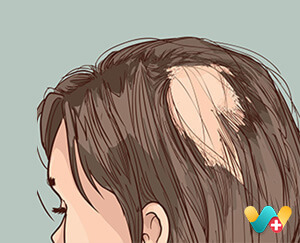
Alopecia areata is an autoimmune condition in which the body's own immune system mistakenly attacks the hair follicles, causing hair to fall out in round or oval patches. It is different from common hair fall or pattern baldness - the hair follicles themselves are not destroyed, they simply "go quiet," which is why regrowth is possible with the right care. It is not contagious and is not caused by poor hygiene.
Alopecia areata can present in several forms, and identifying which type you have is the first step towards effective, individualised homeopathic treatment. The main types we see at WeClinic™ Homeopathy are -
- Patchy Alopecia Areata - one or more coin-sized round patches, the most common form.
- Alopecia Totalis - complete loss of hair across the entire scalp.
- Alopecia Universalis - complete loss of hair over the whole body, including eyebrows & eyelashes.
- Ophiasis Pattern - a band-like pattern of hair loss along the sides & back of the scalp.
- Diffuse Alopecia Areata - sudden, unexpected thinning spread across the whole scalp.
- Alopecia in Children - patchy hair loss that can also affect children and teenagers.
- Alopecia Areata Barbae - patchy hair loss confined to the beard area in men, following the same autoimmune process seen on the scalp.
| Also known as | Spot baldness, patchy alopecia |
|---|---|
| Commonly affects | Any age or gender, most often first appearing before age 30 |
| Main symptoms | Sudden round or oval bald patches, exclamation-mark hairs, nail pitting, eyebrow/eyelash loss |
| Common causes | Autoimmune attack on hair follicles, genetics, co-existing autoimmune disease, stress, viral triggers |
| Diagnosis | Trichoscopy, hair pull test, occasional scalp biopsy, blood tests for related autoimmune conditions |
| Homeopathic approach | Individualised, constitutional remedies at WeClinic™ Homeopathy aimed at the underlying immune imbalance |
| Typical treatment duration | Initial regrowth often noted within 2-4 months; full course recommended for lasting results |
Common Symptoms We Treat
Alopecia areata often appears suddenly, and its signs can vary from a single small patch to more extensive hair loss. Our doctors regularly treat patients with the following presentations -
- Sudden bald patches - one or more smooth, coin-sized patches appearing quickly on the scalp or body.
- Exclamation-mark hairs - short, tapered hairs seen at the edge of a growing patch.
- Nail changes - pitting, ridging or roughness of the finger and toe nails.
- Eyebrow & eyelash loss - thinning or complete loss of eyebrow & eyelash hair.
- Tingling or itching - mild irritation on the scalp just before a patch appears.
- Fine white or grey regrowth - hair sometimes regrows initially without pigment.
What Causes Alopecia Areata?
Alopecia areata develops when the immune system attacks the hair follicles, but why this happens can vary from person to person. Common contributing factors include -
- Autoimmune attack on hair follicles by the body's own immune system.
- Genetics & family history of alopecia areata or autoimmune disease.
- Co-existing autoimmune conditions such as thyroid disorders, vitiligo or lupus.
- High emotional or physical stress acting as a possible trigger.
- Viral infections or illness preceding a flare-up in some cases.
- Hormonal changes affecting immune regulation.
Who Is Most at Risk?
While alopecia areata can affect anyone, certain factors make some people more susceptible than others -
- Family history: having a close relative with alopecia areata or another autoimmune disease increases risk.
- Other autoimmune disorders: conditions like thyroid disease, vitiligo or type 1 diabetes raise susceptibility.
- Age: alopecia areata often first appears before the age of 30, though it can occur at any age.
- Atopic conditions: a personal history of eczema, asthma or seasonal allergies is linked with higher risk.
Common Diagnostic Tests
To confirm alopecia areata and rule out other causes of hair loss, doctors typically recommend -
- Trichoscopy / Dermoscopy - a magnified scalp examination to check for exclamation-mark hairs and follicle changes.
- Hair pull test - gently pulling a small section of hair to assess how easily it comes out at the edge of a patch.
- Scalp biopsy - occasionally used in unclear cases to confirm the diagnosis under a microscope.
- Blood tests (thyroid panel, ANA, etc.) - to screen for associated autoimmune conditions.
Note: These tests are usually recommended in more extensive or unclear cases and are not required for every patient.
Prevention & Care Tips
- Start treatment as early as possible once patches appear.
- Practice stress-management techniques such as yoga or meditation.
- Protect the scalp from excess sun exposure and harsh weather.
- Avoid harsh chemical hair treatments and tight hairstyling.
- Eat a balanced, nutrient-rich diet with adequate protein, iron, zinc and vitamin D to support healthy hair follicles.
- Get regular check-ups if you have a personal or family history of autoimmune disease.
How Homeopathy Treats Alopecia Areata
Allopathy typically manages alopecia areata with corticosteroid injections, topical immunotherapy or newer JAK-inhibitor medication, which can help some patients but don't address the underlying immune imbalance and may carry side effects with prolonged use. Homeopathy takes an entirely different, constitutional approach.
The Homeopathic Approach - Treating the Root Cause, Not Just the Patch
Homeopathy doesn't view alopecia areata as an isolated "bald patch" problem - since it is fundamentally an immune-related condition, our doctors look at your overall constitution. At WeClinic™ Homeopathy, our Kanpur-based team led by Dr. Sonali Verma takes a detailed case history: the pattern and location of hair loss, how quickly it appeared, any associated nail changes, your stress levels, family history and general physical and mental makeup. Based on this complete picture, an individualised remedy and potency is prescribed for your specific case.
Progress with constitutional treatment generally follows a staged pattern rather than an overnight change. Care is usually aimed first at halting further spread of existing patches and preventing new ones from forming; only once this stability is reached does visible regrowth of fine hair typically begin. Because of this staged pattern, our doctors usually advise patients to continue the prescribed course for the recommended duration rather than judging results too early, and to keep in touch with the clinic for periodic review.
Commonly Referenced Homeopathic Remedies for Alopecia Areata
Classical homeopathic literature references several remedies for patchy hair loss, each suited to a different type of case, such as -
For rapid, patchy hair loss with a dry, flaky scalp, most often considered in individuals with a sensitive, nervous disposition.
Considered for hair loss with brittle hair and a sensitive scalp, especially where there is a family history of hair loss.
Referenced for weak hair follicles and poor scalp health in individuals prone to fatigue or recurrent infections.
Often considered for hair loss on the sides of the scalp in individuals with digestive complaints or underlying anxiety.
Referenced for well-defined round patches that appear after grief, emotional stress or suppressed emotions.
Considered for thin, dry hair loss accompanied by restlessness, anxiety and a burning scalp sensation.
Referenced for patchy hair loss where fine white or grey regrowth appears first, especially with an itchy or moist scalp.
Considered for smooth, round bald patches with a greasy or dandruff-prone scalp, often in individuals with a history of recurring skin complaints.
Important: This information is for educational purposes only. Please do not self-medicate. WeClinic™ doctors prescribe the right remedy and dosage only after a detailed personal case-history consultation, so book your free consultation before starting any treatment.
Benefits of Homeopathic Alopecia Areata Treatment
- Natural treatment with no known side effects
- No risk of dependency - completely non-addictive
- Addresses the underlying immune imbalance, not just the patch
- Suitable for long-term, chronic management
- Safe for both adults and children
Homeopathy vs Allopathy for Alopecia Areata
Both approaches aim to help hair regrow, but they work very differently -
Allopathy
- Focuses on corticosteroid injections, topical immunotherapy or JAK inhibitors
- Regrowth may reverse once treatment is stopped
- Long-term use can carry side effects
- Treats the bald patch in isolation
Homeopathy
- Focuses on the underlying immune imbalance
- Aims for lasting improvement with a complete course
- Natural remedies, safe for long-term use
- Treats the patient's overall constitution
Frequently Asked Questions About Alopecia Areata Homeopathy
Can homeopathy help regrow hair in alopecia areata?
Homeopathy works at a constitutional level to address the underlying immune imbalance believed to drive alopecia areata, rather than only treating the visible bald patch. Many patients see gradual regrowth of fine hair over the course of individualised treatment, though results vary from person to person depending on the extent and duration of hair loss, and results are not guaranteed.
Is alopecia areata an autoimmune condition?
Alopecia areata is indeed an autoimmune condition — the body's own immune system mistakenly attacks the hair follicles, causing them to shrink and temporarily stop producing hair. It is not caused by poor hygiene, and it is not contagious.
What is the difference between alopecia areata and male/female pattern baldness?
Alopecia areata is an autoimmune condition that causes sudden, patchy hair loss in round or oval bald spots, and can affect people of any age or gender. Pattern baldness (androgenetic alopecia), on the other hand, is a gradual, genetically-driven thinning that typically follows a predictable pattern - receding hairline and crown thinning in men, and diffuse thinning at the crown in women.
How long does homeopathic treatment take to show results in alopecia areata?
Many patients notice fine hair regrowth within 2-4 months of starting individualised treatment, though this varies with the extent, duration and pattern of hair loss. For lasting results, doctors usually recommend completing the full course rather than stopping as soon as some regrowth appears.
Does hair grow back on its own in alopecia areata?
In many patchy cases, hair can regrow on its own within a year, though it may fall out again in some people. More extensive forms like alopecia totalis and alopecia universalis are less likely to resolve without treatment. Early, consistent care generally gives the best chance of regrowth.
Is alopecia areata hereditary?
Genetics appear to play a role - having a close family member with alopecia areata or another autoimmune condition increases your own risk. However, having a family history does not mean you will definitely develop the condition, as environmental and immune triggers are also involved.
Can stress trigger alopecia areata?
High emotional or physical stress is considered a possible trigger in people who are already predisposed to alopecia areata, though it is not the sole cause in most cases. Managing stress through lifestyle changes is often recommended alongside treatment as supportive care.
Is homeopathic treatment safe for children with alopecia areata?
Homeopathic treatment is generally considered safe for children with alopecia areata, since the medicines are prepared from natural sources and, when prescribed by a qualified doctor in age-appropriate doses, are well-tolerated. Alopecia areata can occur in children too, and early, gentle treatment is often effective.
What is the difference between alopecia totalis and alopecia universalis?
Alopecia totalis refers to complete hair loss limited to the scalp, while alopecia universalis is a more extensive form involving loss of hair across the entire body, including the eyebrows, eyelashes and body hair. Both are considered more advanced presentations of alopecia areata.
Does homeopathic alopecia areata treatment have any side effects?
Homeopathic alopecia areata treatment does not carry the side effects associated with long-term corticosteroid or immunosuppressive therapy, since remedies used at WeClinic™ Homeopathy are natural and prescribed in individualised, minimal doses.
Does alopecia areata affect a person emotionally as well as physically?
Alopecia areata does affect many patients emotionally as well as physically — because it often appears suddenly and can involve visible bald patches on the scalp, eyebrows or eyelashes, many patients experience some anxiety, self-consciousness or lowered confidence alongside the physical hair loss. Our doctors take this into account during consultation, and addressing the condition early with proper treatment often helps ease this emotional burden as regrowth begins.
Can scalp massage or hair oiling help with alopecia areata?
Gentle scalp massage and oiling can improve local blood circulation and may support overall scalp health, but they do not correct the underlying immune reaction that is attacking the hair follicles in alopecia areata. They are best used as a supportive, comforting measure alongside - not instead of - individualised homeopathic treatment.
What is alopecia areata barbae?
Alopecia areata barbae is a form of alopecia areata that causes patchy hair loss confined to the beard area in men, following the same autoimmune process seen on the scalp. It can occur on its own or alongside scalp patches, and is treated with the same individualised, constitutional approach used for other forms of alopecia areata.
Is it safe to colour or dye my hair if I have alopecia areata?
Since alopecia areata affects the hair follicle rather than the hair shaft itself, occasional hair colouring does not directly cause or worsen the condition for most people. However, harsh chemical treatments can irritate an already sensitive scalp, so it is best to keep processing gentle and infrequent, and to check with your doctor if you notice increased shedding or irritation afterwards.
Start Your Journey to Healthier Hair Today
Book a free consultation with WeClinic™'s experienced homeopathic doctors and get a treatment plan made for your specific case.
Call Now - Book Free Consultation Prefer to visit in person? Book a Clinic Appointment