


 Our specialists are online... Call now...




























Key Takeaways
- What it is: Dandruff is a common, non-contagious scalp condition in which dead skin flakes shed faster than normal, causing visible white or yellow flakes and itching.
- Who it affects: Dandruff most commonly affects adolescents and adults between the teenage years and their 40s, and tends to be slightly more frequent in men because of more active scalp oil glands.
- Main cause: Most dandruff is driven by an overgrowth of Malassezia, a yeast-like fungus that lives naturally on the scalp and breaks down skin oils into irritants that speed up flaking.
- Dry scalp vs dandruff: Dry scalp causes small, dry white flakes from lack of moisture, while true dandruff usually produces larger, oily, yellowish flakes with redness and an oily scalp.
- Homeopathic approach: Homeopathy for dandruff is individualised and aims to correct the scalp's oil balance and skin tendency rather than only removing surface flakes, using constitutionally selected remedies.
- Treatment timeframe: Many patients report a noticeable reduction in flaking and itching within 3 to 6 weeks of individualised treatment, with longer courses advised for chronic or recurring dandruff.
- Safety point: Thick, silvery, well-defined scaly patches, intense redness, oozing or spreading scalp lesions should be examined by a doctor, as they may indicate scalp psoriasis or seborrheic dermatitis rather than simple dandruff.
What Is Dandruff?
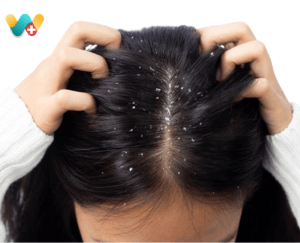
Dandruff is a common scalp condition in which dead skin cells on the scalp shed more quickly than normal, producing visible white or yellow flakes on the scalp, hair and shoulders, often with itching. It is not a sign of poor hygiene or a serious health problem, and it is not contagious - but it can be persistent and, for many people, embarrassing enough to want proper treatment. When flaking is accompanied by redness and inflammation, it is medically classified as seborrheic dermatitis of the scalp, of which everyday dandruff is considered the mildest form.
Dandruff isn't a single, uniform condition - it shows up differently depending on the underlying cause. The types we commonly see at WeClinic™ include -
- Dry Scalp Dandruff - fine, small white flakes from lack of moisture.
- Oily Scalp Dandruff - larger, greasy, yellowish flakes with an oily scalp.
- Seborrheic Dermatitis - redness, scaling and inflammation on oily areas of the scalp.
- Fungal (Malassezia) Dandruff - flaking linked to overgrowth of a naturally occurring scalp yeast.
- Scalp Psoriasis-Related Flaking - thicker, silvery scales that can resemble dandruff.
- Product-Sensitivity Dandruff - flaking & itching triggered by certain hair care products.
| Also known as | Seborrhea, scalp flaking; the inflamed form is called seborrheic dermatitis of the scalp (mild form of pityriasis simplex capillitii) |
|---|---|
| Commonly affects | Teenagers and adults aged roughly 15-45; slightly more common in men and in people with oily skin |
| Main symptoms | White or yellow flakes, itchy scalp, oiliness, redness and a dry, tight or irritated scalp feeling |
| Common causes | Malassezia yeast overgrowth, excess scalp oil, dryness, cold weather, product sensitivity and stress |
| Diagnosis | Usually a visual scalp examination; dermoscopy, fungal scraping or biopsy only in persistent or unclear cases |
| Homeopathic approach | Individualised, constitutional treatment aiming to correct scalp oil balance and skin tendency rather than only surface flakes |
| Typical treatment duration | Many patients report visible improvement in 3-6 weeks; chronic or fungal cases may need a longer, maintenance course |
| When to seek urgent care | Thick silvery scales, intense redness, oozing, sores, rapid hair loss or spreading lesions should be examined by a doctor |
Common Dandruff Symptoms We Treat
Dandruff symptoms can range from mild, occasional flaking to persistent, visible flakes with scalp discomfort. Our doctors regularly treat patients with the following presentations -
- White or yellow flakes - visible on the scalp, hair and shoulders.
- Itchy scalp - mild to intense itching, often worse with sweating or heat.
- Oily scalp - excess oil with flakes that stick together and clump.
- Scalp redness & irritation - patches of inflamed, sensitive skin.
- Dry, tight scalp feeling - especially in cold or low-humidity weather.
- Flaking that worsens in winter - a common seasonal pattern.
What Causes Dandruff?
Dandruff is most commonly caused by an overgrowth of the naturally occurring scalp yeast Malassezia, combined with excess oil production, dryness, weather and individual skin sensitivity. The main contributing factors include -
- Excess oil (sebum) production on the scalp.
- Overgrowth of Malassezia, a yeast-like fungus normally present on the scalp.
- Dry skin, especially in cold, low-humidity weather.
- Sensitivity or allergic reaction to hair care products.
- Infrequent or irregular hair washing.
- Stress & hormonal changes.
- Underlying skin conditions like eczema or psoriasis.
- Poor diet or certain nutrient deficiencies.
Who Is Most at Risk?
While dandruff can affect almost anyone, certain factors make some people more prone to it than others -
- Age: dandruff is most common from the teenage years through the 40s, when oil glands are most active.
- Gender: men tend to have more active oil glands and are somewhat more prone to dandruff than women.
- Skin type: people with naturally oily skin or a tendency toward eczema are more susceptible.
- Weather & lifestyle: cold, dry climates, high stress levels and infrequent hair washing can all increase risk.
Common Diagnostic Tests for Dandruff
Dandruff is usually diagnosed on the basis of a visual scalp examination, but in persistent, severe or unclear cases doctors may recommend -
- Scalp examination & dermoscopy - to assess flake type, redness and oiliness.
- Fungal culture or scraping - for recurrent or stubborn dandruff not responding to routine care.
- Skin biopsy - rarely needed, to rule out conditions like psoriasis or eczema.
- General health & blood work - occasionally advised if an underlying condition is suspected.
Note: These tests are usually recommended in more advanced or unclear cases and are not required for every patient.
Prevention & Scalp Care Tips
- Wash hair regularly with a mild, suitable shampoo.
- Avoid harsh, alcohol-based hair styling products.
- Don't over-oil an already oily or fungus-prone scalp.
- Manage stress through regular exercise & rest.
- Eat a balanced, nutrient-rich diet.
- Avoid scratching to prevent irritation or infection.
How Homeopathy Treats Dandruff
Homeopathy treats dandruff by addressing the underlying scalp tendency - oil imbalance, dryness, sensitivity and any inherited skin disposition - with an individualised, constitutionally selected remedy rather than only suppressing surface flakes. By contrast, conventional treatment usually relies on medicated or anti-fungal shampoos that control flaking and itching while they are in use, but symptoms often return once the product is stopped, and some shampoos can dry out or further irritate the scalp with prolonged use.
The Homeopathic Approach - Treating the Root Cause, Not Just the Flakes
Homeopathy doesn't treat dandruff as an isolated "scalp problem" - it looks at your overall constitution. At WeClinic™ Homeopathy in Kanpur, our doctors, including skin specialist Dr. Sonali Verma, take a detailed case history: whether your scalp is dry or oily, the colour and texture of the flakes, what triggers or worsens the itching, and your general physical and mental makeup. Based on this, an individualised remedy and potency is prescribed for your specific case.
Commonly Referenced Homeopathic Remedies for Dandruff
Classical homeopathic literature references several homeopathic medicines for scalp and dandruff care, each suited to a different presentation, such as -
For white, dry dandruff flakes, especially in sensitive scalps, often with itching around the hairline.
For yellow, sticky, moist flakes and dandruff associated with patchy hair thinning.
For a humid, itchy scalp with a tendency to ooze or crust, often linked with sensitive skin.
For chronic, dry, itchy dandruff that worsens with warmth or in the evening, with a tendency to scratch.
For oily scalp with stubborn dandruff linked to excess sebum or blocked scalp glands.
For a dry, burning, sensitive scalp with fine white scaling and marked restlessness.
Often considered where dandruff is accompanied by an itchy scalp and noticeable hair fall coming out in handfuls or patches.
Commonly referenced for profuse white scalp scaling with excessive sweating of the head, often in those who feel the cold easily.
Often used where thick, crusty scales form over the scalp with a tendency to a sticky, gluey discharge beneath the crusts.
Commonly referenced for white, dry, flour-like dandruff with dryness of the scalp and a tendency to recur.
Important: This information is for educational purposes only. Please do not self-medicate. WeClinic™ doctors prescribe the right remedy and dosage only after a detailed personal case-history consultation, so book your free consultation before starting any treatment.
Benefits of Homeopathic Dandruff Treatment
- Natural treatment with no side effects
- Addresses your scalp type, not just visible flakes
- Safe for long-term or recurring use
- Suitable for all age groups
- No dependency on harsh chemicals or steroids
Homeopathy vs Allopathy for Dandruff
Both approaches aim to relieve dandruff, but they work very differently -
Allopathy
- Focuses on quick relief with medicated or anti-fungal shampoos
- Flaking often returns once the product is stopped
- Long-term use can dry out or irritate the scalp
- Treats the scalp surface in isolation
Homeopathy
- Focuses on the root cause of the scalp problem
- Aims for lasting relief with a complete course
- Natural remedies, safe for long-term use
- Treats the patient's overall constitution
Does Oiling the Scalp Help or Worsen Dandruff?
Oiling the scalp can worsen dandruff in most cases, because the Malassezia yeast behind flaking feeds on oil, so adding more oil to an oily or fungus-prone scalp gives it more fuel and can increase greasy, sticky flakes. A very dry, tight scalp may feel temporarily soothed by light oiling, but leaving heavy oil on overnight - a common habit in India - traps moisture and oil against the skin and often makes flaking and itching worse. If you do oil, use a small amount, avoid overnight application on an oily scalp, and wash it out with a mild shampoo within a couple of hours.
Dandruff Diet: What to Eat and Avoid
A dandruff-friendly diet limits foods that drive oil production and inflammation while supplying nutrients that support healthy skin and scalp. Diet alone will not clear dandruff, but it can meaningfully reduce how often and how severely it flares.
Helpful foods
- Zinc-rich foods such as pumpkin seeds, chickpeas, lentils and nuts, which support scalp skin health.
- Omega-3 sources like flaxseed, walnuts and fatty fish, which help calm skin inflammation.
- B-vitamin foods such as whole grains, eggs and green leafy vegetables.
- Probiotic foods like yoghurt and fermented items that support a balanced skin microbiome.
- Plenty of water to keep skin and scalp hydrated.
Foods to limit
- Excess sugar and refined carbohydrates that can raise oil production.
- Fried, greasy and heavily processed foods.
- Too much dairy in those who notice it worsens their skin.
- Excess caffeine and alcohol, which can dehydrate skin.
Our WeClinic™ doctors provide a personalised diet chart alongside your prescribed medicine, tailored to your scalp type and general health.
When to See a Doctor for Dandruff
You should see a doctor for dandruff when it does not improve with regular anti-dandruff shampoo, keeps coming back, or is accompanied by warning signs that suggest a condition beyond simple flaking. Seek professional evaluation if you notice -
- Thick, silvery, well-defined scaly patches that may signal scalp psoriasis rather than dandruff.
- Intense redness, swelling, oozing, crusting or sores on the scalp.
- Severe itching that disturbs sleep or daily life.
- Noticeable hair thinning or bald patches developing alongside the flaking.
- Flaking that spreads to the eyebrows, sides of the nose, ears or chest.
- Signs of scalp infection such as pain, warmth or pus.
These signs do not always mean something serious, but they need a proper scalp examination so the correct condition is treated. Book a free consultation with WeClinic™ Homeopathy, Kanpur if any of these apply to you.
Frequently Asked Questions About Dandruff Homeopathy
Can homeopathy cure dandruff permanently?
Homeopathy addresses dandruff at a constitutional level, working on the scalp's oil balance, immune response and any underlying skin tendency rather than only removing visible flakes. Many patients see a significant, lasting reduction in flaking and itching when they complete the full course prescribed by the doctor, though very oily or fungus-prone scalps may need periodic maintenance care.
Is dandruff caused by a fungus?
In many cases, yes. A yeast-like fungus called Malassezia lives naturally on everyone's scalp, but in some people it overgrows and breaks down scalp oils into irritants that speed up skin-cell turnover, leading to flaking, redness and itching. Not all dandruff is fungal, though - dry-scalp dandruff is usually related to lack of moisture rather than fungal overgrowth, which is why identifying your type matters before treatment.
What is the difference between dry scalp and dandruff?
Dry scalp produces small, dry, white flakes along with a tight, itchy feeling, usually from lack of moisture, harsh shampoos or cold weather. Dandruff, especially the oily or fungal type linked to seborrheic dermatitis, produces larger, yellowish, greasy flakes along with redness and an oily scalp. Both can cause itching, so a proper scalp examination helps tell them apart.
Which is the best homeopathic medicine for dandruff?
There is no single best medicine - homeopathy is individualised, and remedies like Natrum Muriaticum, Kali Sulphuricum, Graphites, Sulphur, Thuja Occidentalis and Arsenicum Album are commonly referenced in classical literature for different dandruff presentations. The right remedy and potency depend entirely on your scalp type, flake colour and accompanying symptoms, so it should only be prescribed after a proper case-history consultation with a qualified homeopathic doctor.
Can dandruff cause hair fall?
Dandruff itself does not directly destroy hair follicles, but the itching it causes can lead to frequent scratching, scalp inflammation and weakened hair roots, which may contribute to increased hair shedding over time. Treating the underlying dandruff along with general scalp care often helps reduce this associated hair fall.
How long does homeopathic treatment take to show results in dandruff?
Most patients notice a reduction in flaking and itching within 3-6 weeks of starting treatment, though this can vary depending on whether the dandruff is dry, oily or fungal in nature, and how long it has been present. For lasting results, doctors usually recommend completing the full course rather than stopping as soon as symptoms ease.
Is dandruff contagious?
No. Dandruff is not contagious and cannot spread from person to person through contact, combs or towels. It develops due to factors like scalp oil production, fungal overgrowth, dryness or sensitivity to hair products, not through an infection that passes between people.
Does diet affect dandruff?
Diet can play a supporting role in scalp health. Excessive sugar, fatty or processed foods may worsen oil production and inflammation in some people, while a balanced diet with adequate zinc, B-vitamins and omega-3 fatty acids can support healthier skin and scalp function. Our doctors typically recommend a personalised diet chart alongside medicine for better results.
Is homeopathic treatment safe for long-term use?
Yes, homeopathic medicines are prepared from natural sources and, when taken in the doctor-prescribed dose, are safe for long-term use with no known dependency or side effects. This makes homeopathy a suitable option for recurring or chronic dandruff that needs sustained scalp care.
What is the difference between dandruff and scalp psoriasis?
Dandruff typically causes fine to moderate flaking with mild redness, while scalp psoriasis causes thicker, silvery-white scales on raised, well-defined red patches that can extend beyond the hairline and may be more persistent. Because the two can look similar in mild cases, a proper scalp examination is important before starting any treatment.
Does applying hair oil worsen dandruff?
Applying hair oil often worsens dandruff, especially on an oily or fungus-prone scalp, because the Malassezia yeast behind flaking feeds on scalp oils, so adding more oil can increase greasy, sticky flakes. Leaving heavy oil on overnight, a common habit in India, tends to make flaking and itching worse. A very dry scalp may tolerate a small amount of light oil washed out within a couple of hours, but heavy or overnight oiling is best avoided.
How often should I wash my hair if I have dandruff?
For most people with dandruff, washing the hair regularly - often every alternate day or a few times a week with a mild shampoo - helps remove excess oil and flakes and keeps Malassezia in check. Washing too infrequently allows oil and flakes to build up, while over-washing with harsh shampoos can dry and irritate the scalp, so the right frequency depends on your scalp type and is best guided by a doctor.
Why does dandruff get worse in winter?
Dandruff commonly worsens in winter because cold, dry air and indoor heating strip moisture from the scalp, making skin drier and more prone to flaking, while less frequent hair washing in cold weather lets oil and flakes accumulate. This seasonal pattern is very common and usually improves with regular gentle scalp care and treatment suited to a dry, flaky winter scalp.
Does dandruff go away on its own?
Mild dandruff may come and go on its own with seasonal or lifestyle changes, but persistent dandruff usually does not fully clear without proper care because the underlying oil imbalance or fungal overgrowth remains. Individualised treatment along with good scalp care gives more reliable, lasting relief than waiting for it to resolve by itself.
Is dandruff the same as seborrheic dermatitis?
Dandruff and seborrheic dermatitis are closely related, and everyday dandruff is considered the mildest form of seborrheic dermatitis of the scalp. Plain dandruff causes flaking with little or no inflammation, whereas seborrheic dermatitis adds visible redness, greasy yellow scales and irritation, and can extend to the eyebrows, sides of the nose and ears. Both respond to individualised homeopathic scalp care after a proper assessment.
Start Your Journey to a Healthy, Flake-Free Scalp Today
Book a free consultation with WeClinic™'s experienced homeopathic doctors and get a treatment plan made for your specific scalp type.
Call Now - Book Free Consultation Prefer to visit in person? Book a Clinic Appointment